ASTM D6869 Coulometric and Volumetric Determination of Moisture in Plastics Using the Karl Fischer Reaction
ASTM D6869 describes a test procedure to measure the moisture in plastics through the Karl Fischer reaction, which is a reaction of iodine and water. Industries use this technique to regulate defects in processing and preserve polymer quality. The test involves Karl Fischer coulometric titration or volumetric titration using specific chemical reagents. Test reports consist of moisture content, sample size, and test conditions. Findings are presented as percentages (%) to help manufacturers eliminate defects such as splay, bubbling, and hydrolytic degradation in plastic products.
Read More
GET STARTED
ASTM D6869 Introduction
ASTM D6869 (Standard Test Method for Coulometric and Volumetric Determination of Moisture in Plastics Using the Karl Fischer Reaction) is a standard method of determining the moisture content in plastics by the iodine-based Karl Fischer Titration. Humidity directly affects processing and the ultimate performance of the plastic product. High moisture content can cause surface imperfections such as splay and bubbles, whereas hydrolysis can degrade the polymer structure. On the other hand, very low moisture at high temperatures can cause unwanted polymerization. Therefore, ASTM D6869 can be used to control moisture content to assure quality, research, and stability of production. The approach aligns with the ISO 15512, which guarantees uniformity in international testing.
Get Certified ASTM D6869 Testing for Accurate Moisture Control in Plastics
Moisture variations can significantly impact plastic processing and product quality. Certified testing provides an accurate moisture measurement before starting the manufacturing of plastic products. Moreover, controlled testing reduces defects and material rejection.
Service Name
Remarks
ASTM D6869 Testing
Contact US
Testing Procedure and Requirements
ASTM D6869 uses the Karl Fischer reaction (iodine reacts with water in a quantitative reaction) to determine moisture content. Technicians place the plastic sample into a titration system. The system quantifies the amount of iodine used, which directly relates to moisture content. Depending on the level of moisture, the method may be coulometric or volumetric titration.
Test Principle
Iodine reacts with water in the Karl Fischer reaction to quantify moisture.
Measurement Technique
Coulometric or volumetric titration determines iodine consumption.
Moisture Range
Applicable for moisture levels from 0.005% to 100%.
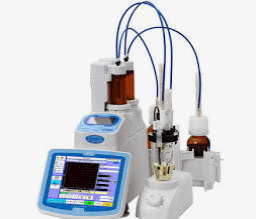
Karl Fischer Titrator
Scope of ASTM D6869 Test Standard
Measures the moisture content of the majority of plastic materials.
Based on the Karl Fischer iodine-water reaction.
Covers a wide moisture range from 0.005% to 100%
Enhances process optimization and quality control of plastic products.
Eliminates substances that emit volatile interfering substances.
Equipment and Sample Preparation
Karl Fischer Titrator
Measures moisture through iodine reaction using coulometric or volumetric mode.
Sample Introduction System
Transfers plastic samples into the titration chamber without contamination.
Analytical Balance
Measures precise sample weight for accurate calculations.
Use of ASTM D6869
Determining the moisture content of plastic materials before the molding process, extrusion process, compounding, and packaging.
Assists in process optimization, as well as formulation development of moisture-sensitive polymers.
Avoids flaws like splay and bubbles.
Enables stable polymer performance.
Helps in choosing appropriate plastic materials.
How Does the Karl Fischer Reaction Work in ASTM D6869?
The Karl Fischer reaction uses iodine to react with water present in the sample. The reaction uses iodine proportionally to the amount of moisture. Thus, the titration system measures moisture using the consumption of iodine. This direct correlation ensures it is highly accurate, even when the moisture content is extremely low.
Why Is Moisture Control Critical in Plastic Processing?
Moisture has a direct effect on the processing and final properties of plastics. Due to high moisture, hydrolysis occurs, and the polymer chains become weak. As a result, bubbles or splay can be found on the surface during the molding process. Nevertheless, high temperature and very low moisture content can cause undesired polymerization. Thus, moisture control ensures consistent processing and improved plastic product quality.
Common Challenges and Troubleshooting
Some plastics emit volatile chemicals, such as residual monomers or plasticizers. These chemicals can disrupt the iodine-water reaction and give inaccurate results. Also, when samples are not handled properly, outside moisture can affect accuracy. To overcome these problems, laboratories should work with closed systems and restricted environments. Moreover, an appropriate sample size enhances measurement precision.
Testing Technique Process, and Data Collection
Testing begins with the accurate weighing of the plastic sample. The technician then puts the sample into the Karl Fischer titration system. The device starts the reaction of iodine and quantifies the number consumed. Then, the system determines moisture content according to the stoichiometry of the reaction. Repeatability across a number of samples and process optimization are both achieved through consistent data collection.
Analysis Results and Interpretation
ASTM D6869 reports standard moisture content in SI units. The outcomes are normally presented in percent (%) of moisture content. Reduced values are an indication of the presence of dry material that can be processed, and higher values are an indication of possible defect or degradation. These results allow engineers to adjust drying and processing conditions. Proper interpretation ensures product quality and production efficiency.
Factors to Consider For ASTM D6869
Speed: Quick determination of moisture assists manufacturers in making fast decisions on processing. Efficient Karl Fisher systems cut the time of testing without affecting the accuracy.
Expertise: Experienced technicians ensure proper sample handling and accurate titration. Experience enhances predictability and reduces interference-induced error.
Cost: Cost-effective testing supports routine moisture analysis in production environments. Balanced testing is optimal in terms of accuracy and operational efficiency.
You can share your astm d6869 testing requirements with MaTestLab. MaTestLab has a vast network of material testing laboratories, spread across the USA and Canada. We support your all material testing needs ranging from specific astm d6869 test to various testing techniques.
How much do I need to pay for the astm d6869 test?
Please contact us for a detailed quote for your astm d6869 testing needs. Cost incurred to carry out different astm d6869 testing methodology depends on the type of raw material; number of samples, coupons, or specimens; test conditions, turn around time etc. Costs of some ASTM testing methods start from $100 and the final value depends upon the factors listed above. Please contact us for the best and latest prices.
How many samples are required for astm d6869?
The required number of samples or specimens should comply with the procedure given in the astm d6869 standard. However, the MaTestLab operations team can assist you for your special requirements once you share your testing details with us.
How much discount can I get on the astm d6869 test?
MaTestLab has a vast testing laboratory network, hence we bring you the best testing facilities in a cost-effective way. We offer considerable discounts (15-20%) to our returning customers based on test volume and frequency.
How many days will it take to complete the astm d6869 test?
The turnaround time for astm d6869 test methodology depends upon the test procedure mentioned in the standard test document. However, we at MaTestLab understand your research requirements and hence try to get your test completed within the least possible time.
Where can I get the astm d6869 tested?
You can share your astm d6869 testing requirements with MaTestLab. MaTestLab has a vast network of material testing laboratories, spread across the USA and Canada. We support your all material testing needs ranging from specific astm d6869 test to various testing techniques.
MaTestLab Inc. offers accessible, quick, and affordable material testing, product testing, and failure analysis services. We support your on-demand testing and expert consultation needs with the help of our extensive network of material testing laboratories situated in the US and other parts of the world.
MATERIAL TESTING
We offer destructive and non-destructive tests over a range of mechanical, electrical, chemical, thermal, optical, corrosion, radiation, and biological testing methodologies defined by ASTM, ISO and other organizations.
PRODUCT TESTING
We help you evaluate and ensure your product quality and performance with standard and custom-made testing solutions. All the tests are done at well-equipped testing laboratories using standard testing methods for best output and satisfaction.
FAILURE ANALYSIS
Failure analysis ensures high levels of quality in every manufacturing process. We help you with getting the best failure or root cause analysis to determine the cause of the failure. The results help you identify means to prevent failure recurrences.