
Iron And Steel Products

Iron and steel are fundamental materials underpinning the development of contemporary infrastructure and industry. These metals are integral to the construction of buildings, bridges, and transportation networks, as well as to the manufacture of machinery, vehicles, and even household appliances. Their notable properties, such as high strength, durability, and adaptability, render them essential across diverse fields, including construction, the automotive sector, and energy production. To guarantee their suitability for these demanding applications, comprehensive material testing is required. Evaluations focus on attributes like tensile strength, hardness, and corrosion resistance, ensuring that iron and steel products meet rigorous standards for performance, longevity, and safety before they are deployed in critical roles.

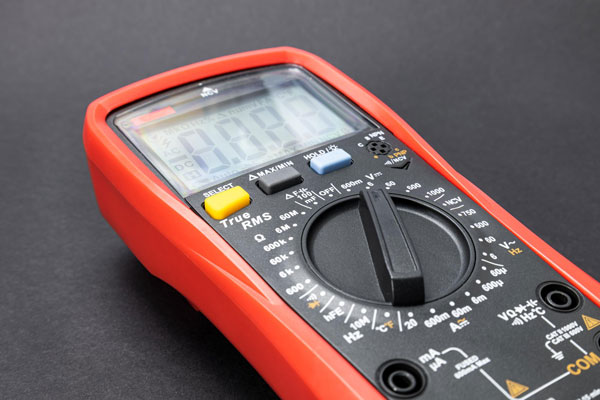
    Digital multimeter used for ASTM testing
    ASTM at a Glance

    What is ASTM?

    ASTM International develops voluntary consensus standards that provide consistent methods for testing, evaluating, classifying, and specifying materials, products, systems, and services.

    12,800+ Standards
    Access one of the world's most comprehensive collections of ASTM standards
    Recognized Worldwide
    Access one of the world's most comprehensive collections of ASTM standards
    Measure What Matters
    Access one of the world's most comprehensive collections of ASTM standards
    Every Material & Industry
    Access one of the world's most comprehensive collections of ASTM standards

    Introduction

    Testing iron and steel is far from a trivial procedure; it underpins material assurance across countless industries. The process is designed to rigorously evaluate core attributes like strength, durability, and structural integrity, ensuring these materials can withstand real-world demands. We employ a suite of mechanical, chemical, and physical assessments to uncover potential flaws, hidden cracks, impurities, or weaknesses that might otherwise go unnoticed. Ultimately, this level of scrutiny ensures compliance with international standards, upholds safety, and extends the lifespan of both industrial applications and public structures. In essence, methodical testing is a foundational element in building reliable, sustainable, and efficient systems in modern society.

    Common types of steel used in various industries

    Common types of steel Major elemental compositionIndustries used
    Carbon steelcarbonLow carbon steel- 0.3% carbon

    Medium carbon steel- 0.3-0.6 % carbon

    High carbon steel – 0.6%-1% carbon

    Ultra high carbon steel-1%-2% carbon

    Low carbon- Car body panels, wires, pipes

    Medium carbon- Railway tracks, gears, axles

    High carbon- Cutting tools, springs, blades

    Alloy steelNickel, copper, chromium, and/or aluminumConstruction materials, pipelines, and automobile parts
    Satinless Steel10-20% chromiumutensils, surgical tools, tanks
    Tool steelTungsten, molybdenum, cobalt, and vanadiumCutting tools, molds
    Advanced-high-strength steel (AHSS) Complex multilayer microstructure phases of ferrite, martensite, bainite, and retained austeniteMartensitic (MS), ferritic-bainitic (FB), transformation-induced plasticity (TRIP), and twinning-induced plasticity (TWIP)Automobile parts 
    Galvanized SteelIron with zinc coatingConstruction, truck doors
    Electrical SteelIron with siliconTransformers, generators 

    Commonly Used Iron and Steel Products Test Methods

    1. Tensile Strength Test – Determines yield and ultimate tensile strength.
    2. Hardness Test (Rockwell, Brinell, Vickers) – Measures surface hardness.
    3. Impact Test (Charpy/Izod) – Evaluates toughness and resistance to sudden shocks.
    4. Bend and Flexural Test – Assesses ductility and deformation behavior.
    5. Fatigue Test – Determines endurance under cyclic loading.
    6. Ultrasonic & Radiographic Testing (NDT) – Detects internal flaws without damaging the sample.
    7. Residual Stress Measurement – Assesses stresses from manufacturing processes
    8. Salt Spray Test – Checks corrosion resistance.
    9. Humidity & Aging Test – Simulates environmental degradation.
    10. Coating Thickness Test – Measures galvanization or protective layer.
    11. ASTM E8- Standard Test Methods for Tension Testing of Metallic Materials
    12. ASTM E10- Standard Test Method for Brinell Hardness of Metallic Materials
    13. ASTM A370- Standard Test Methods and Definitions for Mechanical Testing of Steel Products
    14. ASTM E18
    15. ASTM E23
    16. ASTM A956
    17. ASTM E92
    18. ASTM A194
    19. ISO 14284
    20. ISO 9556
    21. ISO 15510

    FAQ

    Where can I get iron and steel products testing done?
    You can share your iron and steel products testing requirements with MaTestLab. MaTestLab has a vast network of material testing laboratories, spread across the USA and Canada. We support your all material testing needs ranging from specific iron and steel products tests to various testing techniques.
    Please contact us for a detailed quote for your iron and steel products testing needs. Cost incurred to carry out different iron and steel products testing methodology depends on the type of raw material; number of samples, coupons, or specimens; test conditions, turn around time etc. Please contact us for the best and latest prices.
    The required number of samples or specimens should comply with the relevant standard's procedure. The MaTestLab operations team can assist you for your special requirements once you share your testing details with us.
    MaTestLab has a vast testing laboratory network, hence we bring you the best testing facilities in a cost-effective way. We offer considerable discounts (15-20%) to our returning customers based on test volume and frequency.
    Turnaround time depends on the specific test procedure required. However, we at MaTestLab understand your research requirements and hence try to get your testing completed within the least possible time.
    Testimonials
    Real results
    Engineers trust us with what matters most
    Start Your Testing
    Project Today
    Define your requirements and get access to
    specialized laboratories ready to deliver results
    Partners with us
    Clients
    Vendors
    Process for testing
    • STEP 01

      You share your testing requirements

    • STEP 02

      You share your sample(s)

    • STEP 03

      We deliver your test reports

    Get your testing done

    Let us known your testing requirements and we will be right back with a solution.

      Let us root for each other. Collaborate to grow, expand, and accelerate our businesses.

      Partner with us

        Contact Us