ASTM D570 is the standard test method for water absorption of plastics. This standard determines the relative rate of water absorption by polymers when immersed. This test method is designed to be applied to a wide range of plastics, such as sheets and rods that are 0.13 mm (0.005 in.) thick or more, homogeneous and laminated plastics, and cast, hot-molded, and cold-molded resinous goods. Properties including mechanical strength, electrical insulating resistance, dielectric losses, appearance, and size are all strongly correlated with a plastic's moisture content. The part shape, the plastic's intrinsic properties, and the type of exposure (such as immersion in water or exposure to high humidity) all have a major role in determining how these qualities are affected by changes in moisture content brought on by water absorption. As a guide for the amount of water absorbed by a material, the ASTM D570 test method for rate of water absorption serves two main purposes. Secondly, it can be used as a control test to ensure product uniformity, particularly for sheet, rod, and tube arms when tested on the final product.
Read More
GET STARTED
ASTM D570 Introduction
ASTM D570 is a test method designed to measure the water absorption properties of plastics when immersed. All types of plastics, including cast, hot-molded, and cold-molded resinous products, and both homogeneous and laminated plastics in rod and tube form, are worked upon by this test method. The results obtained are specially used for quality control and specification purposes. The test procedure is crucial for understanding how moisture affects the mechanical and physical properties of plastics, which is essential for their effectiveness in various applications. Ensuring dependability and endurance in their intended uses, D570 assesses the suitability of plastic materials for use in damp environments by measuring their water absorption. ASTM D570 is essentially the standard procedure for determining the water absorption capacity of a plastic material. In this method, a plastic sample is immersed in water at 23°C for 24 hours, after which any increase in weight is recorded. This measurement provides insight into the material’s water absorption characteristics. Understanding how much water a plastic absorbs is critical, as it directly influences aspects such as dimensional stability and mechanical properties, which are particularly relevant in environments exposed to moisture. The results from this test inform decisions regarding material selection, quality control, and performance comparisons. Ultimately, understanding the water absorption behavior of plastics is crucial for predicting their durability and functional reliability, particularly in electrical, structural, or outdoor applications.
Get Certified ASTM D570 for Reliable Moisture Resistance Evaluation
ASTM D570 certification indicates that plastic materials carry the known requirements of water absorption performance. Certified testing maintains a uniform assessment of the moisture uptake behaviour, helps in product qualification, and builds confidence in the dimensional and mechanical stability over time. Adherence to the ASTM D570 will ensure consistency in the applications of plastics in the service environments that are prone to moisture.
Service Name
Remarks
ASTM D570 Testing
Contact US
ASTM D570 Testing Procedure and Requirements
Specimen Preparation
Prepare plastic specimens with smooth surfaces and specified dimensions
Initial Conditioning
Dry samples to constant weight and then imbibe.
Initial Weighing
Take the initial weight of each specimen with great precision.
Water Immersion
Place specimens in distilled water, at a certain temperature, and for a certain time duration.
Scope of ASTM D570
Identifies the features of water absorption of plastic materials.
Relevant to moulded, extruded, and fabricated plastic items.
Assesses dimensional and property variations because of the moisture uptake.
Facilitates the choice of materials to use in a humid and wet service environment.
Applicable to quality control, research, and product development uses.
ASTM D570 Equipment and Sample Preparation
Specimen Preparation
Machine or mold specimens with smooth edges and uniform thickness without inducing internal stresses
Specimen Detail
Use flat, rectangular, or disk-shaped specimens representative of the plastic material
Specimen Size
Prepare specimens according to the specified thickness and surface area requirements for accurate absorption measurement
Applications of ASTM D570
Assessment of moisture resistance of engineering plastics.
Electrical insulation and electronic housings.
Quality control of plastic parts that are exposed to a humid environment.
Dimensional stability testing of construction and automotive plastics.
Moisture-resistant polymer formulations research and development.
ASTM D570 Common Challenges and Troubleshooting
Other pitfalls consist of not being completely dry before testing, the presence of surface water in weighing, and specimens differing in thickness, which influences the outcome in absorption. Poor temperature management of immersion water can also cause inaccurate data. These concerns in laboratories can be solved by constant-weight drying, wiping down specimen surfaces, and controlling immersion conditions during the test period.
ASTM D570 Technique, Process, and Data Collection
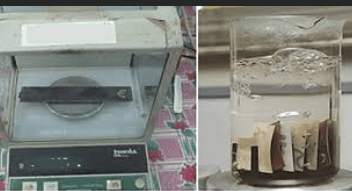
The test is characterized by the conditioning of plastic specimens to a dry state, precise registering of their initial mass, and by placing the sample in distilled water for determined periods of time, i.e., 24 hours or longer. Upon immersion, the specimens are lifted and dried on the surface and then reweighed immediately to calculate the gain in mass because of absorption of water. The measures that were taken are the dimensions of the specimen, the time of immersion, the temperature, and the value of the water absorption percentage.
ASTM D570 Analysis Results and Interpretation
The results of the ASTM D570 test give information on the potential entrapping of moisture in plastic stuff and their vulnerability to either swelling or degradation. A low water absorption shows desirable resistance to moisture and dimensional balance, while a high water absorption indicates the possibility of a decrease in mechanical strength and electric insulation performance. The engineers rely upon such findings to choose suitable plastics whilst serving in humid, submerged, or outside conditions.
ASTM D570 Problem & Solution
Problem: It is possible that plastic materials can absorb moisture and will swell and lose strength as well as electrical properties.
Solution: ASTM D570 measures water absorption in predetermined immersion conditions, which allows engineers to select plastics resistant to moisture and maximize the life of products.
Factors to Consider for ASTM D570
Speed The test offers a fairly fast assessment of moisture absorption, particularly in brief immersion periods like 24 hours.
Expert Proper preparation of specimens, conditioning, and weighing of the specimens are labour-intensive tasks that necessitate competent personnel in the laboratory to get accurate results.
Cost ASTM D570 is an economical technique to measure the water absorption behaviour that will aid in avoiding premature failures in the materials used and decreasing both the cost of maintenance and replacement in moisture-exposed structures.
You can share your astm d570 testing requirements with MaTestLab. MaTestLab has a vast network of material testing laboratories, spread across the USA and Canada. We support your all material testing needs ranging from specific astm d570 test to various testing techniques.
How much do I need to pay for the astm d570 test?
Please contact us for a detailed quote for your astm d570 testing needs. Cost incurred to carry out different astm d570 testing methodology depends on the type of raw material; number of samples, coupons, or specimens; test conditions, turn around time etc. Costs of some ASTM testing methods start from $100 and the final value depends upon the factors listed above. Please contact us for the best and latest prices.
How many samples are required for astm d570?
The required number of samples or specimens should comply with the procedure given in the astm d570 standard. However, the MaTestLab operations team can assist you for your special requirements once you share your testing details with us.
How much discount can I get on the astm d570 test?
MaTestLab has a vast testing laboratory network, hence we bring you the best testing facilities in a cost-effective way. We offer considerable discounts (15-20%) to our returning customers based on test volume and frequency.
How many days will it take to complete the astm d570 test?
The turnaround time for astm d570 test methodology depends upon the test procedure mentioned in the standard test document. However, we at MaTestLab understand your research requirements and hence try to get your test completed within the least possible time.
Where can I get the astm d570 tested?
You can share your astm d570 testing requirements with MaTestLab. MaTestLab has a vast network of material testing laboratories, spread across the USA and Canada. We support your all material testing needs ranging from specific astm d570 test to various testing techniques.
MaTestLab Inc. offers accessible, quick, and affordable material testing, product testing, and failure analysis services. We support your on-demand testing and expert consultation needs with the help of our extensive network of material testing laboratories situated in the US and other parts of the world.
MATERIAL TESTING
We offer destructive and non-destructive tests over a range of mechanical, electrical, chemical, thermal, optical, corrosion, radiation, and biological testing methodologies defined by ASTM, ISO and other organizations.
PRODUCT TESTING
We help you evaluate and ensure your product quality and performance with standard and custom-made testing solutions. All the tests are done at well-equipped testing laboratories using standard testing methods for best output and satisfaction.
FAILURE ANALYSIS
Failure analysis ensures high levels of quality in every manufacturing process. We help you with getting the best failure or root cause analysis to determine the cause of the failure. The results help you identify means to prevent failure recurrences.