ASTM D3171 Constituent Content of Composite Materials
ASTM D3171 quantifies constituents in composite materials (fiber reinforcement content, matrix resin content, and void content). This standard evaluates the quality and composition of the composite laminate used in the aerospace, automotive, marine, and industrial industries. The test involves chemical digestion, burning, or carbonization of the matrix to determine the true values of reinforcement content and void volume. ASTM D3171 provides a way for manufacturers to control the quality of their work, improve their processes, and ensure that materials meet specifications.
Read More
GET STARTED
Introduction to ASTM D3171
ASTM D3171 (Standard Test Methods for Component Content of Composite Materials) provides methods for measuring the fiber, resin, and void content of composite materials. These measures are important because they significantly affect the composite’s performance. The preferred ones are mostly carbon fiber-reinforced polymers, glass fiber-reinforced polymer (GFRP), aramid fiber composites, epoxy laminates, polyester composites, and a few metal matrix composites. ASTM D3171 tests construction, verifies component ratios, and supports engineering design calculations for producers. This test method is an important part of composite materials testing.
Get Certified ASTM D3171 Testing for Composite Quality Assurance
Certification verifies that the composite materials contain the desired amount of reinforcement, resin, and voids. Component evaluation helps ensure consistency in manufacturing, overall structural performance, and product reliability.
Service Name
Remarks
ASTM D3171 Testing
Contact US
Testing Procedures and Requirements
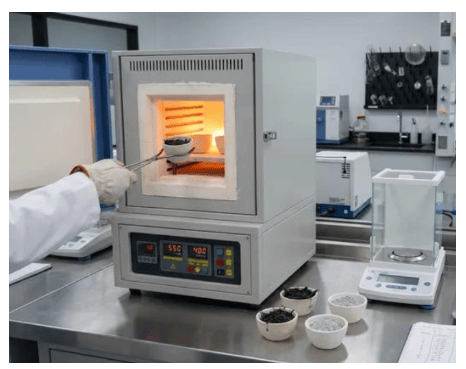
Technicians first create representative composite samples and measure the samples’ original mass. Then chemically digest, ignite, or carbonize the matrix, leaving the reinforcement intact. Then measure the amount of reinforcement remaining after this process and determine the fiber and resin contents and the void volume.
Matrix Removal Process
Technicians chemically digest, incinerate at high temperatures, or extract the polymer matrix from the plastic. Control temperature, time, and chemical concentration to prevent damage to the reinforcement fibers.
Fiber Recovery and Cleaning
Operators carefully recover the fiber material after matrix removal and clean it to remove any residual resin, ash, or contamination that could interfere with mass measurement.
Drying and Conditioning
Technicians dry the recovered constituents in a controlled environment or a drying oven to a constant mass. They dry samples in a desiccator to avoid moisture.
Quality Check and Validation
Operators check whether the mass balance is reasonable and retest if any significant discrepancy or loss of material is observed during testing.
ASTM D3171 Muffle Furnace
Scope of ASTM D3171 Test Standard
Measures fiber, resin, and void content of composite laminates.
Applicable to carbon fiber composites, fiberglass composites, aramid composites, epoxy laminates, polyester composites, and metal matrix composites.
Weighs and volumizes measures of reinforcement and matrix.
Checks the void content by matrix removal methods.
Assists with quality control, composite material qualification, and composite design.
ASTM D3171 Equipment and Sample Preparation
Specimen Details
Technicians test fiber-reinforced composite materials, such as glass fiber, carbon fiber, aramid fiber, and other polymer-based composites. Fabricate specimens from composite laminates, molded panels, structural parts, or manufactured parts that are representative of the material being tested. Samples are uncontaminated, moisture-free, and not visibly damaged by constituent content determination.
Specimen Preparation
Operators cut representative samples from the composite material and clean the specimens to remove dust, oils, and other foreign materials. They dry the specimens, if necessary, and weigh them on an analytical balance, using a calibrated mass, to record the initial mass. Properly prepare the sample for ignition, digestion, or extraction to ensure the correct separation of the reinforcement and matrix, as well as the void content.
Specimen Dimensions
The laboratory ensures accurate specimen size and mass while removing matrix from the specimen during the test. The operators maintain dimensions and specimen masses in accordance with the selected test procedure and the type of composite material to achieve an accurate determination of fiber, resin, and void content.
Use of ASTM D3171
Determines the fiber, resin, and void content of composite laminates.
Checks the manufacturing consistency and laminate quality.
Helps with the development and optimization of composite materials.
Assists with mechanical property evaluation and design calculations.
Supplies parts to manufacturers for aerospace, automotive, marine, and industrial applications.
Why is Constituent Content Important?
The mechanical, thermal, electrical, and physical properties of a composite are directly affected by constituent components. A good fiber/resin ratio improves strength/stiffness, but too many voids reduce fatigue resistance and durability.
What Materials Can Be Tested?
ASTM D3171 generally tests carbon fiber composites, fiberglass composites, aramid fiber composites, epoxy matrix composites, polyester laminates, hybrid composites, and some metal matrix composites.
Common Challenges and Troubleshooting
Incomplete matrix removal, reinforcement damage at some point in digestion, erroneous weighing, and erroneous sampling affect test accuracy. Laboratories reduce those issues by standardizing their approaches, ensuring proper calibration of equipment, and selecting the appropriate metric resolution method for each composite device.
Testing Technique, Process, and Data Collection
Technicians measure the mass of the composite specimen and then extract the matrix using the chosen technique. Then find the remaining reinforcement mass and calculate the amount of fiber, resin, and void content. Test Method II determines the contents of constituents from the thickness of the laminate and the known fiber areal weight without separating the matrix.
Analysis Results and Interpretation
ASTM D3171 provides fiber content (wt. and volume), resin content (wt. and volume), and void content (volume). The higher the fiber content, the greater the composite’s strength and stiffness, although excessive resin or void content can reduce the composite’s strength. Engineers use these results to confirm manufacturing quality and ensure it meets the design requirements.
Factors to Consider for ASTM D3171 Testing
Speed: Efficient testing enables a rapid quality check during composite manufacturing.
Expertise: Skilled technicians ensure the removal of matrices and the correct calculation.
Cost: Routine constituent analysis helps reduce production defects and material waste.
Malhar Khole is a Material Testing Associate at MaTestLab Inc. and holds a postgraduate degree in Material Science and Technology from IIT...
FAQ's
Where can I get the astm d3171 tested?
You can share your astm d3171 testing requirements with MaTestLab. MaTestLab has a vast network of material testing laboratories, spread across the USA and Canada. We support your all material testing needs ranging from specific astm d3171 test to various testing techniques.
How much do I need to pay for the astm d3171 test?
Please contact us for a detailed quote for your astm d3171 testing needs. Cost incurred to carry out different astm d3171 testing methodology depends on the type of raw material; number of samples, coupons, or specimens; test conditions, turn around time etc. Costs of some ASTM testing methods start from $100 and the final value depends upon the factors listed above. Please contact us for the best and latest prices.
How many samples are required for astm d3171?
The required number of samples or specimens should comply with the procedure given in the astm d3171 standard. However, the MaTestLab operations team can assist you for your special requirements once you share your testing details with us.
How much discount can I get on the astm d3171 test?
MaTestLab has a vast testing laboratory network, hence we bring you the best testing facilities in a cost-effective way. We offer considerable discounts (15-20%) to our returning customers based on test volume and frequency.
How many days will it take to complete the astm d3171 test?
The turnaround time for astm d3171 test methodology depends upon the test procedure mentioned in the standard test document. However, we at MaTestLab understand your research requirements and hence try to get your test completed within the least possible time.
Where can I get the astm d3171 tested?
You can share your astm d3171 testing requirements with MaTestLab. MaTestLab has a vast network of material testing laboratories, spread across the USA and Canada. We support your all material testing needs ranging from specific astm d3171 test to various testing techniques.
MaTestLab Inc. offers accessible, quick, and affordable material testing, product testing, and failure analysis services. We support your on-demand testing and expert consultation needs with the help of our extensive network of material testing laboratories situated in the US and other parts of the world.
MATERIAL TESTING
We offer destructive and non-destructive tests over a range of mechanical, electrical, chemical, thermal, optical, corrosion, radiation, and biological testing methodologies defined by ASTM, ISO and other organizations.
PRODUCT TESTING
We help you evaluate and ensure your product quality and performance with standard and custom-made testing solutions. All the tests are done at well-equipped testing laboratories using standard testing methods for best output and satisfaction.
FAILURE ANALYSIS
Failure analysis ensures high levels of quality in every manufacturing process. We help you with getting the best failure or root cause analysis to determine the cause of the failure. The results help you identify means to prevent failure recurrences.