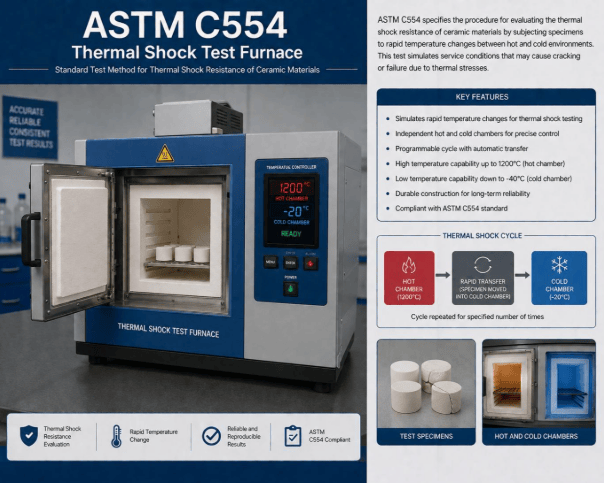
ASTM C554 Standard Test Method for Crazing Resistance of Fired Glazed Ceramic Whitewares by a Thermal Shock
ASTM C554 describes a standard test method for determining the crazing resistance of fired glazed ceramic whiteware by a thermal shock method. This standard assesses the resistance of glazed ceramic products to craze cracking following multiple heating and cooling cycles. Manufacturers use ASTM C554 to assess glaze durability, improve glaze-body compatibility, and verify product quality for ceramic tableware, sanitary ware, and decorative products. The test report includes the thermal shock conditions, number of cycles, and visual examination results.
Read More
GET STARTED
What is ASTM C554?
ASTM C554 is a standard test method that determines the crazing resistance of fired glazed ceramic whiteware by thermal shock. It provides a standardized laboratory test method for evaluating whether glazed ceramic products develop fine craze cracks after repeated thermal shock exposure. The method intentionally induces thermal stresses between the glaze and the ceramic body to assess the tendency toward crazing. Manufacturers use these results to optimize glaze formation and firing conditions, test product quality, and ensure durability.
Get Certified ASTM C554 Crazing Resistance Testing
Thermal shock can lead to stresses that induce glaze crazing during product use. ASTM C554 is a standard test method that provides manufacturers with a way to evaluate glaze performance, modify ceramic properties, and reduce thermal expansion mismatch failures.
Service Name
Remarks
ASTM C554 Testing
Contact US
ASTM C554 Equipment and Sample Preparation Guide
Operators must prepare specimens and control thermal shock conditions to get reliable crazing resistance results. Technicians examine representative glazed ceramic specimens, clean their surfaces, and repeatedly heat and rapidly cool them under controlled conditions. After testing, a proper visual examination assists in determining the extent of glaze crazing.
Sample and Specimen Details
Technicians select representative fired specimens of ceramic whiteware with a finished glazed surface for testing.
Specimen Preparation
Technicians clean and inspect ceramic surfaces before testing to check for defects and contaminants.
Specimen Dimensions
Technicians use finished ceramic products or representative samples of glazed products that meet the dimension criteria as per ASTM C554.
Instrumentation
Thermal Shock Test Furnace, Water Bath or Cooling Tank, Temperature Measuring Device, Timer, Specimen Holder, Inspection Lighting, and Magnifying Glass or Optical Inspection Device.
Testing Procedures and Requirements for ASTM C554
ASTM C554 evaluates crazing resistance by subjecting glazed ceramic specimens to repeated thermal shock cycles followed by visual examination. In the laboratory, specimens are heated to the specified temperature, rapidly cooled according to the test procedure, and then visually inspected for glaze crazing. Proper temperature control, heating duration, cooling duration, and careful inspection ensure reliable and repeatable results.
Specimen Inspection
Before testing the specimens, technicians inspect and clean the glazed ceramic specimens to ensure defect-free specimen surfaces.
Thermal Shock Exposure
Technicians heat the specimens to the specified temperature and rapidly cool them according to ASTM C554 requirements.
Visual Examination
Technicians check the surfaces of the glazes for crazing after each thermal shock cycle.
Result Evaluation
Technicians count the number of cycles and document the occurrence or absence of glaze crazing.
ASTM C554 Testing Process and Data Collection
Operators select representative ceramic specimens and assess the glazed surface for visible defects. They heat the specimens under controlled temperatures and cool them as specified. They repeat the heating and cooling cycles as needed and check the glaze after each cycle. The laboratory records the specimen identification, thermal shock conditions, thermal shock cycle numbers, and lack of craze crack occurrences.
ASTM C554 Thermal Shock Test Furnace
What is the scope of ASTM C554?
ASTM C554 specifies a standard method of thermal shock to establish the crazing resistance of fired, glazed ceramic whiteware. The test evaluates the ability of glazed ceramic products to resist craze cracking after repeated heating and rapid cooling cycles. This standard-
Determines the resistance of fired glazed ceramic whitewares to glaze crazing after repeated thermal shock exposure.
Subjects glazed ceramic specimens to repeated thermal shock cycles.
Identifies cracking of glaze due to thermal stress.
Assesses glaze-body compatibility and supports ceramic product quality control.
Compares and contrasts glaze formulations and firing conditions.
Provides a standardized thermal shock testing procedure.
What are the Uses of ASTM C554 Testing?
ASTM C554 assesses the ability of a glazed ceramic product to resist the development of craze cracks when exposed to sudden temperature changes. The test supports product development, quality assurance, and process optimization for ceramic products used in residential and commercial applications. This standard test method-
Determines the resistance of fired ceramic glazes to chemical deterioration and expansion.
Identifies cracks in glaze due to thermal shock.
Assists with quality control in the production of glazed ceramic whiteware products.
Compares the resistance of glaze formulations to crazing.
Supports preparation of firing conditions to minimize firing defects.
Tests the quality and stability of glass ceramic ware.
Aids in the detection and reduction of failures resulting from glaze craze.
Which Materials Can Be Tested Under ASTM C554?
ASTM C554 covers fired glazed ceramic whitewares, such as ceramic tableware, sanitary ware, household ceramic products, decorative ceramics, and other glazed ceramic products that may be subject to thermal shock in service.
Why is ASTM C554 Important?
ASTM C554 is a standard test method for rapid change resistance of glazes. The test helps manufacturers improve glaze formulations, reduce thermal stress failures, prevent crazing, and ensure the long-term durability and appearance of ceramic products.
Common Challenges and Troubleshooting
Accurate thermal shock testing is ensured by the careful preparation of the test specimens, controlled heating, even cooling, and visual inspection. Common issues include non-uniform heating and cooling, differences in the cooling rate of the specimen and the cooler, contaminated specimen surfaces, pre-existing flaws in the glaze, and inaccurate temperature control. Technicians improve repeatability by applying standardized procedures, calibrated equipment, and consistent specimen lighting.

Analysis Results and Interpretation
ASTM C554 is a standard test method that evaluates the resistance of fired glazed ceramic whitewares to glaze crazing using thermal shock.
The laboratory reports results as observations of the presence or absence of glaze crazing, number of thermal shock cycles, high heating temperature, cooling conditions, and findings of inspection.
Specimens that remain free from craze cracks demonstrate good thermal shock resistance.
What are the factors to consider for ASTM C554 testing?
Speed: The laboratory performs thermal shock cycles efficiently while maintaining controlled heating and cooling conditions.
Expertise: Technicians must control heating and cooling accurately, inspect glazing surfaces carefully, and distinguish cracks from other surface defects.
Cost: Standardized thermal shock testing helps manufacturers improve the quality of glaze, reduce product failures, and lower warranty and replacement costs.
Laraib Hashmi is an aspiring research enthusiast and science content professional with a strong interdisciplinary skill set, holding a postgraduate degree in...
FAQ's
Where can I get the astm c554 tested?
You can share your astm c554 testing requirements with MaTestLab. MaTestLab has a vast network of material testing laboratories, spread across the USA and Canada. We support your all material testing needs ranging from specific astm c554 test to various testing techniques.
How much do I need to pay for the astm c554 test?
Please contact us for a detailed quote for your astm c554 testing needs. Cost incurred to carry out different astm c554 testing methodology depends on the type of raw material; number of samples, coupons, or specimens; test conditions, turn around time etc. Costs of some ASTM testing methods start from $100 and the final value depends upon the factors listed above. Please contact us for the best and latest prices.
How many samples are required for astm c554?
The required number of samples or specimens should comply with the procedure given in the astm c554 standard. However, the MaTestLab operations team can assist you for your special requirements once you share your testing details with us.
How much discount can I get on the astm c554 test?
MaTestLab has a vast testing laboratory network, hence we bring you the best testing facilities in a cost-effective way. We offer considerable discounts (15-20%) to our returning customers based on test volume and frequency.
How many days will it take to complete the astm c554 test?
The turnaround time for astm c554 test methodology depends upon the test procedure mentioned in the standard test document. However, we at MaTestLab understand your research requirements and hence try to get your test completed within the least possible time.
Where can I get the astm c554 tested?
You can share your astm c554 testing requirements with MaTestLab. MaTestLab has a vast network of material testing laboratories, spread across the USA and Canada. We support your all material testing needs ranging from specific astm c554 test to various testing techniques.
MaTestLab Inc. offers accessible, quick, and affordable material testing, product testing, and failure analysis services. We support your on-demand testing and expert consultation needs with the help of our extensive network of material testing laboratories situated in the US and other parts of the world.
MATERIAL TESTING
We offer destructive and non-destructive tests over a range of mechanical, electrical, chemical, thermal, optical, corrosion, radiation, and biological testing methodologies defined by ASTM, ISO and other organizations.
PRODUCT TESTING
We help you evaluate and ensure your product quality and performance with standard and custom-made testing solutions. All the tests are done at well-equipped testing laboratories using standard testing methods for best output and satisfaction.
FAILURE ANALYSIS
Failure analysis ensures high levels of quality in every manufacturing process. We help you with getting the best failure or root cause analysis to determine the cause of the failure. The results help you identify means to prevent failure recurrences.