
ASTM A967 Specification for Chemical Passivation Treatments for Stainless Steel Parts

    What is ASTM A967?

    ASTM A967 is a standard specification that specifies the requirements for chemical passivation treatments for stainless steel parts to enhance corrosion resistance. The specification includes nitric acid immersion, citric acid immersion, and electrochemical passivation treatments to remove embedded contaminants, foreign particles left on the surface of stainless steel after machining, fabrication, or welding, and free iron. ASTM A967 (Standard Specification for Chemical Passivation Treatments for Stainless Steel Parts) differs from a cleaning process that removes dirt or oils because it restores the passive oxide layer that protects stainless steel from corrosion. Passivation can extend service life and enhance performance in severe industrial applications while providing better corrosion protection and preventing rust staining over time. ASTM A967 also requires verification testing to prove the passivation treatment has been effective before the components enter service.

    Read more

    The specification includes qualitative tests to confirm the effectiveness of passivation, particularly the removal of contaminant iron and other exogenous matter from the stainless-steel surface. The applicable passivation evaluation practices include:

    • Practice A – Water Immersion Test: Evaluates the passivated surface after water immersion.
    • Practice B – High Humidity Test: Evaluates the effectiveness of passivation under high-humidity conditions.
    • Practice C – Salt Spray Test: Evaluates the passivated surface under salt spray exposure.
    • Practice D – Copper Sulfate Test: Detects contaminant iron on the passivated stainless-steel surface.
    • Practice E – Potassium Ferricyanide-Nitric Acid Test: Evaluates the presence of free iron or other contaminants on the passivated surface.
    • Practice F – Damp Cloth Test: Evaluates the passivated surface by exposing it to a damp cloth.
    • Practice G – Boiling Water Immersion Test: Evaluates the passivated surface after exposure to boiling water.

    Get Certified ASTM A967 Testing for Reliable Stainless Steel Passivation Performance

    ASTM A967/A967M testing can provide qualitative verification that stainless steel parts meet the applicable passivation requirements and acceptance criteria specified by the purchaser or applicable product requirements. ASTM A967 laboratory tests provide qualitative evidence of the selected passivation treatment’s effectiveness, particularly in removing contaminant iron and other exogenous matter. With proper ASTM A967 testing, manufacturers can ensure higher product quality, fewer corrosion failures, compliance with customer specifications, and consistent performance in critical environments where stainless steel reliability is paramount.
    What is the Scope of ASTM A967 Specification?

    ASTM A967 is a standard specification for chemical passivation treatments that enhance the corrosion resistance of stainless steel parts by removing free iron and other surface contaminants. This specification outlines approved passivation procedures, process requirements, verification testing, and acceptance criteria for stainless steel components used in industries such as aerospace, automotive, medical devices, food processing, and chemical manufacturing. These tests generally verify the passivation process and include free-iron detection, high-humidity testing, water immersion testing, copper sulfate testing, salt spray testing, and visual inspection.

    Read more

    This specification covers several chemical passivation treatments for stainless steel parts and alternative qualitative tests with acceptance criteria for confirming the effectiveness of those treatments. The ASTM A967 specification-

    • Describes chemical passivation processes for stainless steel parts.
    • Applies to nitric acid and citric acid passivation processes listed in the specification.
    • Provides alternative passivation treatments and qualitative tests to confirm their effectiveness, particularly for removing contaminant iron and other exogenous matter.
    • Includes verification methods to assess the effectiveness of passivation treatments.
    • Supports quality-control activities when stainless steel passivation is specified for a particular application or product requirement.
    • Applies only to chemical passivation treatment, not mechanical finishing operations.

    What are the Uses of ASTM A967?

    Manufacturers use ASTM A967 testing to ensure stainless steel parts are properly passivated and will provide the corrosion resistance needed for harsh industrial use. They use the results for quality assurance, process validation, and product certification.

    • Stainless steel manufacturers can verify the effectiveness of passivation treatments.
    • Fabricators can evaluate parts after cleaning, descaling, and passivation.
    • Quality control laboratories can verify treated stainless steel surfaces.
    • Research laboratories can compare different passivation treatments.
    • Medical, food-processing, chemical, and industrial equipment manufacturers can verify surface-treatment requirements when their applicable specifications require ASTM A967.
    • Corrosion laboratories can evaluate whether treated surfaces meet the selected passivation acceptance criteria.

    What Materials Can Be Tested Under ASTM A967?

    ASTM A967 covers many types of stainless steel, including austenitic, ferritic, martensitic, duplex, and precipitation-hardening stainless steels. Common applications range from medical devices and surgical implants, food processing machinery, valves and pumps, piping systems, heat exchangers, aerospace components, automotive parts, fasteners, precision-machined parts, and industrial stainless steel assemblies.

    Why is ASTM A967 Important for Stainless Steel Components?

    ASTM A967 ensures stainless steel surfaces are adequately cleaned and passivated to achieve optimal corrosion resistance and performance. The specification reduces the risk of rust formation from free iron contamination in the matrix and improves durability, cleanliness, product reliability, and service life in critical environments that require corrosion resistance.

    ASTM A967 Equipment and Sample Preparation Guide

    Analysts select representative stainless steel parts and subject them to chemical passivation and verification testing before use. The test-sample preparation procedure is an important part of assessing passivation effects and corrosion resistance.

    Read more

    Specimen detailsRepresentative stainless steel parts used in the aerospace industry, medical devices, food processing equipment, automotive parts, valves, fittings, pumps, fasteners, and precision-machined parts such as austenitic, ferritic, martensitic, duplex, and precipitation-hardening stainless steels.
    Specimen PreparationTechnicians clean the specimens to remove grease, oil, machining residues, oxides, and other contaminants before immersing them in the specified nitric and/or citric acid passivation solution. Technicians process the specimens under the controlled conditions defined by ASTM A967.
    Specimen DimensionsTechnicians prepare representative parts or specimens appropriate to the selected passivation treatment and verification procedure.
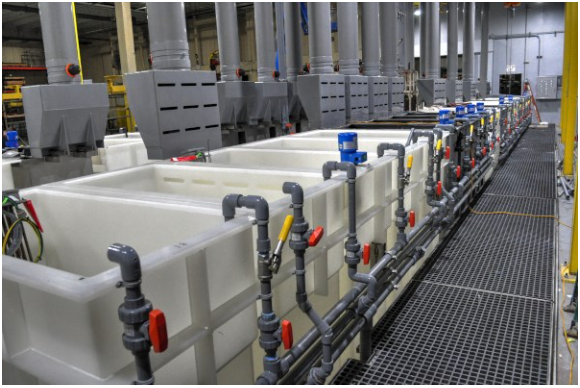
    InstrumentationPassivation Tanks, Nitric Acid or Citric Acid Processing Solutions, Deionized Water Rinse Systems, Temperature-Controlled Immersion Tanks, Copper Sulfate Test Solutions, Humidity Test Chambers (when required), Salt Spray Chambers (when required), Visual Inspection Equipment, and other calibrated laboratory instruments for passivation verification.

    Testing Procedures and Requirements for ASTM A967

    ASTM A967 provides alternative qualitative tests and acceptance criteria to confirm the effectiveness of passivation treatments. Typically, the testing process involves the following steps:

    Read more

    Specimen PreparationTechnicians clean the stainless steel specimens before the selected passivation treatment, per ASTM A967 requirements, to remove grease, machining residues, oxides, scale, and other contaminants.
    Chemical Passivation TreatmentTechnicians place the cleaned specimens in a nitric acid or citric acid passivation solution and control the treatment temperature and immersion time to remove free iron contamination and facilitate formation of the passive oxide layer.
    Free Iron Detection TestingAnalysts perform the applicable ASTM A967 verification practice selected for the material and requirements, such as water immersion, high humidity, salt spray, copper sulfate, potassium ferricyanide-nitric acid, damp cloth, or boiling water immersion testing.
    Corrosion Resistance EvaluationAnalysts perform standard corrosion exposures, such as salt spray testing, when required to evaluate the effectiveness of the passivation treatment.
    Visual ExaminationTechnicians visually inspect the treated parts for signs of improper passivation, including discoloration, stains, surface defects, and corrosion.
    Documentation and ReportingLaboratory personnel document material identification, surface preparation, passivation treatment, treatment conditions, verification method, observations, acceptance results, and ASTM A967 test details in laboratory reports.

    Other ASTM standards often cited with this specification include ASTM A380 and ASTM B117.

    ASTM A967 Testing Process and Data Collection

    Technicians select representative stainless steel parts or specimens and prepare them according to the selected passivation treatment and applicable ASTM A967/A967M requirements. After passivation, the material undergoes verification testing using accepted techniques to confirm removal of free iron and corrosion resistance. The passivation process parameters, inspection observations, corrosion test results, and verification data are recorded and matched against the acceptable criteria of ASTM A967.

    The image shows stainless steel components, chemical passivation equipment, corrosion resistance verification testing, and surface inspection according to ASTM A967.
    ASTM A967 Stainless Steel Passivation Testing and Surface Inspection

    Common Challenges and Troubleshooting

    Poor test accuracy may result from inadequate cleaning, incorrect passivation solution concentration, insufficient immersion time, contamination during passivation, or improper verification methods. Careful process control, equipment calibration, trained staff, and laboratory practices ensure accurate, repeatable results.

    Analysis Results and Interpretation

    • The applicable qualitative verification test determines whether the passivation treatment meets the selected ASTM A967/A967M practice.
    • This standard specification offers various qualitative verification tests: water immersion, high humidity, salt spray, copper sulfate, potassium ferricyanide-nitric acid, damp cloth, and boiling water immersion.
    • Visual inspection records whether rust, staining, discoloration, pitting, surface contamination, or other defects are present, which may indicate that the product is not fully passivated or was inadequately processed during passivation.
    • All stainless steel parts that pass all verification tests and acceptance criteria comply with ASTM A967 and are suitable for applications that require higher corrosion resistance, greater surface cleanliness, and long-term reliability.

    Link to ASTM A967

    Read more

    Updated on August 20, 2026

    Laraib Hashmi
    About Author
    Laraib Hashmi is an aspiring research enthusiast and science content professional with a strong interdisciplinary skill set, holding a postgraduate degree in Applied Microbiology from KIIT Bhubaneshwar, Odisha.
    Know More
    Testimonials
    Real results
    Engineers trust us with what matters most
    Why Choose Matestlab?
    Matestlab is a unified testing services partner based in the USA. Matestlab offers raw material and product testing services through accredited, expert laboratories primarily based in the USA. Matestlab supports physical, thermal, chemical, electrical, mechanical, environmental, and characterization testing needs through its global network of 2200+ accredited testing laboratories. Matestlab's in-house materials science experts curate and design comprehensive testing programs matched to the sample material and specific testing need, with regulatory requirements and confidentiality in mind.

    If you are looking for a managed and trusted testing partner to achieve your research goals, feel free to schedule a meeting with us or send us a request at connect@matestlabs.com to learn more about our services. For a quick quote, call us at (302)244-7710. We are happy to serve you.
    Start Your Testing
    Project Today
    Define your requirements and get access to
    specialized laboratories ready to deliver results
    Partners with us
    Clients
    Vendors
    Process for testing
    • STEP 01

      You share your testing requirements

    • STEP 02

      You share your sample(s)

    • STEP 03

      We deliver your test reports

    Get your testing done

    Let us know your testing requirements and we will be right back with a solution.

      Let us root for each other. Collaborate to grow, expand, and accelerate our businesses.

      Partner with us