

What Are Nonmetallic Inclusions in Steel
Nonmetallic inclusions are minute nonmetallic particles introduced during melting, refining, casting, or secondary processing of steel. Some inclusions are naturally present in steel, however, undesirable and improperly distributed inclusions can impair steel performance and cause cracking, poor surface finish, shortened fatigue life, and structural failure. Therefore, steel manufacturers carefully monitor inclusions to maintain product quality and process consistency.
Nonmetallic Inclusion Analysis
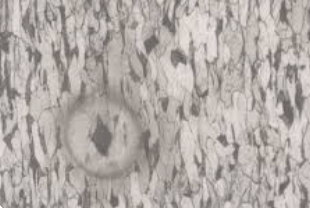
Nonmetallic inclusion analysis is the study of the morphology, size, composition, number, and distribution of nonmetallic inclusions in the steel produced. This study is done by metallographic techniques and/or microscopic evaluation methods. This analysis assesses the steel’s cleanliness and identify contamination or oxidation issues during production. Furthermore, industries employ inclusion analysis to improve mechanical properties, enhance the machinability of parts, and improve the durability of critical components. There are several standards that can be used for inclusion evaluation in the quality control of steel. ASTM International developed ASTM E45 for microscopic inclusion rating. Likewise, ASTM E2142 provides guidance on automated SEM-based inclusion analysis. These standards provide laboratories with a way to ensure they test in the same way as others and report reliably.
Scope of Nonmetallic Inclusion Analysis
- Measures the internal quality and cleanliness of steel
- Detects oxide, sulfide, silicate, and aluminate inclusions
- Calculates inclusion size, shape, distribution, and frequency
- Assists in monitoring the process while making steel and refining it
- Promotes better fatigue resistance and mechanical properties
- Identifies contamination and process-related defects
- Helps meet ASTM and industry standards for quality
- Applied in the fields of automobile, aerospace, energy, and construction.
Principle of Nonmetallic Inclusion Analysis
Nonmetallic inclusion analysis is based on the microscopic observation of polished steel specimens, which reveal the composition, size, and shape of the nonmetallic particles in the metal. Inclusions are found in the steel and have different optical, physical, and chemical properties from the surrounding steel during analysis. Thus, inclusions are classified by their morphology and composition using optical microscopy, an image analysis system, or scanning electron microscopy.
Moreover, the standardized rating methods consist of comparing observed inclusions with reference charts or automatically collected image analysis data. Results obtained are useful for manufacturers to assess the efficiency of the process, the integrity of the material, and the suitability for challenging engineering applications.
Test Procedure Overview
The test process starts with the division of a steel sample from the steel batch that is representative of the batch. Technicians then mount, grind, and polish the specimen to create a smooth, mirror-like surface that can be viewed under the microscope. Optical or scanning electron microscopes measure the inclusions at a predetermined magnification.
The inclusions are then categorized into standard types, including sulfides, alumina, silicates, and globular oxides. Inclusion thickness, length, distribution, and frequency are manually compared to a chart available in the literature or automated image analysis software in the laboratory. Finally, the results are documented to measure the cleanliness of steel and the overall quality of the product.
| Test Parameter | Description |
| Optical Microscopy | This technique evaluates the morphology, distribution, and size of inclusions under specified magnifications. Metallographic microscopes examine polished steel surfaces in accordance with ASTM E45 rating methods. |
| Scanning Electron Microscope (SEM) | Provides high-resolution imaging and elemental analysis of inclusions. SEM coupled with EDS helps identify the composition, origin, and sources of contamination in steel. |
| Sample Preparation | Technicians carefully section, mount, grind, and polish steel specimens to avoid introducing artificial defects or scratches that may interfere with the accuracy of inclusion evaluation. |
| Inclusion Rating | Analysts classify inclusions into categories such as sulfides, aluminates, silicates, and globular oxides using standardized comparison charts or automated image analysis systems. |
| Image Analysis Software | Automated systems measure inclusion count, size distribution, aspect ratio, and area fraction, improving testing consistency and reducing operator-related variation. |
Significance of Nonmetallic Inclusion Analysis
Nonmetallic inclusion analysis is an important factor in achieving steel quality and reliability. Manufacturers use inclusion analysis to reduce material defects and enhance product performance. For this reason, inclusions are directly linked to fatigue behavior, toughness, ductility, and machinability. Furthermore, cleaner steel results in longer service life of components used in harsh operating conditions, pressure, and cyclic loading.
The analysis is also suitable for optimizing steel refining and casting processes. Manufacturers can track oxidation, slag presence, refractory wear, and secondary contamination sources by monitoring inclusion characteristics. In this way, producers increase the efficiency of their production processes, decrease rejections, and ensure the quality of their steel remains consistent from batch to batch.
Applications of Nonmetallic Inclusion Analysis
Nonmetallic inclusion analysis is widely used in industries where high-performance, high-cleanliness steel is required. Gear, bearing, shaft, and engine part manufacturers test inclusions in parts to increase fatigue resistance and durability. Likewise, in the aerospace sector, the analysis of inclusion content is important for structural and turbine materials, in which reliability is the key factor.
In the oil and gas and energy industrial sectors, inclusion analysis is used to guarantee the integrity of pipelines, pressure vessels, and drilling equipment that are exposed to high-stress conditions. Further, inclusion evaluation is used in steelmaking, foundries, and heavy engineering applications to control processes, verify quality, certify products, and troubleshoot failures. Hence, nonmetallic inclusion analysis is still a vital process in modern steel production and quality control.


