Introduction to ASTM E96
ASTM E96 is a standard test method used to determine the water vapor transmission rate (WVTR) and moisture vapor permeability of various materials, including films, coatings, and textiles. This method helps assess the quality of materials by measuring their ability to resist moisture penetration. The test is commonly used in industries such as packaging, construction, and textiles. The results obtained through this method are especially used for quality control, reliability checks, performance evaluation, and specification purposes.
The test provides valuable information for quality control and product development, and it is used in conjunction with other ASTM standards to fully evaluate the properties of various materials, including films, coatings, and textiles. The final values of the procedure are stated in g/m²/day or equivalent WVTR units.
Scope of ASTM ASTM E96
- Determines the water vapor transmission rate (WVTR) of materials
- Applicable to sheet materials like plastics, films, coatings, and building materials
- Evaluates permeability under controlled temperature and humidity conditions
- Includes two methods: Desiccant Method (dry cup) and Water Method (wet cup)
- Widely used for packaging, construction, and barrier materials
- Helps assess moisture resistance and durability
Principle of the Test Method
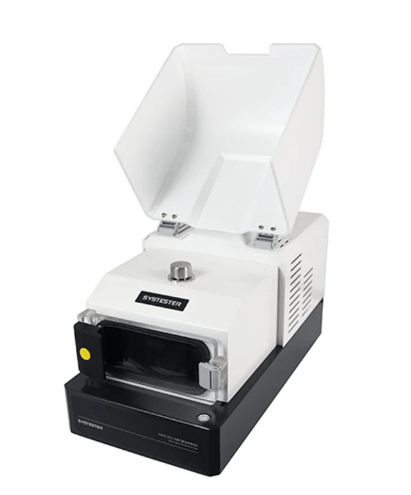
The test measures the rate at which water vapor passes through a material by sealing it over a test cup containing either a desiccant or water, creating a humidity gradient. As moisture moves through the specimen, the change in weight of the cup is recorded over time. This weight change is used to calculate the water vapor transmission rate, which indicates the material’s permeability to moisture.
Testing Procedure Overview
The test method ASTM E96 involves measuring the weight gain of a test specimen over a specified period of time while exposed to a constant temperature and humidity. The test is performed in two modes: the desiccant method and the water method. Both methods are used to calculate the water vapor transmission rate and moisture vapor permeability of the specimen.
| Desiccant Method | In the desiccant method, the analyst places the specimen in a test cell with a desiccant, and the weight gain of the desiccant is measured over time. |
| Water Method | In the water method, the analyst places the specimen in a test cell that is filled with water, and the weight loss of the water is measured over time. |
Significance of ASTM E96
ASTM E96 is a standardized and reliable method to evaluate the water vapor transmission rate (WVTR) of materials, which proves critical for understanding their moisture barrier performance. Quantifying how much water vapor passes through a material under controlled conditions, it helps manufacturers ensure product quality, durability, and suitability for specific environments. This process prevents issues such as condensation, material degradation, mold growth, and loss of product integrity. The method also supports material comparison, research and development, and compliance with industry standards, making it an essential tool in quality control and performance validation.
Application of ASTM E96
ASTM E96 is widely applied across industries where moisture control is critical. In the construction sector, it is used to evaluate building materials such as insulation, roofing membranes, and wall barriers to ensure proper vapor permeability and to prevent structural damage. In packaging, it helps assess films and coatings used to protect moisture-sensitive products such as food, pharmaceuticals, and electronics. Additionally, it is used in textiles and protective clothing to measure breathability and comfort. Overall, the standard supports the selection and development of materials that require controlled moisture transmission for performance and longevity.