Introduction to Mechanical Testing for Polymer Development
Polymers are utilized in a wide range of fields, including the automotive sector, the aerospace industry, medicine, packaging, consumer items, and industrial applications. Many applications require specific mechanical properties to ensure reliable performance under service conditions. Mechanical testing provides an understanding of how a polymer will respond under tensile, compression, flexural, impact, or cyclic loads. During polymer development, several mechanical tests are performed to compare formulations, evaluate additives, and optimize processing parameters. Mechanical testing provides quantitative information to aid manufacturers in designing materials that perform to the expected standard without failing early. Mechanical properties of polymers are influenced by temperature, strain rate, humidity, specimen geometry, and conditioning. Standardized testing conditions are therefore essential for meaningful comparisons.
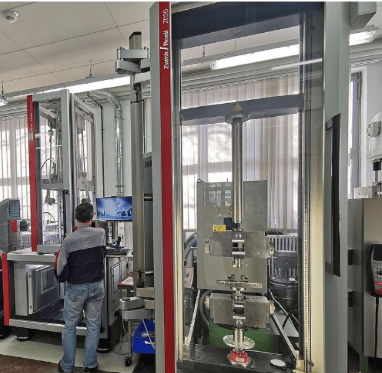
Scope of Mechanical Testing for Polymer Development
- Compares the mechanical properties of polymers.
- Assists in material selection and product design.
- Compares polymer formulations and additives.
- Supports QC and specification checks.
- Predicts the product behavior in service.
- Assists in research and development tasks.
- Recognizes failure modes.
Principle of Mechanical Testing
Mechanical testing applies known forces or deformations to a polymer specimen under controlled conditions in a lab. The testing equipment continuously measures the load, displacement, strain, or energy absorbed by the specimen during the application of the load to the specimen. These data are used to determine properties such as tensile strength, modulus, elongation, impact resistance, hardness, and fatigue life. These measured properties help engineers predict material performance under service conditions.
Essential Mechanical Tests for Polymer Development
| Test Method | Property Measured | Typical Standard |
| Tensile Testing | Tensile strength, modulus, yield strength, and elongation | ASTM D638 |
| Flexural Testing | Flexural strength and flexural modulus | ASTM D790 |
| Compression Testing | Compressive strength and modulus | ASTM D695 |
| Impact Testing | Impact resistance and toughness | ASTM D256, ASTM D6110 |
| Hardness Testing | Resistance to indentation | ASTM D2240 |
| Fatigue Testing | Resistance to cyclic loading | ASTM D7791 |
| Creep Testing | Time-dependent deformation under load | ASTM D2990 |
| Fracture Toughness Testing | Resistance to crack propagation | ASTM D5045 |
Test Procedure Overview
| Material Preparation | Mold, machine, or prepare representative polymer specimens. |
| Conditioning | Condition specimens under specified temperature and humidity conditions. |
| Instrument Setup | Configure the testing equipment according to the applicable standard. |
| Testing | Apply the required load, deformation, or impact under controlled conditions. |
| Data Collection | Record load, displacement, strain, or absorbed energy. |
| Result Analysis | Calculate mechanical properties and compare them with specifications. |
Significance
Polymer mechanical testing yields critical information for designing reliable polymer products. The results help engineers optimize formulations, evaluate reinforcement materials, and assess the effects of additives, fillers, and processing conditions. The testing also allows manufacturers to set quality control limits, ensure products meet customer specifications, and help predict product performance during service. Identifying mechanical weaknesses early reduces development time and lowers the risk of field failures.
Applications
- Supports the development of new thermoplastic and thermoset materials.
- Evaluates reinforced and filled polymer composites.
- Supports automotive lightweight programs.
- Evaluates polymers for aerospace applications.
- Verifies the mechanical performance of medical devices.
- Assesses packaging materials and consumer products.
- Assists in failure investigation and product enhancement initiatives.
- Supports research and development of advanced polymer systems.