
By Malhar Khole | Last updated 8th June 2026

ASTM G154 Standard Practice for Operating Fluorescent Ultraviolet (UV) Lamp Apparatus for Exposure of Materials

ASTM G154 defines procedures to run a fluorescent ultraviolet (UV) lamp apparatus to expose materials in a controlled environment of UV, moisture, and heat. This practice determines the weathering resistance of plastics, coatings, inks, sealants, and other nonmetallic materials used in industries. It is based on fluorescent UV lamps, controlled condensation, and temperature exposure cycles to accelerate environmental aging. The test report provides information on exposure conditions, lamp type, lamp irradiance, temperature parameters, and changes in material properties. The results are expressed in material-specific terms as set out in the applicable evaluation standard and are used to aid manufacturers in forecasting the long-term outdoor durability and product performance.

Read More

GET STARTED

    Share your requirements *

    Provide your contact information *

    ASTM G154 Introduction

    ASTM G154 (Standard Practice for Operating Fluorescent Ultraviolet (UV) Lamp Apparatus for Exposure of Materials) establishes standards for operating fluorescent ultraviolet lamp weathering equipment to assess the durability of nonmetallic materials. The practice mimics the detrimental effects of UV radiation, moisture, and heat that materials may be subjected to during service life. ASTM G154 is used for pre-commercial testing of coatings, plastics, adhesives, sealants, textiles, and other materials. Moreover, the practice helps compare material performance, support product development, and verify the quality requirements. ASTM G154 does not specify pass-or-fail criteria for itself. Instead, it is based on material-specific ASTM standards, which specify exposure conditions and property evaluations. Thus, it is an important method for accelerated weathering and durability tests.

    Get Certified ASTM G154 Testing for Reliable Weathering Performance

    Outdoor exposure can lead to fading, cracking, chalking, discoloration, and loss of mechanical properties. Hence, manufacturers must have reliable weathering data prior to production for use in service. This practice simulates environmental exposure tests in a controlled lab setting and helps identify potential durability issues early in the process. Accurate testing also assists in material selection, product development, and quality assurance programs.

    Service NameRemarks
    ASTM G154 Testing
    Contact US

    Testing Procedure and Requirements

    ASTM G154 is a method for exposing specimens to fluorescent UV radiation in a controlled environment. The machine is designed to simulate key weathering effects observed in the field through the combined effects of UV light, moisture, and heat. The exposure conditions depend on the material-specific standard followed. As a result, the test reports should record all operating parameters during the exposure.

    Other ASTM documents mentioned in this practice include ASTM D3980, E691, G53, G113, and G151.

    Exposure EnvironmentThe apparatus exposed specimens to controlled cycles of UV radiation, moisture, and heat to accelerate weathering effects
    Moisture CycleThe system typically generated moisture through condensing humidity to simulate dew formation on material surfaces.
    Control SpecimensThe practice recommends exposing materials with known good and poor durability for comparison purposes.
    Replicate SamplesAt least three replicates of each material are recommended to support statistical evaluation of results.
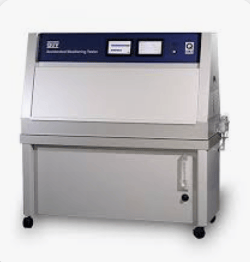
    The image shows a fluorescent Ultraviolet (UV) lamp apparatus that reproduces the weathering effects that occur when materials are exposed to sunlight, as discussed in ASTM G154.
    ASTM G154 Fluorescent Ultraviolet (UV) Lamp Apparatus

    Scope of ASTM G154 Test Standard

    • Tests nonmetallic materials that are subjected to ultraviolet radiation, water, and temperature.
    • Reproduces the effects of weathering from direct light and light through window glass.
    • Provides procedures for obtaining, measuring, and controlling exposure conditions.
    • Covers exposure using fluorescent UV lamp light sources under controlled environments.
    • Meets material-specific ASTM standards for changes in properties following exposure.
    • Does not apply to corrosion testing of bare metallic materials.

    Equipment and Sample Preparation

    Fluorescent UV Weathering ApparatusGenerates controlled ultraviolet radiation while maintaining specified moisture and temperature conditions throughout exposure.
    Fluorescent UV LampsDifferent lamp types provide specific ultraviolet wavelength distributions required for weathering studies.
    Condensation Moisture SystemThe system produces controlled condensing humidity that simulates dew and moisture exposure conditions.
    Sample and Specimen DetailsThe practice is suitable for nonmetallic materials such as plastics, coatings, sealants, adhesives, inks, textiles, and similar products evaluated for weathering resistance.
    Specimen DimensionsASTM G154 does not specify universal specimen dimensions. Material-specific ASTM standards define specimen size and geometry requirements.
    Specimen PreparationMaterial-specific ASTM methods govern specimen preparation, conditioning, mounting, and property evaluation before exposure.

    Use of ASTM G154 

    • Tests the durability of coatings under weather conditions in the construction and infrastructure sectors.
    • Evaluates the durability of plastics in motor vehicles and consumer products.
    • Supports the development of outdoor sealants, adhesives, and protective materials.
    • Compares the performance of new formulations with established products.
    • Accelerated durability data for quality control and research program.

    Why Does ASTM G154 Use UV Light, Moisture, and Heat Together?

    Sunlight is generally not the only cause of outdoor degradation. However, the damage to materials results from a combination of three factors: ultraviolet radiation, moisture, and temperature. So ASTM G154 takes all these environmental factors and puts them in a controlled chamber. This introduces accelerated aging effects, enabling better prediction of long-term field performance than single-factor aging.

    Why Are Control Specimens Important in ASTM G154 Testing?

    Control specimens are used as a reference for testing the weathering performance. Thus, labs can compare the durability of unknown materials with that of products with established durability properties. The practice suggests using both a high-durability and a low-durability control material. This comparison enhances confidence in the generated exposure data.

    Common Challenges and Troubleshooting 

    Laboratories may experience difficulties when comparing test results generated by various weathering equipment. Therefore, direct comparisons might be unreliable if there is no guarantee of reproducibility for the tested material. In addition, exposure conditions can vary across apparatus models. If operating parameters are not properly documented, the data may be of little use. To overcome these problems, laboratories should record all exposure settings used, use recommended control specimens, and verify correlation before comparing results across different devices.

    ASTM G154 Testing Technique, Process, and Data Collection

    The testing process started with the preparation of specimens in accordance with the applicable material standard. Then, the technicians install the samples in the fluorescent UV weathering chamber. The equipment then subjects samples to a series of cycles of UV, moisture, and heat. Operating parameters and exposure conditions are monitored during testing. Lastly, they assess changes in material properties in accordance with the requirements defined in the appropriate ASTM evaluation method.

    Analysis Results and Interpretation

    ASTM G154 uses SI units as the standard measurement system. The practice, however, does not specify a reporting unit since the evaluation of the property is material-dependent. The reports include exposure time, lamp type, irradiance conditions, temperature conditions, moisture conditions, and changes in the measured property. These results are then compared with performance requirements to assess the weathering resistance and service life of the engineered products.

    Factors to Consider For the ASTM G154 Testing

    • Speed: Weathering data is accelerated under UV exposure compared to natural outdoor conditions. Thus, manufacturers can assess product durability within realistic development schedules.
    • Expertise: Highly trained technicians provide for the correct use of apparatus, exposure, specimen handling, and result interpretation. As a result, the accuracy and repeatability of the tests increase greatly.
    • Cost: Accelerated weathering studies help to prevent development problems and avoid costly in-field failures. Thus, testing often has long-term value even though lab test costs may be high initially.

    Link to ASTM G154

    FAQ's

    Where can I get the astm g154 tested?

    You can share your astm g154 testing requirements with MaTestLab. MaTestLab has a vast network of material testing laboratories, spread across the USA and Canada. We support your all material testing needs ranging from specific astm g154 test to various testing techniques.

    How much do I need to pay for the astm g154 test?

    Please contact us for a detailed quote for your astm g154 testing needs. Cost incurred to carry out different astm g154 testing methodology depends on the type of raw material; number of samples, coupons, or specimens; test conditions, turn around time etc. Costs of some ASTM testing methods start from $100 and the final value depends upon the factors listed above. Please contact us for the best and latest prices.

    How many samples are required for astm g154?

    The required number of samples or specimens should comply with the procedure given in the astm g154 standard. However, the MaTestLab operations team can assist you for your special requirements once you share your testing details with us.

    How much discount can I get on the astm g154 test?

    MaTestLab has a vast testing laboratory network, hence we bring you the best testing facilities in a cost-effective way. We offer considerable discounts (15-20%) to our returning customers based on test volume and frequency.

    How many days will it take to complete the astm g154 test?

    The turnaround time for astm g154 test methodology depends upon the test procedure mentioned in the standard test document. However, we at MaTestLab understand your research requirements and hence try to get your test completed within the least possible time.

    Where can I get the astm g154 tested?

    You can share your astm g154 testing requirements with MaTestLab. MaTestLab has a vast network of material testing laboratories, spread across the USA and Canada. We support your all material testing needs ranging from specific astm g154 test to various testing techniques.

    POPULAR TESTS
    ONE-STOP FOR ALL
    MATERIAL TESTING NEEDS
    MaTestLab Inc. offers accessible, quick, and affordable material testing, product testing, and failure analysis services. We support your on-demand testing and expert consultation needs with the help of our extensive network of material testing laboratories situated in the US and other parts of the world.
    MATERIAL TESTING
    We offer destructive and non-destructive tests over a range of mechanical, electrical, chemical, thermal, optical, corrosion, radiation, and biological testing methodologies defined by ASTM, ISO and other organizations.
    PRODUCT TESTING
    We help you evaluate and ensure your product quality and performance with standard and custom-made testing solutions. All the tests are done at well-equipped testing laboratories using standard testing methods for best output and satisfaction.
    FAILURE ANALYSIS
    Failure analysis ensures high levels of quality in every manufacturing process. We help you with getting the best failure or root cause analysis to determine the cause of the failure. The results help you identify means to prevent failure recurrences.
    Process for testing
    • STEP 01

      You share your testing requirements

    • STEP 02

      You share your sample(s)

    • STEP 03

      We deliver your test reports

    Get your testing done

    Let us known your testing requirements and we will be right back with a solution.

      Let us root for each other. Collaborate to grow, expand, and accelerate our businesses.

      Partner with us

        close

        Please share your requirement with us

          ×

          Contact Us

          Discover more from MaTestLab

          Subscribe now to keep reading and get access to the full archive.

          Continue reading