

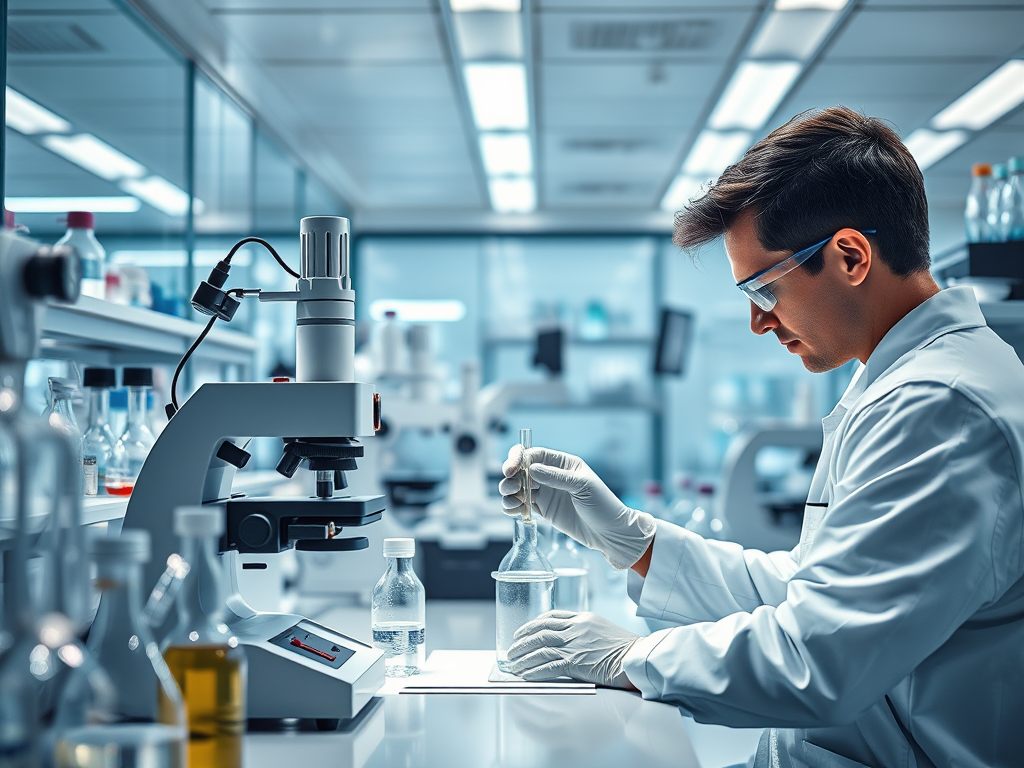
Introduction
Chemical analysis is the bedrock of contemporary science, driving industries from pharmaceuticals to agriculture. Chemical analysis includes qualitative and quantitative analyses of substances to confirm they adhere to predetermined requirements. Good chemical analysis services are key to product design, quality assessment, and compliance approval. These services allow producers to stay consistent, scientists to verify results, and regulatory authorities to maintain safety measures. As analytical methods evolve constantly, chemical analysis has improved both in accuracy and efficiency, enhancing scientific development and industrial advancement.
Principle and Methodology
Chemical analysis is the process of detecting, identifying, and measuring chemical constituents in accordance with standardized methods. Sample preparation, extraction, separation, detection, and interpretation of data are the steps involved in the process. Methods such as spectroscopy, chromatography, and mass spectrometry are employed to examine different substances ranging from organic compounds to trace elements in environmental samples. The selection of an analytical method relies on the chemical nature of the analyte, accuracy, detection limits, and regulatory requirements. HPLC is widely employed in pharmaceutical analysis because of its accuracy and reproducibility, whereas ICP-MS is utilized for the detection of trace metals in environmental samples.
Instrumentation
Chemical analysis services depend on sophisticated equipment such as spectrophotometers, chromatographs, and mass spectrometers for precision, sensitivity, and speed. Spectroscopic methods such as UV-Vis, IR, and NMR give molecular structure information. Chromatographic methods such as GC and LC separate and quantify complex mixtures. Mass spectrometry is usually coupled with chromatography to identify compounds according to their mass-to-charge ratio. Specialized methods such as X-ray fluorescence and AAS are employed for elemental analysis. Current analytical equipment provides high-throughput capacity, minimizing human mistakes and enhancing reproducibility.
Industries Utilizing Chemical Analysis Services
Chemical analysis services are crucial for product safety, regulatory compliance, and quality control in various industries. Pharmaceutical companies use these services for drug formulation, stability testing, and quality control. Food and beverage sectors use analytical techniques to detect contaminants and comply with regulations. Environmental monitoring agencies assess pollution levels and mitigate health risks. Petroleum and petrochemical industries use chemical analysis for refining processes and fuel quality assessment. Materials science and nanotechnology research also rely on chemical analysis for material characterization.
Benefits of Reliable Chemical Analysis Services
Chemical analytical services enhance the quality of the product and ensure safety, conformity to regulations, research and development, and environment monitoring. Chemical analysis services detect dangerous contaminants, safeguard consumer health, and utilize sophisticated instrumentation in precision, accuracy, and speed of chemical analyses.
Limitations of Chemical Analysis Services
Chemical analysis services are limited by high costs, complexity of sample preparation, and detection limits. Challenges are matrix effects, cross-contamination, and environmental issues. In spite of these, improvements in analytical techniques and instrumentation are making chemical analysis stronger and available.


