
Metals and Alloys Testing

Metals and alloys like cast iron, aluminium, steel, stainless steel and other alloys are mainstay of industrial manufacturing. Metals and alloys testing are of main three types i.e., chemical testing, mechanical testing and surface defect testing. However, other tests are also done per requirement and suitability.

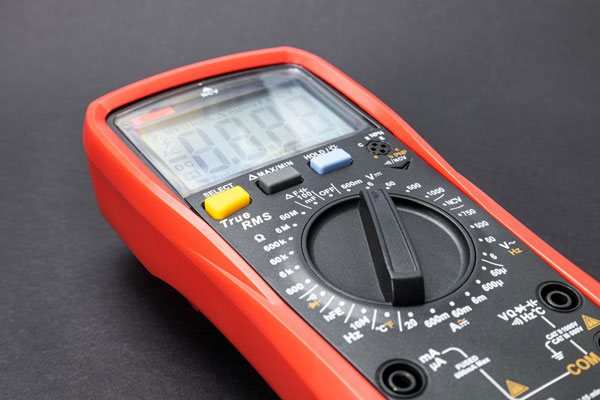
    Digital multimeter used for ASTM testing
    ASTM B107 Standard Specification for Magnesium-Alloy Extruded Bars, Rods, Profiles, Tubes, and Wire
    ASTM B107 is the governing specification that defines magnesium-alloy extruded products such as bars, rods, profiles, tubes, and…
    ASTM Methods
    ASTM B678 Standard Test Method for Solderability of Metallic-Coated Products
    ASTM B678 affords a standardized technique to assess the solderability of metallic-lined products, especially those used in electric…
    ASTM Methods
    ASTM B813 Standard Specification for Liquid and Paste Fluxes for Soldering Copper and Copper Alloy Tube
    ASTM B813 outlines the same old necessities for liquid and paste-type fluxes used within the soldering of copper…
    ASTM Methods
    ASTM B849 Standard Specification for Pre-Treatments of Iron or Steel for Reducing Risk of Hydrogen Embrittlement
    ASTM B849 provides guidelines for pre-remedies of iron or steel parts previous to electroplating, aiming to limit the…
    ASTM Methods
    ASTM B134 Standard Specification for Brass Wire
    Technical specifications for brass wire in various shapes, including round, square, rectangular, hexagonal, and octagonal, are set out…
    ASTM Methods
    ASTM B211 Standard Specification for Aluminum and Aluminum-Alloy Rolled or Cold Finished Bar, Rod, and Wire
    ASTM B211 lists the demands for aluminum and aluminum-alloy rolled or cold-finished bar, rod, and wire products. The…
    ASTM Methods
    ASTM B328 Standard Test Method for Density, Oil Content, and Interconnected Porosity of Sintered Metal Structural Parts and Oil-Impregnated Bearings
    ASTM B328 specification provides a reliable procedure for determining significant physical characteristics of sintered metal structural parts and…
    ASTM Methods
    ASTM B962 Standard Test Methods for Density of Compacted or Sintered Powder Metallurgy (PM) Products Using Archimedes’ Principle
    The ASTM B962 provides standardized procedures to determine the density of compact or sintered powder metal work (PM)…
    ASTM Methods
    ASTM B363 Standard Specification for Seamless and Welded Unalloyed Titanium and Titanium Alloy Welding Fittings
    ASTM B363 gives the standards for titanium and alloy products that are based on titanium. These are used…
    ASTM Methods
    ASTM C794 Standard Test Method for Adhesion-in-Peel of Elastomeric Joint Sealants
    ASTM C794 provides a standard method of testing the adhesion properties of elastomeric joint sealants under the influence…
    ASTM Methods
    ASTM D1143 Standard Test Methods for Deep Foundation Elements Under Static Axial Compressive Load
    The ASTM D1143 specifies methods for testing the performance of elements of deep foundation systems, such as driven…
    ASTM Methods
    ASTM D3161/D3161M Standard Test Method for Wind Resistance of Steep Slope Roofing Products (Fan-Induced Method)
    ASTM D3161/D3161M is a standardized procedure for evaluating steep-slope roofing products' wind resistance performance in controlled, simulated conditions.…
    ASTM Methods
    Load more

    Introduction to Metals and Alloys Testing

    The malleability, ductility, strength, and temperature performance of metals and alloys make them especially suitable for structural and load-bearing applications. Engineers and scientists are working to create metals, alloys, and composites that are strong, light, long-lasting, and corrosion-resistant. These ferrous and non-ferrous metals and alloys are tested for their mechanical properties, chemical composition and  metallographic properties. Other tests such as precision dimensional monitoring, nondestructive testing, fatigue testing, S-N curve, corrosion resistance testing, and environmental simulation tests are also done to ensure their quality and usability.

    Types of Metals and Alloys Testing

    Analysis of Chemical Composition-

    • Elemental analysis
    • Wet chemistry
    • Identification of alloys and materials

    Mechanical Testing and Evaluation-

    • Elevated temperature testing
    • Hardness testing
    • Impact testing (Charpy impact testing)
    • Tensile testing
    • Bend testing
    • Fracture toughness
    • Stress rupture testing
    • Fastener testing
    • Fatigue Crack Growth
    • High-Cycle Fatigue
    • Hydrogen Embrittlement
    • Weld testing

    Nondestructive Testing-

    • Eddy Current Testing
    • Radiographic Testing (X-ray inspection)
    • Magnetic Particle Inspection (MPI)
    • Ultrasonic Testing
    • Liquid Penetrant Testing (ECT)
    • Visual inspection

    Corrosion Resistance Analysis-

    • Intergranular Corrosion Testing (ASTM A262)
    • Corrosion Resistance Testing (ASTM G48)
    • Corrosion Testing (ASTM A923)
    • Salt Spray/Salt Fog testing (ASTM B117)
    • Humidity Testing
    • Passivation Testing
    • Testing for corrosion in crevices
    • Electrochemical and galvanic corrosion
    • Intergranular corrosion (IGC)
    • Pitting corrosion

    Metallurgical Testing-

    • Microscopic, macroscopic, and microhardness examination
    • Grain Size (ASTM E112)
    • Macro-etch (ASTM E340)
    • Grain Flow
    • Surface Condition
    • Microhardness (Knoop & Vickers)
    • Intergranular Attack & Oxidation
    • Alpha Case
    • Intergranular Corrosion (ASTM A262)
    • Sensitization
    • Nodularity/Nodule Count
    • Eutectic Melting
    • Surface Contamination
    • Case Depth
    • Profiles
    • Weld Qualification
    • Inclusion Rating (ASTM E45)
    • Plating Thickness
    • Carbide Precipitation
    • Ferrite by Point Count (ASTM E562)

    Spectroscopic Analysis-

    • Spectroscopy (ICP-AES, ICP-MS, AES)
    • Scanning Energy Dispersive Scanning/Electron Microscopy (SEM/EDS)
    • X-ray spectrometry
    • Infrared Fourier Transform Spectroscopy (FTIR)

    Failure Analysis-

    • SEM/EDS

    Metals and alloys testing evaluates the quality and performance levels of raw materials and product samples according to industry standards, specifications and customer requirements. All types of ferrous and nonferrous metals and alloys, including precious metals and powdered metals and products made with them need to be tested before they are declared suitable for industrial household usage.

    FAQ

    Where can I get metals and alloys testing testing done?
    You can share your metals and alloys testing testing requirements with Matestlab. Matestlab has a vast network of material testing laboratories, spread across the USA and Canada. We support your all material testing needs ranging from specific metals and alloys testing tests to various testing techniques.
    Please contact us for a detailed quote for your metals and alloys testing testing needs. Cost incurred to carry out different metals and alloys testing testing methodology depends on the type of raw material; number of samples, coupons, or specimens; test conditions, turn around time etc. Please contact us for the best and latest prices.
    The required number of samples or specimens should comply with the relevant standard's procedure. The Matestlab operations team can assist you for your special requirements once you share your testing details with us.
    Matestlab has a vast testing laboratory network, hence we bring you the best testing facilities in a cost-effective way. We offer considerable discounts (15-20%) to our returning customers based on test volume and frequency.
    Turnaround time depends on the specific test procedure required. However, we at Matestlab understand your research requirements and hence try to get your testing completed within the least possible time.
    Testimonials
    Real results
    Engineers trust us with what matters most
    Why Choose Matestlab?
    Matestlab is a unified testing services partner based in the USA. Matestlab offers raw material and product testing services through accredited, expert laboratories primarily based in the USA. Matestlab supports physical, thermal, chemical, electrical, mechanical, environmental, and characterization testing needs through its global network of 2200+ accredited testing laboratories. Matestlab's in-house materials science experts curate and design comprehensive testing programs matched to the sample material and specific testing need, with regulatory requirements and confidentiality in mind.

    If you are looking for a managed and trusted testing partner to achieve your research goals, feel free to schedule a meeting with us or send us a request at connect@matestlabs.com to learn more about our services. For a quick quote, call us at (302)244-7710. We are happy to serve you.
    Start Your Testing
    Project Today
    Define your requirements and get access to
    specialized laboratories ready to deliver results
    Partners with us
    Clients
    Vendors
    Process for testing
    • STEP 01

      You share your testing requirements

    • STEP 02

      You share your sample(s)

    • STEP 03

      We deliver your test reports

    Get your testing done

    Let us know your testing requirements and we will be right back with a solution.

      Let us root for each other. Collaborate to grow, expand, and accelerate our businesses.

      Partner with us