
ASTM E363 is a set of standard test methods for chemical analysis of chromium and ferrochromium. These test methods are used to analyze metals and alloys. They are used to test compliance with compositional specifications. The values reported are in SI units and are considered standard.
ASTM E363 Standard Test Methods for Chemical Analysis of Chromium and Ferrochromium
What is ASTM E363?
What is the Scope of ASTM E363?
The ASTM E363 standard method covers procedures for chemical analysis of chromium and ferrochromium to defined limits. The following analytical procedures are described:
| Procedures | Sections |
| Arsenic by the Molybdenum Blue Photometric Test Method (0.001% to 0.005%) | 10 to 20 |
| Lead by the Dithizone Photometric Test Method (0.001% to 0.05%) | 21 to 31 |
| Chromium by the Sodium Peroxide Fusion-Titrimetric Test Method (50.0% to 99.5%) | 32 to 38 |
ASTM E363 Testing Procedure and Requirements
The following test procedures are described in the standard:
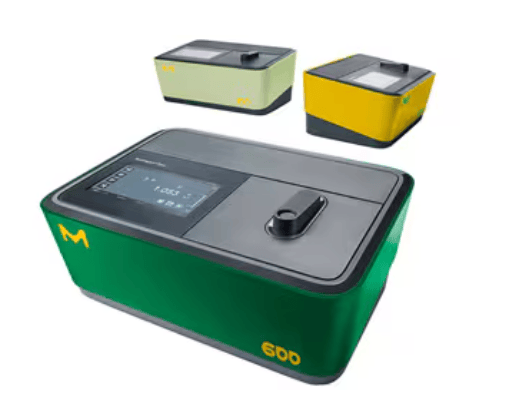
- Arsenic by the Molybdenum Blue Photometric Test Method: Arsenic is first separated by distillation as the trivalent chloride. Ammonium molybdate is added to form arsenomolybdate, which is then reduced by hydrazine sulfate to form the molybdenum blue complex. Photometric measurement is made at approximately 850 nm.
- Lead by the Dithizone Photometric Test Method: After the dissolution of the sample, lead is precipitated with ammonium hydroxide. Interfering metals are complexed with sodium citrate and sodium cyanide, and the lead dithizone complex is extracted with chloroform. Photometric measurement is made at 520 nm.
- Chromium by the Sodium Peroxide Fusion-Titrimetric Test Method: The sample is fused in sodium peroxide. After the dissolution of the melt in dilute sulfuric acid, chromium and manganese are oxidized by ammonium peroxydisulfate with silver nitrate as a catalyst. The permanganate ions are reduced with hydrochloric acid, and the chromate ions are reduced by adding an excess of standard ferrous ammonium sulfate salt. The excess ferrous ions are titrated with a standard potassium permanganate solution.
Samples weighing between 0.500 g and 1.000 g are used for the procedures.
ASTM E363 Results Analysis and Interpretation
Arsenic (%) = A/(B × 10)
Where,
A = milligrams of arsenic found in 50 mL of final test solution, B = grams of sample represented in 50 mL of final test solution.
Lead (%) = A/(B × 10)
Where,
A = lead found in 10 mL of the final test solution mg, and B = sample represented in 10 mL of the final test solution in grams.
Chromium (%) = {[(A × B) – C]/D} × 0.1734
Where,
A = millilitres of 0.1 N K2Cr2O7 solution equivalent to 1 g of ferrous ammonium sulfate, B = grams of ferrous ammonium sulfate used, C = millilitres of 0.1 N KMnO4 solution required to titrate the excess ferrous ammonium sulfate, and D = grams of sample used.
Updated on September 8, 2026

Testimonials
Real results
Engineers trust us with what matters most
“We had a great experience working with this company for our ASTM E84 testing. They were the first company to respond to our inquiry within just a few minutes of submitting it. From start to finish, the communication was excellent, and the entire process was swift, straightforward, and hassle-free.”

“Very good communication, testing associates were very patient with delays on our end. Reasonable turnaround time for results and nicely detailed report. Analysts were also quick to answer any follow-up questions. Happy with results.”
“Matestlab connected us with an accredited lab within days, cutting weeks off our product validation timeline.”
Start Your Testing
Project Today
Project Today
Define your requirements and get access to
specialized laboratories ready to deliver results
specialized laboratories ready to deliver results
Start Testing
Partners with us
Clients
Vendors