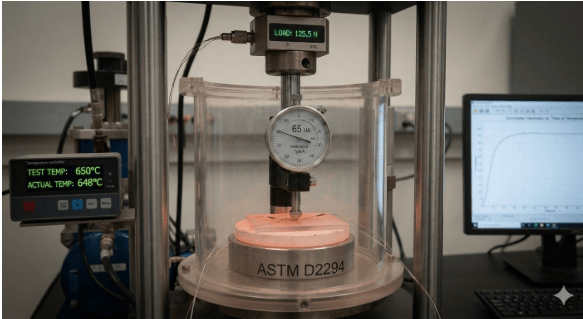
ASTM D2287 provides a classification system and basis for specifying nonrigid vinyl chloride polymer and copolymer molding and extrusion compounds. The compounds contain at least 90% vinyl chloride in the resin portion and include additives such as stabilizers, plasticizers, fillers, dyes, and pigments, as required. The standard classifies compounds based on selected property ranges and uses a cell-based system to determine the material. ASTM D2287 (Standard Classification System and Basis for Specification for Nonrigid Vinyl Chloride Polymer and Copolymer Molding and Extrusion Compounds) covers compounds recommended for compression molding, injection molding, and extrusion, although a particular compound may not suit every fabrication process. The classification system uses durometer hardness, specific gravity, tensile strength, volatile loss, brittleness temperature, burning rate, and volume resistance. Engineers use these properties to determine compounds, compare materials, and support inspection and quality control.
In molding and extrusion, nonrigid vinyl compounds must have uniform physical and performance properties. ASTM D2287 offers a systematic method for determining these compounds within the ranges of properties. Laboratories can assess hardness, specific gravity, tensile strength, volatile loss, brittleness temperature, burning rate, and volume resistance. Laboratories can use this data to identify materials and compare products for inspection, quality control, and compound development.