ASTM D1929 Standard Test Method for Determining Ignition Temperature of Plastics
What is ASTM D1929?
ASTM D1929 is a standard test method for determining the flash ignition temperature and spontaneous ignition temperature of plastics using a hot-air furnace. The method provides controlled measurements to compare the relative ignition characteristics of different plastic materials in laboratories. The values represent the lowest ambient air temperatures that cause ignition under the specified test conditions. ASTM D1929 (Standard Test Method for Determining Ignition Temperature of Plastics) provides laboratory guidance to help characterize how plastic materials respond to controlled heating and ignition conditions.
Get Certified ASTM D1929 Testing for Reliable Plastic Ignition Temperature Evaluation
Plastic materials react differently to high temperatures. ASTM D1929 is a standard laboratory procedure for measuring the ignition temperature of plastics under standard test conditions. Laboratories use ASTM D1929 to determine flash ignition temperature and spontaneous ignition temperature data. Engineers use these results to compare the ignition susceptibility of different plastics and evaluate materials, develop new products, perform quality control, or assess the fire performance of products.
What is the scope of ASTM D1929?
ASTM D1929 covers a flash ignition temperature and spontaneous ignition temperature test method for plastics using a hot-air furnace. The method assesses the heat response of plastics in a controlled environment and gives ignition-temperature data for comparison.
Objective: To determine the flash ignition temperature and spontaneous ignition temperature of plastics under controlled laboratory conditions.
Properties measured: Flash ignition temperature and spontaneous ignition temperature.
Method: Ignition temperature of plastic specimens exposed under controlled conditions in a hot-air furnace.
Test condition: The specimen is exposed to a controlled hot-air environment, and the furnace temperature is monitored according to the test method.
Measurement units: ASTM D1929 specifies SI units as the standard units.
Result: The laboratory reports the determined ignition temperatures and relevant test observations.
Purpose of results: The test values can help compare the relative ignition characteristics of different materials and rank materials according to their ignition susceptibility under the specified test conditions.
Limitation of tests: ASTM D1929 results do not provide a complete assessment of fire hazard or fire risk. Other factors like burning rate, flame spread, burning intensity, fuel contribution, and combustion products can also influence the behavior of a fire. The combustion process can generate gases or vapors that may be hazardous, so suitable precautions must be followed.
What are the uses of ASTM D1929 testing?
ASTM D1929 testing helps laboratories determine and compare the ignition properties of plastic materials under controlled heating conditions. This standard-
Determines the flash ignition temperature of plastics.
Determines the spontaneous ignition temperature of plastics.
Provides comparative data on the ignition susceptibility of different plastics.
Supports plastic material evaluation and product development.
Helps laboratories characterize the response of plastics to heat and flame.
Enables fire-performance and quality-control programs that fire temperature data is applicable to.
Gives the standard laboratory data to compare materials under the specified test conditions.
Which Materials Can Be Tested Under ASTM D1929?
ASTM D1929 is primarily used to analyze plastic materials in a hot-air furnace procedure. This method is used for determining the temperature conditions for flash ignition and spontaneous ignition in controlled laboratory conditions.
Why is ASTM D1929 important?
ASTM D1929 provides a standardized approach for comparing the ignition characteristics of plastics. Ignition temperature provides useful information for laboratories to evaluate how different plastic materials respond to elevated temperatures. Manufacturers, engineers, researchers, and testing laboratories can use these results as part of broader material and fire-performance testing.
ASTM D1929 Equipment and Sample Preparation Guide
ASTM D1929 requires a suitable hot-air furnace and associated temperature-measurement and observation equipment for determining the ignition temperatures of plastics. Laboratories should prepare specimens and operate the test equipment according to the applicable ASTM procedure.
Laboratories use representative plastic specimens suitable for evaluation in the specified hot-air furnace procedure.
Specimen Preparation
Technicians prepare the plastic specimen according to the applicable test procedure and ensure that the specimen is suitable for controlled exposure in the furnace.
Specimen Dimensions
Specimen dimensions and preparation requirements should follow the applicable ASTM D1929 procedure and the configuration of the test apparatus.
Instrumentation
Hot-air furnace, temperature-measurement equipment, specimen-support equipment, ignition/observation equipment, timing equipment, and appropriate safety and ventilation systems.
ASTM D1929 Testing Procedure and Requirements
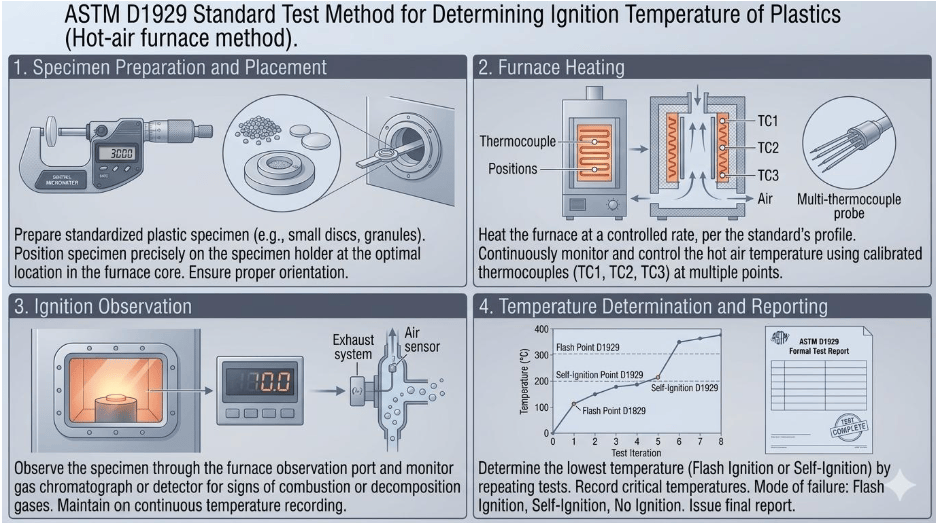
ASTM D1929 uses controlled heating in a hot-air furnace to determine the ignition temperatures of plastic materials. Technicians use an object and condition the furnace, place the object in the heated air, and observe the object for the specified ignition response. Other reference ASTM documents include D618 and E170. The complete testing procedure for ASTM A931 is given as:
Technicians prepare and position the plastic specimen according to the requirements of the test procedure and furnace arrangement.
Furnace Heating
The laboratory exposes the specimen to controlled hot-air heating while monitoring the furnace temperature.
Ignition Observation
Technicians observe the specimen during heating and identify the specified ignition response required for determining the applicable ignition temperature.
Temperature Determination
Analysts determine the temperature associated with flash ignition or spontaneous ignition according to the applicable procedure.
Result Reporting
Laboratories record the specimen identification, test conditions, determined ignition temperatures, observations, and other required information.
ASTM D1929 Testing Process and Data Collection
Technicians first identify and prepare the plastic specimen for testing. They place the specimen in the hot-air furnace and set the test conditions. The specimen is heated in the lab under controlled conditions, and the material is monitored for the desired ignition response. Technicians record the relevant temperature and observations during the test. Analysts determine the flash ignition temperature or spontaneous ignition temperature, depending on the test being conducted. The laboratory then documents the results and compares the ignition characteristics of the tested material with those of other materials when appropriate.
ASTM D1929 Testing Procedure Using Hot-Air Furnace
ASTM D1929 Common Challenges and Troubleshooting
Reliable ASTM D1929 results depend on proper specimen preparation, furnace operation, temperature measurement, observation of ignition, and controlled test conditions. Common challenges include specimen placement, measurement error, unstable furnace temperature, difficult identification of the required ignition response, contamination of the specimen or equipment, and inadequate ventilation. Technicians should check the furnace and temperature-measuring system prior to testing, ensure proper test conditions, collect representative samples, and record observations accurately. Laboratories should also establish appropriate safety measures because combustion generates potentially hazardous gases or vapors.
ASTM D1929 Analysis Results and Interpretation
The report summarizes the ignition characteristics of plastics by determining the flash ignition temperature and spontaneous ignition temperature under controlled hot-air furnace conditions. The results provide comparative values for ignition susceptibility and support evaluation of the relative ignition behavior of different plastic materials.
Laboratories report the flash ignition temperature and spontaneous ignition temperature in °C.
Technicians record the lowest ambient air temperature that produces flash ignition or spontaneous ignition under the specified test conditions and identify the corresponding ignition temperature for the tested plastic.
Analysts document the plastic identification, specimen condition, hot-air furnace configuration, test temperature conditions, ignition observations, and characteristics of the combustion response during testing.
Engineers compare ignition temperatures among plastic materials to rank their relative ignition susceptibility under the test conditions; they should not use the results alone to determine overall fire hazard because burning rate, flame spread, heat release, combustion products, and other factors also affect fire risk.
ASTM D1929 is used for plastics evaluation using the specified hot-air furnace procedure.
What equipment does ASTM D1929 use?
The technique uses a hot-air furnace and special equipment for measuring temperature, specimen support, observation, timing, and safety.
What is flash ignition temperature?
Flash ignition temperature is associated with ignition when the material produces combustible gases or vapors that ignite under the specified test conditions.
What is spontaneous ignition temperature?
It is the temperature to ignite material under the specified heated-air conditions when the ignition response is not started in the same way as the flash ignition determination.
Rohit Dhembare is an Operations Associate at Matestlab Inc., holds a postgraduate degree in Organic Chemistry and is trained in Materials Science testing techniques. Know More
Testimonials
Real results
Engineers trust us with what matters most
“We had a great experience working with this company for our ASTM E84 testing. They were the first company to respond to our inquiry within just a few minutes of submitting it. From start to finish, the communication was excellent, and the entire process was swift, straightforward, and hassle-free.”
Ivars FancyWalls
United States
“Very good communication, testing associates were very patient with delays on our end. Reasonable turnaround time for results and nicely detailed report. Analysts were also quick to answer any follow-up questions. Happy with results.”
Skye Henderson
United States
“Matestlab connected us with an accredited lab within days, cutting weeks off our product validation timeline.”
Rebecca Kozodoy-Pins
United States
Start Your Testing Project Today
Define your requirements and get access to specialized laboratories ready to deliver results