ASTM C1203 Quantitative Determination of Alkali Resistance of a Ceramic-Glass Enamel

    What is ASTM C1203?

    ASTM C1203 is a standard test method to determine the alkali chemical resistance of ceramic-glass enamel coatings. The test quantifies the amount of enamel removed or degraded after exposure to a specified alkaline solution for a defined period. Manufacturers use the test to compare enamel formulations, perform quality control, and support research and development to improve coating performance. The information obtained can enable engineers to choose an enamel coating to cope with high service loads or aggressive cleaning in industry.

    Read more

    Get Certified ASTM C1203 Testing for Reliable Ceramic-Glass Enamel Performance

    Ceramic-glass enamel coatings must resist alkaline environments to ensure durability and performance. ASTM C1203 (Standard Test Method for Quantitative Determination of Alkali Resistance of a Ceramic-Glass Enamel) testing ensures that enamel-coated products are chemically durable before they hit the market. Independent lab testing assists manufacturers in ensuring their products are of consistent quality, optimizing their coating formulations, and fulfilling customer and industry standards.

    What is the Scope of ASTM C1203?

    ASTM C1203 is the standard test to quantify the alkali resistance of ceramic-glass enamel coatings. The test is used as a comparison tool for manufacturers to evaluate coating formulations, product quality, and the chemical durability of enamel-coated products used in alkaline environments. This test-

    Read more

    • Quantitatively measures the alkali resistance of ceramic-glass enamel coatings. 
    • Measures the chemical resistance of porcelain enamel finishes. 
    • Compares the performance of different enamel formulations. 
    • Helps in the quality control of enamel production. 
    • Supports the selection of material for products under alkaline conditions. 
    • Standardizes product data to ensure specification compliance and support product development. 

    What are technical specifications?

    This method applies to ceramic-glass enamel coatings on steel, cast iron, and other metallic substrates specified in the standard. The measurement method includes weight-loss determination after alkali exposure. An analytical balance, chemical bath, laboratory glassware, and drying equipment are used.

    What are the uses of ASTM C1203 Testing?

    Manufacturers can use ASTM C1203 testing to help assess the alkaline chemical resistance of ceramic-glass enamel coatings before products go into service. The test is used for quality assurance, material development, and product certification to provide quantitative information on coating durability. ASTM C1203 testing method-

    • Tests the alkali resistance of ceramic-glass enamel coatings. 
    • Assists in quality control in the enamel production process. 
    • Relates the performance of various enamel formulations. 
    • Helps in the research and development of better enamel coatings. 
    • Ensures adherence to customer and industry specifications. 
    • Helps manufacturers choose ceramic-glass enamel coatings that are appropriate for alkaline and household service environments.

    What is Alkali Resistance in Ceramic-Glass Enamels?

    Alkali resistance is the resistance of ceramic-glass enamel coatings to dissolution in an alkaline chemical or cleaning solution. A ceramic-glass enamel coating with strong alkali resistance retains its appearance, surface integrity, and durability after extended exposure to alkaline solutions. 

    Why is ASTM C1203 testing important?

    Alkaline environments reduce the chemical durability of ceramic-glass enamel coatings if the coating lacks sufficient alkali resistance. ASTM C1203 specifies a general testing approach to determine alkali resistance, allowing manufacturers to apply the same test conditions in their lab.

    What Materials Can Be Tested According to ASTM C1203?

    ASTM C1203 applies to ceramic-glass enamel coatings applied to all types of metal products. The method is applicable to coatings intended for alkaline applications including porcelain enamel-coated steel, enamel-coated cast iron, household appliance panels, cookware and kitchen equipment, sanitary ware, chemical processing equipment, architectural enamel panels, and industrial enamel-coated components.

    How Does ASTM C1203 Measure Alkali Resistance?

    The alkali resistance test is used to determine the resistance of the enamel coating on a specimen in a specified alkaline solution in a controlled laboratory environment. The specimen is weighed before and after the exposure time has elapsed using a calibrated analytical balance. The difference between the two weights is the weight of enamel dissolved or degraded, which is a quantitative measure of the alkali resistance of the coating.

    Common Challenges and Troubleshooting

    Test accuracy can fail because of surface contamination, damaged coatings, inaccurate weighing, incorrect solution concentration, and temperature changes. Repeatability and reliable results are improved by regular calibration of the instruments, proper specimen preparation, controlled testing conditions, and careful handling.

    ASTM C1203 Testing Process and Data Collection

    Technicians start with representative samples of enamel-coated objects that are cleaned and weighed. They place the specimens in the specified alkaline solution in a controlled environment and expose them for the required time. The laboratory rinses, dries, and reweighs the specimens after exposure to measure coating weight loss. Lastly, the laboratory will determine the alkali resistance and create a comprehensive report of all observations and measurements conducted.

    ASTM C1203 Equipment and Sample Preparation Guide

    Accurate and reproducible test results require proper specimen preparation and calibrated laboratory equipment. Technicians prepare representative enamel-coated specimens, inspect the coated surfaces, and verify testing conditions before conducting the alkali resistance test.

    Read more

    Specimen DetailsCeramic-glass enamel-coated steel, cast iron, or other metal substrates with a uniform enamel coating.
    Specimen PreparationThe analyst cleans specimens thoroughly to remove grease, dirt, and contaminants without damaging the enamel surface. Then the analyst inspects specimens for cracks, chips, or coating defects before testing.
    Specimen ConfigurationFlat enamel-coated panels or product samples prepared according to the standard’s dimensional requirements.
    InstrumentationAnalytical balance, temperature-controlled water or chemical bath, laboratory glass beakers, alkali-resistant containers, drying oven, thermometer, specimen holders, deionized water supply, laboratory timer, and personal protective equipment (PPE).

    Testing Procedures and Requirements

    The ASTM C1203 test for alkali resistance involves placing enamel-coated samples in a controlled alkaline solution for a set amount of time. The laboratory determines coating loss by comparing specimen weights before and after testing. 

    Read more

    Referenced standards may include ASTM C282, ASTM C283, and ASTM E691, where applicable.

    Specimen CleaningClean off any dirt, grease, and contaminants before the test.
    Initial Weight MeasurementMeasure the weight of the specimen on the calibrated analytical balance.
    Alkali Solution ExposureSoak the specimen in the appropriate alkali solution, controlling temperature and duration.
    Rinsing and DryingClean and dry the specimen after the test without damaging the enamel surface.
    Final Weight MeasurementMeasure the specimen again after testing to determine the enamel weight loss.
    Result CalculationCalculate alkali resistance based on weight loss per unit area and report the test conditions.
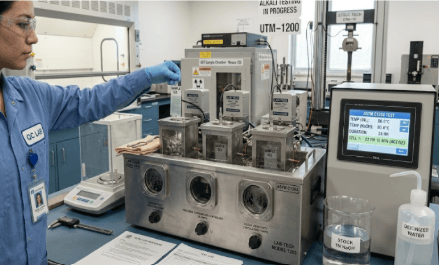
    The image shows laboratory equipment, including an analytical balance, chemical bath, and ceramic-glass enamel specimens used for ASTM C1203 alkali resistance testing.
    ASTM C1203 Temperature-Controlled Alkali Resistance Test Apparatus 

    Analysis Results and Interpretation

    • The laboratory reports alkali resistance as weight loss per unit area (mg/cm²) or as specified by ASTM C1203.
    • Lower weight loss indicates better resistance to alkaline chemical attack. 
    • Higher weight loss suggests reduced chemical durability and possible coating deterioration. 
    • Results help compare different enamel formulations and manufacturing processes. 
    • Engineers use the data to evaluate product quality and select suitable coatings for alkaline service environments. 

    Link to ASTM C120

    Read more

    FAQ

    Where can I get the astm c1203 tested?
    You can share your astm c1203 testing requirements with MaTestLab. MaTestLab has a vast network of material testing laboratories, spread across the USA and Canada. We support your all material testing needs ranging from specific astm c1203 test to various testing techniques.
    Please contact us for a detailed quote for your astm c1203 testing needs. Cost incurred to carry out different astm c1203 testing methodology depends on the type of raw material; number of samples, coupons, or specimens; test conditions, turn around time etc. Costs of some ASTM testing methods start from $100 and the final value depends upon the factors listed above. Please contact us for the best and latest prices.
    The required number of samples or specimens should comply with the procedure given in the astm c1203 standard. However, the MaTestLab operations team can assist you for your special requirements once you share your testing details with us.
    MaTestLab has a vast testing laboratory network, hence we bring you the best testing facilities in a cost-effective way. We offer considerable discounts (15-20%) to our returning customers based on test volume and frequency.
    The turnaround time for astm c1203 test methodology depends upon the test procedure mentioned in the standard test document. However, we at MaTestLab understand your research requirements and hence try to get your test completed within the least possible time.
    Dr Ruchika Yogesh
    About Author
    Dr Ruchika Yogesh
    Dr. Ruchika Yogesh is an entrepreneur, science and AI/ML enthusiast, medicinal chemistry subject matter expert (SME), scientific/medical copyeditor, and an independent researcher.
    Testimonials
    Real results
    Engineers trust us with what matters most
    Start Your Testing
    Project Today
    Define your requirements and get access to
    specialized laboratories ready to deliver results
    Partners with us
    Clients
    Vendors
    Process for testing
    • STEP 01

      You share your testing requirements

    • STEP 02

      You share your sample(s)

    • STEP 03

      We deliver your test reports

    Get your testing done

    Let us known your testing requirements and we will be right back with a solution.

      Let us root for each other. Collaborate to grow, expand, and accelerate our businesses.

      Partner with us

        Contact Us

        Discover more from MaTestLab

        Subscribe now to keep reading and get access to the full archive.

        Continue reading