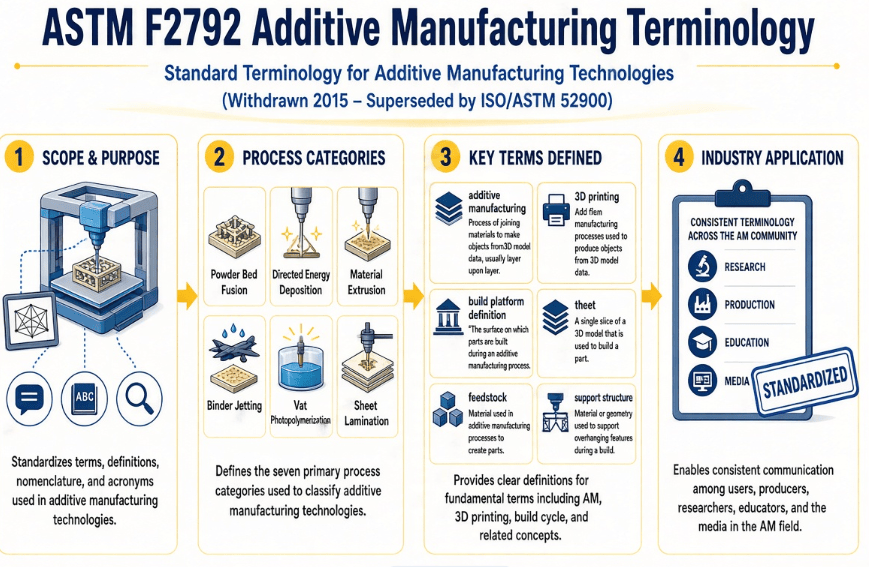
ASTM F2792 is a standard method to determine the static and kinetic coefficients of friction of ceramic tile and similar surfaces using the horizontal dynamometer pull-meter method. The slip resistance and safety characteristics are assessed, and the surface properties and frictional behavior of 3D-printed components are enhanced. The results are crucial for various lab settings and are used to enhance various industrial applications.
Read More
GET STARTED
ASTM F2792 Introduction
ASTM F2792 is an important test method to determine the surface quality and functional properties of 3D-printed parts across various industries, such as aerospace, automotive, healthcare, and consumer goods. Additive manufacturing, also known as 3D printing, is emerging as a transformative technology with a growing need for optimizing the performance and safety of additive-manufactured components. ASTM F2792 is used for reliability checks, performance evaluation, and specification purposes.
ASTM F2792 Test Method
The method proceeds as follows:
Service Name
Remarks
ASTM F2792 Testing
Contact US
Friction Measurements
The ASTM F2792 method involves setting up the horizontal dynamometer pull-meter and placing the 3D-printed specimens on the test surface. The maximum pulling force and the steady-state frictional force are recorded.
Data Analysis
The process is repeated to validate the friction values, and the measured coefficients of friction are compared against relevant standards to assess the suitability of the additive manufactured components for their intended applications.
F2792 Equipment and Sample Preparation
Specimen Details
The ASTM F2792 specimens used are ceramic tiles and other similar surfaces.
Specimen dimensions
The acceptable specimen size varies with the testing requirements.
Specimen Preparation
The ASTM F2792 specimens are subjected to standard additive manufacturing techniques to process 3D-printed specimens.
F2792 Results and Interpretation
The results obtained from the ASTM F2792 test method help use additive manufacturing technologies to quantitatively measure the static and kinetic coefficients of friction for ceramic tile and similar surfaces. The findings aid in quality control, performance evaluation, and research.
Tests Related to ASTM F2792
ASTM F2792 is similar to other standard methods, such as ASTM F2709, used for determining the static and kinetic coefficients of friction of plastic film and sheeting.
Use of F2792 in Various Industries
It is used in aerospace, automotive, healthcare, and consumer goods industries for lightweight components and precise fabrication of implants and prosthetics. This will help promote cross-industry collaboration and deploy additive manufacturing technologies.
Materials Commonly Tested with F2792
This standard is used to evaluate different materials, such as polymers, metals, ceramics, and composites, for specific requirements of additive manufacturing processes in aerospace, medical, biomedical, and automotive applications.
Common Challenges and Troubleshooting in F2792 Testing
Challenges of testing include material properties inconsistencies, equipment calibration, and process repeatability. Troubleshooting optimizes build parameters, verifies powder quality, and adheres to machine maintenance protocols to ensure the reliability and reproducibility of AM technologies.
Safety and Best Practices in F2792 Testing
Testing safety involves safe handling of powders by following guidelines for minimizing the amount of dust generation, ventilation, and so on. Best practices include training equipment, regular calibration, and other protective gear to ensure a safe testing environment.
Importance of F2792
This standard is an important benchmarking requirement in standardizing additive manufacturing technologies and promoting adoption globally and assuring the quality. Through a unified framework, it allows collaboration, innovation, and trust in the AM technologies; hence, further propels its advancement into many sectors.
Related
FAQ's
Where can I get the astm f2792 tested?
You can share your astm f2792 testing requirements with MaTestLab. MaTestLab has a vast network of material testing laboratories, spread across the USA and Canada. We support your all material testing needs ranging from specific astm f2792 test to various testing techniques.
How much do I need to pay for the astm f2792 test?
Please contact us for a detailed quote for your astm f2792 testing needs. Cost incurred to carry out different astm f2792 testing methodology depends on the type of raw material; number of samples, coupons, or specimens; test conditions, turn around time etc. Costs of some ASTM testing methods start from $100 and the final value depends upon the factors listed above. Please contact us for the best and latest prices.
How many samples are required for astm f2792?
The required number of samples or specimens should comply with the procedure given in the astm f2792 standard. However, the MaTestLab operations team can assist you for your special requirements once you share your testing details with us.
How much discount can I get on the astm f2792 test?
MaTestLab has a vast testing laboratory network, hence we bring you the best testing facilities in a cost-effective way. We offer considerable discounts (15-20%) to our returning customers based on test volume and frequency.
How many days will it take to complete the astm f2792 test?
The turnaround time for astm f2792 test methodology depends upon the test procedure mentioned in the standard test document. However, we at MaTestLab understand your research requirements and hence try to get your test completed within the least possible time.
Where can I get the astm f2792 tested?
You can share your astm f2792 testing requirements with MaTestLab. MaTestLab has a vast network of material testing laboratories, spread across the USA and Canada. We support your all material testing needs ranging from specific astm f2792 test to various testing techniques.
MaTestLab Inc. offers accessible, quick, and affordable material testing, product testing, and failure analysis services. We support your on-demand testing and expert consultation needs with the help of our extensive network of material testing laboratories situated in the US and other parts of the world.
MATERIAL TESTING
We offer destructive and non-destructive tests over a range of mechanical, electrical, chemical, thermal, optical, corrosion, radiation, and biological testing methodologies defined by ASTM, ISO and other organizations.
PRODUCT TESTING
We help you evaluate and ensure your product quality and performance with standard and custom-made testing solutions. All the tests are done at well-equipped testing laboratories using standard testing methods for best output and satisfaction.
FAILURE ANALYSIS
Failure analysis ensures high levels of quality in every manufacturing process. We help you with getting the best failure or root cause analysis to determine the cause of the failure. The results help you identify means to prevent failure recurrences.