ASTM E69 Standard Test Method for Combustible Properties of Treated Wood by the Fire-Tube Apparatus
What is ASTM E69?
ASTM E69 is a standard test method for evaluating the combustible properties of wood treated to reduce flammability. It uses a fire-tube device to burn treated wood samples and assess their relative combustibility. The most important measurement is the percentage weight loss after exposure. Additional observations may include the rate of weight loss, duration of flaming and afterglow, temperature increase, and maximum vertical flame progress. Engineers use ASTM E69 (Standard Test Method for Combustible Properties of Treated Wood by the Fire-Tube Apparatus) to assess fire-retardant treatment formulations, compare treated wood products, and perform quality control during manufacturing.
Get Certified ASTM E69 Testing for Reliable Fire-Retardant Treated Wood Evaluation
ASTM E69 is a test for the combustible properties of fire-retardant-treated wood based on a controlled exposure procedure in a firetube. Technicians make representative samples and observe how they react to heat and flame, and analysts measure weight loss and record other combustion properties. The results provide a comparative assessment of fire-retardant chemicals, treatment formulations, and manufacturing consistency.
What Is the Scope of ASTM E69?
ASTM E69 is the applicable standard for fire-tube testing used to determine the combustibility of wood treated to resist combustion. It evaluates the treated wood itself, instead of the fire resistance of a full building component or construction assembly.
Fire-retardant-treated wood: Assessment of wood products treated with chemicals to decrease flammability.
Combustibility measurement: To determine the relative combustibility by percentage weight loss of the specimen under controlled burn exposure.
Flaming and afterglowing: Observation of the duration of flaming and afterglowing during and following exposure.
Weight-loss behavior: Assessment of the rate and extent of specimen weight loss.
Temperature response: Measurement of temperature increase during the prescribed test.
Flame progression: Maximum upward flame spread under the given test conditions.
Treatment quality control: Sampling and preparation of treated material lots and treatment charges at manufacturing facilities to assess treatment quality.
What Are the Uses of ASTM E69 Testing?
ASTM E69 testing helps wood-treatment manufacturers, product developers, and quality-control laboratories assess the effectiveness and consistency of fire-retardant treatments. This standard:
Evaluates the relative combustibility of fire-retardant-treated wood specimens.
Compares the effectiveness of different fire-retardant chemicals and treatment formulations.
Supports quality-control testing during the manufacture and treatment of wood products.
Helps assess treatment consistency within a lot of treated wood.
Supports sampling and evaluation of treatment charges at wood-preservation facilities.
Provides comparative data for research, development, and improvement of fire-retardant treatment processes.
Assists in recording weight loss, flaming, afterglowing, and other combustion properties in a controlled laboratory environment.
Which Materials Can Be Tested Under ASTM E69?
ASTM E69 covers the reduction of flammability in wood through chemical processes. It is used for specimens of wood treated from representative materials, including materials requiring complete treatment penetration. The method can also be used at a treating plant to sample treatment charges for process quality control.
Why Is ASTM E69 Important?
Fire-retardant treatment is used to reduce the combustible response of wood products, but treatment effectiveness and consistency need to be evaluated under controlled conditions. ASTM E69 specifies a comparative fire-tube method for determining weight loss and other combustion properties.
ASTM E69 Equipment and Sample Preparation Guide
ASTM E69 requires representative treated wood specimens, a fire-tube apparatus, and instruments for measuring weight, temperature, gas flow, and test duration. Technicians must adhere to the sampling and specimen preparation specifications provided for the treatment, especially if full penetration is needed.
Analysts identify the wood species or product, treatment formulation, treating process, production lot or charge, and relevant treatment information. Samples should represent the treated material being evaluated.
Sample preparation
Skilled personnel select and prepare specimens according to the standard’s sampling requirements. For lots where complete penetration is required, specimen sampling and preparation should account for the treatment penetration requirement.
Specimen dimensions
The standard specimen dimensions for ASTM E69 (Fire-Tube Test) are 9.5 mm × 19 mm × 1016 mm (⅜ in. × ¾ in. × 40 in.).
Instruments
The apparatus includes a fire tube and associated combustion setup, gas-flow measurement equipment, temperature-indicating apparatus such as a thermometer or thermocouple, a timer, and a balance.
Testing Procedures and Requirements for ASTM E69
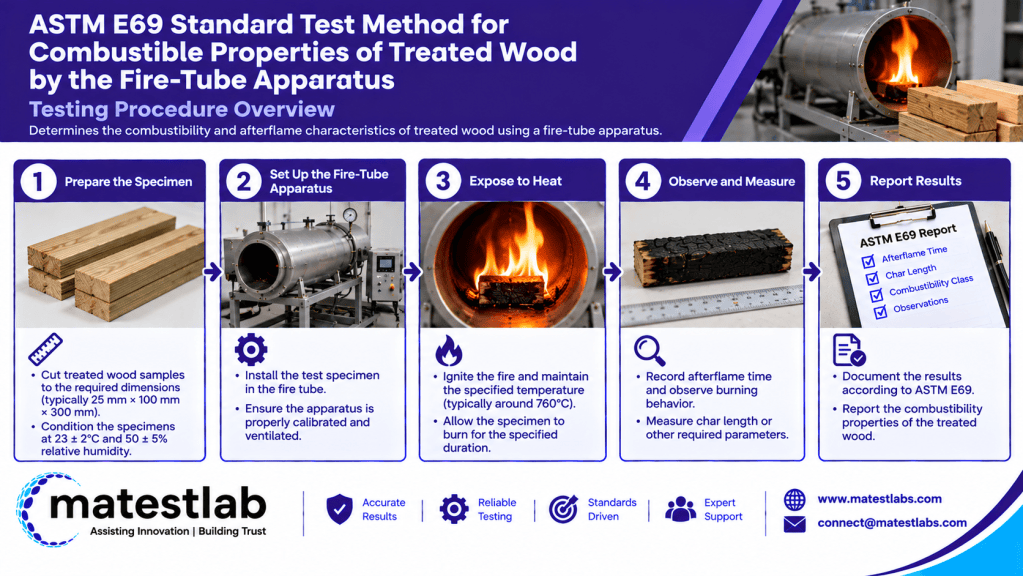
ASTM E69 evaluates the combustible response of treated wood through controlled fire-tube exposure. Technicians should prepare the specimens, set up the apparatus, set the exposure parameters, and measure the combustion properties required according to the standard. Other reference ASTM documents include D9 and E176. The complete procedure for ASTM E69 is given as:
Technicians select representative treated wood specimens and prepare them according to the standard’s sampling and specimen requirements.
Apparatus preparation
Skilled personnel assemble and inspect the fire-tube apparatus and verify the gas-flow, temperature-measurement, timing, and weighing equipment before testing.
Initial specimen measurements
Technicians measure and record the specimen’s initial weight and relevant identification details before fire exposure.
Controlled fire exposure
Skilled personnel expose the specimen to the prescribed fire-tube conditions and monitor the test duration, temperature response, flaming, afterglow, and other relevant observations.
Post-exposure measurements and reporting
Analysts determine specimen weight loss and calculate the percentage loss in weight. Additional results, including weight-loss rate and flame-related observations, are recorded when measured under the method.
ASTM E69 Testing Process and Data Collection
The ASTM E69 testing process starts with selecting treated wood specimens from the material lot or treatment charge being tested. Technicians document wood and treatment information and prepare specimens according to the standard. The fire-tube apparatus and measurement instruments are tested prior to exposure. The initial specimen weight is recorded by skilled personnel along with the prescribed fire exposure and temperature, test duration, flaming, and afterglowing. Technicians then take the necessary weight measurements after exposure. Analysts determine the percentage weight loss and check other combustion data recorded. Data collection includes specimen identification, treatment details, initial and final weights, temperature observations, gas-flow conditions, exposure duration, flaming and afterglowing observations, and any deviations from the method.
ASTM E69 Testing Procedure
Common Challenges and Troubleshooting
ASTM E69 results may vary according to wood species, penetration of the treatment, specimen preparation, moisture condition, and treatment formulation. Technicians should take representative samples and record the treatment process and specimen condition before testing. Prior to exposure, the fire-tube apparatus, gas-flow measurement system, temperature indicators, timer, and balance should be checked by skilled personnel. Weight loss and combustion observations may be affected by inconsistent exposure conditions, and the setup and procedure must be maintained. The analyst should also differentiate weight-loss measurements from other measurements like flames, afterglow, and flame progression. Any deviations should be recorded because results are valid only for the specified fire exposure conditions.
ASTM E69 Analysis Results and Interpretation
ASTM E69 analysis is based on the relative combustible response of fire-retardant-treated wood during a controlled fire-tube exposure. The laboratory report should include weight loss of specimens and combustion notes to compare treatment performance and manufacturing consistency.
Laboratory reports provide information on the wood material, treatment formulation, specimen information, production lot or treatment charge, and test method.
Technicians collect and weigh specimens before and after the fire and note the percentage weight loss due to the prescribed fire treatment.
Analysts evaluate the rate of weight loss where the necessary measurements are available and report the calculation according to the method.
Skilled personnel document the duration of flaming and afterglowing, temperature increase, and maximum vertical flame progress when these observations are measured.
Analysts compare the results with applicable material specifications, treatment requirements, or established comparative data rather than applying universal acceptance limits.
What equipment and methods do you use for ASTM E69?
ASTM E69 uses a fire-tube apparatus, gas flow measurement equipment, temperature-indicating instruments, a timer, and a balance. The method assesses percentage weight loss and can also include notes on weight loss rate, flaming, afterglowing, temperature rise, and vertical flame advance.
How do I submit a sample or request an ASTM E69 quote?
Enter the type of wood, treatment formulation, treatment process, production lot or charge, number of specimens, and any applicable product requirements. Please verify specimen dimensions, sampling configuration, laboratory capabilities, and safety provisions prior to sample submission.
Do you serve clients internationally for ASTM E69?
International service relies on the service area of the laboratory, shipping methods for samples, acceptance of specimens for testing, and availability of appropriate facilities for fire testing. Verify with the chosen laboratory regarding service availability and shipping of specimens.
Is your company accredited to perform ASTM E69 testing?
Accreditation is dependent on the single laboratory and the current accredited scope. Check with the laboratory to determine if ASTM E69 fire-tube testing is incorporated in their accreditation and if the requested measures are accredited.
Dr. Ruchika Yogesh is a serial entrepreneur, material science and AI/ML enthusiast, medicinal chemistry subject matter expert (SME), scientific/medical copyeditor, and a researcher. Know More
Testimonials
Real results
Engineers trust us with what matters most
“We had a great experience working with this company for our ASTM E84 testing. They were the first company to respond to our inquiry within just a few minutes of submitting it. From start to finish, the communication was excellent, and the entire process was swift, straightforward, and hassle-free.”
Ivars FancyWalls
United States
“Very good communication, testing associates were very patient with delays on our end. Reasonable turnaround time for results and nicely detailed report. Analysts were also quick to answer any follow-up questions. Happy with results.”
Skye Henderson
United States
“Matestlab connected us with an accredited lab within days, cutting weeks off our product validation timeline.”
Rebecca Kozodoy-Pins
United States
Why Choose Matestlab?
Matestlab is a unified testing services partner based in the USA. Matestlab offers raw material and product testing services through accredited, expert laboratories primarily based in the USA. Matestlab supports physical, thermal, chemical, electrical, mechanical, environmental, and characterization testing needs through its global network of 2200+ accredited testing laboratories. Matestlab's in-house materials science experts curate and design comprehensive testing programs matched to the sample material and specific testing need, with regulatory requirements and confidentiality in mind.
If you are looking for a managed and trusted testing partner to achieve your research goals, feel free to schedule a meeting with us or send us a request at connect@matestlabs.com to learn more about our services. For a quick quote, call us at (302)244-7710. We are happy to serve you.
Start Your Testing Project Today
Define your requirements and get access to specialized laboratories ready to deliver results