
ASTM E350 describes standard test methods for determining the chemical composition of carbon steel, low-alloy steel, silicon electrical steel, ingot iron, and wrought iron. The standard sets limits on certain chemical amounts and provides various analytical methods for each chemical. Some procedures include gravimetric, spectrophotometric, titrimetric, atomic absorption spectrometry, and FTIR Spectroscopy. Laboratories mainly use ASTM E350 (Standard Test Methods for Chemical Analysis of Carbon Steel, Low-Alloy Steel, Silicon Electrical Steel, Ingot Iron, and Wrought Iron) as referee methods to determine whether steel and iron materials meet compositional specifications. The standard calls for trained analysts, appropriate laboratory equipment, and proper quality-control procedures.
ASTM E350 Chemical Analysis of Carbon Steel, Low-Alloy Steel, Silicon Electrical Steel, Ingot Iron, and Wrought Iron
What is ASTM E350?
What is the Scope of ASTME350?
ASTM E350 covers the chemical analysis of carbon steels, low-alloy steels, silicon electrical steels, ingot iron, and wrought iron. The standard includes specified concentration ranges for numerous elements and provides more than one analytical method for some elements. The appropriate method depends on the alloy composition and the scope and interference information for the selected procedure. The scope of ASTM E350 includes-
- Material type: Carbon steel, low-alloy steel, silicon electrical steel, ingot iron, and wrought iron in the form of chips, turnings, millings, or solid samples.
- Purpose: The amount of elements in the sample was measured quantitatively to ensure that it meets the chemical specifications and material grades.
- Properties evaluated: Percentages of manganese, phosphorus, sulfur, silicon, copper, nickel, chromium, molybdenum, aluminum, cobalt, tin, titanium, vanadium, and antimony.
- Testing method: Chemical dissolution followed by wet chemical titrations, gravimetry, atomic absorption spectrometry (AAS), or molecular absorption spectrophotometry.
- Results: The quantitative weight percentages are compared against the standard alloy grade limits.
- Test limitations: Covers specified concentration ranges for each element; high-alloy or stainless steels require separate specifications (such as ASTM E353 or E354).
- Use conditions: Testing is conducted in certified chemical testing laboratories on clean, representative metal samples free from scale, oil, or surface contamination.
- Applications: Raw material clearance, Heat composition verification, failure analysis, and referee analysis for trade transactions.
What are the Uses of ASTM E350 Testing?
Laboratories can use ASTM E350 to test the chemical composition of steel and iron materials. Engineers and manufacturers use the results to confirm material composition and check compliance with applicable compositional specifications. This standard-
- Differentiates the concentration of known elements in carbon steel.
- Measures the concentration of particular elements in low-alloy steel.
- Analyzes ingot iron or wrought iron.
- Checks alloying-element concentrations.
- Supports compliance testing against chemical composition specifications.
- Assists in comparing the chemical composition of steel and iron materials.
- Aids in material identification and verification.
- Describes procedures for using referee methods for chemical composition analysis.
What Materials Can Be Tested Under ASTM E350?
ASTM E350 covers carbon steels, low-alloy steels, silicon electrical steels, ingot iron, and wrought iron within the concentration ranges defined by the standard. The standard applies to elements such as aluminum, chromium, copper, manganese, molybdenum, nickel, phosphorus, silicon, sulfur, titanium, and vanadium. It also covers several trace and alloying elements within specified limits. Laboratories choose the analytical method based on the material type and the range of values that the method can determine. If ASTM E350 does not cover an element of interest, laboratories can use ASTM E1019, which contains methods for additional elements such as carbon, sulfur, nitrogen, and oxygen.
Why is ASTM E350 Important?
ASTM E350 is important because the chemical composition directly influences the properties and performance of steel and iron materials. Laboratories have established and accepted the standard’s analytical procedures as referee methods for checking compliance with compositional specifications. The standard helps laboratories generate uniform chemical-analysis data and supports material verification and quality control. ASTM E350 provides several procedures for some elements because one method does not cover all concentration ranges. Laboratories therefore choose the method that corresponds to the alloy composition and the interference conditions under which the method operates.
ASTM E350 Equipment and Sample Preparation Guide
The laboratory prepares the steel or iron sample and confirms that the required equipment is available and suitable for the selected ASTM E350 analytical procedure. Proper preparation helps ensure that the test portion is representative, free from contamination, and compatible with the chemical or instrumental method used for elemental analysis.
| Sample and Specimen Details | Technicians test representative samples of carbon steel, low-alloy steel, silicon electrical steel, ingot iron, and wrought iron in the laboratory to determine elemental composition. |
| Specimen Preparation | Technicians prepare specimens according to the specific procedure selected for the element being determined. Proper sample preparation is essential for accurate results. |
| Specimen Dimensions | ASTM E350 focuses on sample preparation and analytical procedures rather than physical specimen dimensions. The standard specifies procedures for various analytical methods. |
| Instrumentation | Laboratories use various analytical instruments, including atomic absorption spectrometers, direct-current plasma atomic emission spectrometers, spectrophotometers, and gravimetric analysis equipment. |
Testing Procedures and Requirements for ASTM E350
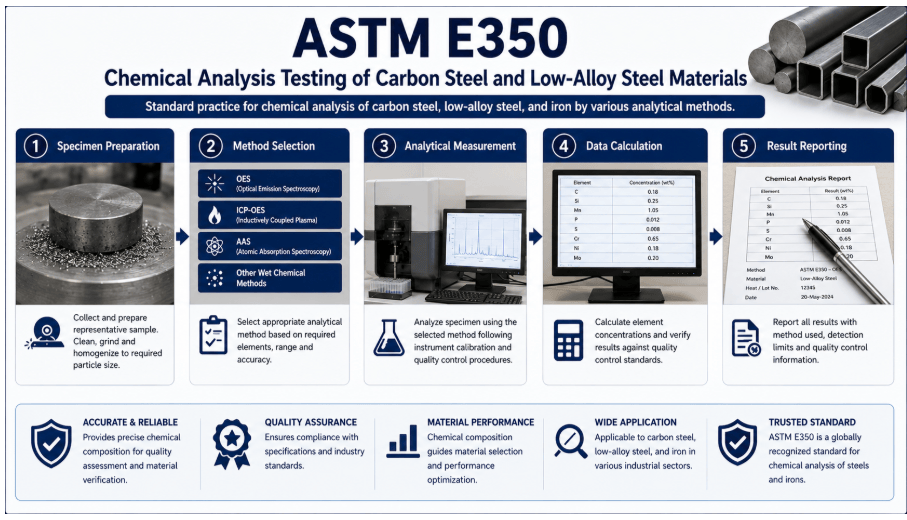
The test standard uses many analytical techniques to determine the elemental composition of steel materials. Analysts select the appropriate method based on the element and concentration range, prepare specimens, perform analysis, and calculate results.
| Specimen Preparation | Technicians clean, machine, or dissolve specimens depending on the analysis technique used. They ensure the specimen is representative of the material being tested. |
| Method Selection | Analysts select the appropriate analytical method based on the element and concentration range. For elements with multiple methods, they match the method with the alloy composition |
| Chemical Analysis | Technicians perform the analysis using the selected method, which may include wet chemistry (titration), atomic absorption spectrometry, or spectrophotometry |
| Data Calculation | Analysts calculate the elemental composition using the measured data and appropriate calibration standards. |
| Result Reporting | Laboratories report the elemental composition in weight percent for each element and include relevant method details and test conditions. |
ASTM E350 Testing Process and Data Collection
Technicians choose the appropriate test technique for each element based on the alloy composition and expected concentration range. The technician prepares the sample according to the procedure and performs the analysis using the selected technique. The technician records the measured values and calculates each element’s concentration. The laboratory then provides a detailed report. Technicians record the concentration, testing method, specimen identification, and test conditions.
Common Challenges and Troubleshooting
If a technician does not properly prepare a specimen, choose the right tests, or calibrate instruments, then ASTM E350 test results will not be valid. ASTM E350 does not stand alone and assumes trained analysts are using these test methods competently and safely, and are performing common laboratory procedures in a suitably equipped laboratory under suitable quality-control practices. The composition ranges for some methods are so wide that analysts cannot use many test methods to determine the composition of all alloys under evaluation. Users must choose the appropriate test method by comparing the information in the Scope and Interference sections of each method with the composition of the alloy under evaluation. Technicians always prepare specimens and properly calibrate instruments according to the standard.
ASTM E350 Analysis Results and Interpretation
Chemical analysis results help laboratories determine the composition of carbon and low-alloy steels. ASTM E350 reports elemental concentrations to show material quality and conformance to material specifications. Elemental composition represents the weight percent of each element present in a steel sample.
- Engineers determine aluminum using the 8-Quinolinol Gravimetric Method (0.20 % to 1.5 %), the Spectrophotometric Method (0.003 % to 0.20 %), or the Atomic Absorption Spectrometry Method (0.005 % to 0.20 %).
- Analysts determine chromium using Atomic Absorption Spectrometry (0.006 % to 1.00 %) or the Peroxydisulfate Oxidation-Titration Method (0.05 % to 3.99 %). For manganese, laboratories use Atomic Absorption Spectrometry (0.005% to 2.0%), the Metaperiodate Spectrophotometric Method (0.01% to 2.5%), or the Peroxydisulfate-Arsenite Titrimetric Method (0.10% to 2.50%).
- Engineers give the percentage of each element that they calculate. The results are used by the manufacturers to validate the material quality and make sure that materials are of the required specification. The test method is documented and any interferences that may impact the results are documented. The concentrations of elements are compared with the specification of the product before engineers accept or reject the product.
Can ASTM E350 test low-alloy steel?
Yes. ASTM E350 specifically covers the chemical analysis of low-alloy steels within the composition ranges specified by the standard.
Which standard covers some elements not included in ASTM E350?
ASTM E1019 provides test methods for determining carbon, sulfur, nitrogen, and oxygen in steel, iron, nickel, and cobalt alloys when the required analysis falls outside ASTM E350 coverage.
Get Certified ASTM E350 Testing Services for Reliable Chemical Composition Analysis
ASTM E350 testing determines the chemical composition of steel and iron materials used in manufacturing and industrial processes. Qualified laboratories analyze selected elements following the appropriate ASTM E350 procedure and compare the measured concentrations with the applicable material specifications. Laboratories use the resulting chemical analysis for material verification, quality control, product qualification, and compliance evaluation. Laboratories may employ other ASTM methods similar to ASTM E350 when ASTM E350 does not cover a specific element.
FAQ
Updated on September 10, 2026


If you are looking for a managed and trusted testing partner to achieve your research goals, feel free to schedule a meeting with us or send us a request at connect@matestlabs.com to learn more about our services. For a quick quote, call us at (302)244-7710. We are happy to serve you.
Project Today
specialized laboratories ready to deliver results