By rowanjenkins | Last updated 23rd February 2026

ASTM D7127 Measurement of Surface Roughness of Abrasive Blast Cleaned Metal Surfaces

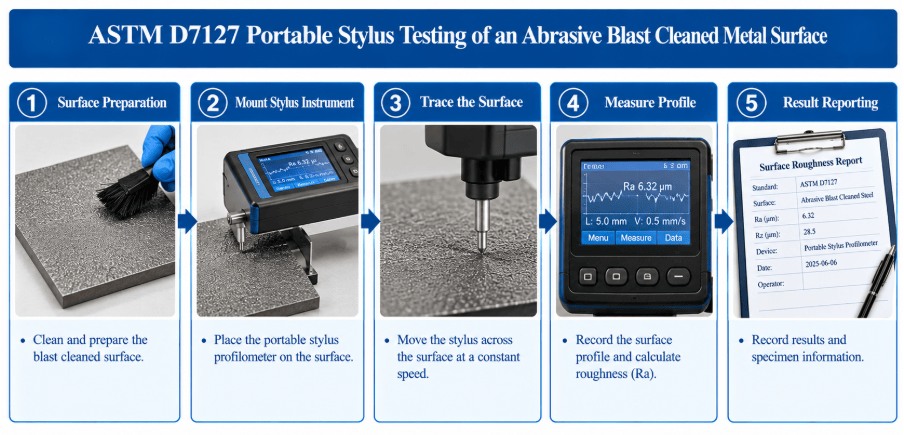
ASTM D7127 is a standard method to determine the surface roughness of abrasive blast-cleaned metal surfaces using a portable stylus instrument. The effectiveness of the abrasive blast cleaning processes is determined. This information is crucial for determining the durability and performance of metal surfaces in the automotive, construction, and appliance industries. The results are crucial for various lab settings and are used to enhance various industrial applications.

Read More

GET STARTED

    Share your requirements *

    Provide your contact information *

    ASTM D7127 Introduction

    ASTM D7127 is an important test method to determine the requirements for adequate roughness of metal surfaces to assess their quality and durability when used for coating applications or other industrial purposes. In this method, the instructions are outlined for abrasive blast cleaning of metal surfaces, which removes rust, scale, and other contaminants from metal surfaces before their use in painting, coating, or bonding. The adhesion and performance of applied coatings are determined by evaluating the surface roughness resulting from abrasive blasting. ASTM D7127 is used for reliability checks, performance evaluation, and specification purposes.

    Get Certified ASTM D7127 for Accurate Surface Profile Measurement

    ASTM D7127 certification proves that metal surfaces that have been blast-cleaned by abrasives are tested on established surface profile measurement procedures and available traceable calibration practices. Certified tests enhance the reliability of the adhesion of the coating, aid in adherence to the inspection, and guarantee uniformity in the quality of the surface preparation. ASTM D7127 compliance also improves the service life and protection of the layer of protection on sensitive metal structures.

    Service NameRemarks
    ASTM D7127 Testing
    Contact US

    ASTM D7127 Testing Procedure and Requirements

    Surface Cleaning VerificationEnsure the metal surface is properly abrasive blast cleaned and free of loose debris
    Replica Tape SelectionSelect an appropriate replica tape grade corresponding to the expected surface profile range
    Tape ApplicationApply the replica tape firmly to the surface and burnish to capture the surface profile impression
    Thickness MeasurementMeasure compressed tape thickness using a calibrated micrometre.
    Profile DeterminationSubtract backing thickness to determine peak-to-valley surface roughness

    Scope of ASTM D7127

    • Tests surface rugae of abrasive blast-cleaned metal substrates. 
    • Can be used on steel and other metallic surfaces that are ready to receive the coating.
    • Integrates surface profile measurement techniques of replica tape or similar. 
    • Make sure coating systems comply with the requisite anchor pattern prerequisites. 
    • Helps quality control in the process of surface preparation and checking of coating. 
    • Applied in the construction and marine industries as well as in pipeline and industrial maintenance.

    ASTM D7127 Equipment and Sample Preparation

    Specimen PreparationEnsure blast-cleaned metal surfaces are dry, clean, and free from dust or loose abrasive particles before measurement
    Specimen DetailUse representative areas of the prepared metal surface that reflect actual blasting conditions
    Specimen SizeThe measurement area should be large enough to permit multiple profile readings across the blasted surface

    Applications of ASTM D7127

    • Checks on abrasive blast-cleaned steel before coating is applied. 
    • Quality control on protective coating and lining projects. 
    • Checking of the surface of pipes, bridges, and marine structures. 
    • Inspection of blasted metal surfaces is already done. 
    • Assessment of anchor profile in high-performance coating systems.
    • Industrial corrosion protection programmes.

    ASTM D7127 Common Challenges and Troubleshooting

    Poor burnishing of replica tape, contamination of the surface being blasted, and inconsistency of the readings caused by uneven spacing of the blasting are some of the common obstacles. Accuracy may also be compromised through excessive pressure on the measurement or poor choice of tape grade. The methods used by inspectors to alleviate these problems include maintaining clean surfaces, using replica tape ranges, burnishing under consistent pressure, and performing several readings to obtain representative average values of surface roughness.

    ASTM D7127 Technique, Process, and Data Collection

    The test involves a replica tape to obtain a physical impression of the profile of the blast-cleaned surface. Once the tape is transferred onto the surface, it follows the peaks and the valleys of the roughened metal. A calibrated micrometre is used to measure the compressed thickness of the tape, and the difference between the compressed thickness and the backing thickness is used to measure the height of the surface profile. The data obtained are profile readings at an individual level, position of measurement, tape grade, and mean profile readings, which are used to reflect the surface roughness state in the blasted area.

    ASTM D7127 Analysis Results and Interpretation

    ASTM D7127 results give quantitative values of peak-to-valley surface roughness of the surface of the anchor that characterises the profile of the blasted surface. Profile values within the given ranges show appropriate surface preparation for adhesion coating, and values out of the limits might need re-blasting or surface repair. The results are interpreted by analysts to guarantee compliance with the specifications of manufacturers of coatings and project specifications. Measurements of the surface profile are consistent in establishing that the trained metal surface could support the long-term protective films and corrosion-resistant media.

    ASTM D7127 Problem & Solution

    Problem: Coating adhesion failures are caused by abrasive blast surface profiles, which are not performed properly or are inconsistent.

    Solution: ASTM D7127 determines the surface roughness of blast-cleaned metal surfaces, which makes it possible to check the correct profile of the anchors and guarantee the adhesion and life cycle of the coating.

    Factors to Consider for ASTM D7127

    Speed
    The replica tape measurements enable quick local evaluation of the surface roughness onsite, which enables the decision to apply the coating on time during the operation of surface preparation.

    Expert
    To make quality control parameters accurate, trained inspectors make sure that applications of tapes are done correctly, that there are correct readings on the micrometry, and proper interpretation of profile values.

    Cost
    ASTM D7127 is an economical inspection technique that will decrease the risk of coating failure, reduce rework, and provide long-life performance of protective coating that complies with the demands of ASTM International standards.

    FAQ's

    Where can I get the astm d7127 tested?

    You can share your astm d7127 testing requirements with MaTestLab. MaTestLab has a vast network of material testing laboratories, spread across the USA and Canada. We support your all material testing needs ranging from specific astm d7127 test to various testing techniques.

    How much do I need to pay for the astm d7127 test?

    Please contact us for a detailed quote for your astm d7127 testing needs. Cost incurred to carry out different astm d7127 testing methodology depends on the type of raw material; number of samples, coupons, or specimens; test conditions, turn around time etc. Costs of some ASTM testing methods start from $100 and the final value depends upon the factors listed above. Please contact us for the best and latest prices.

    How many samples are required for astm d7127?

    The required number of samples or specimens should comply with the procedure given in the astm d7127 standard. However, the MaTestLab operations team can assist you for your special requirements once you share your testing details with us.

    How much discount can I get on the astm d7127 test?

    MaTestLab has a vast testing laboratory network, hence we bring you the best testing facilities in a cost-effective way. We offer considerable discounts (15-20%) to our returning customers based on test volume and frequency.

    How many days will it take to complete the astm d7127 test?

    The turnaround time for astm d7127 test methodology depends upon the test procedure mentioned in the standard test document. However, we at MaTestLab understand your research requirements and hence try to get your test completed within the least possible time.

    Where can I get the astm d7127 tested?

    You can share your astm d7127 testing requirements with MaTestLab. MaTestLab has a vast network of material testing laboratories, spread across the USA and Canada. We support your all material testing needs ranging from specific astm d7127 test to various testing techniques.

    POPULAR TESTS
    ONE-STOP FOR ALL
    MATERIAL TESTING NEEDS
    MaTestLab Inc. offers accessible, quick, and affordable material testing, product testing, and failure analysis services. We support your on-demand testing and expert consultation needs with the help of our extensive network of material testing laboratories situated in the US and other parts of the world.
    MATERIAL TESTING
    We offer destructive and non-destructive tests over a range of mechanical, electrical, chemical, thermal, optical, corrosion, radiation, and biological testing methodologies defined by ASTM, ISO and other organizations.
    PRODUCT TESTING
    We help you evaluate and ensure your product quality and performance with standard and custom-made testing solutions. All the tests are done at well-equipped testing laboratories using standard testing methods for best output and satisfaction.
    FAILURE ANALYSIS
    Failure analysis ensures high levels of quality in every manufacturing process. We help you with getting the best failure or root cause analysis to determine the cause of the failure. The results help you identify means to prevent failure recurrences.
    Process for testing
    • STEP 01

      You share your testing requirements

    • STEP 02

      You share your sample(s)

    • STEP 03

      We deliver your test reports

    Get your testing done

    Let us known your testing requirements and we will be right back with a solution.

      Let us root for each other. Collaborate to grow, expand, and accelerate our businesses.

      Partner with us

        close

        Please share your requirement with us

          ×

          Contact Us

          Discover more from MaTestLab

          Subscribe now to keep reading and get access to the full archive.

          Continue reading