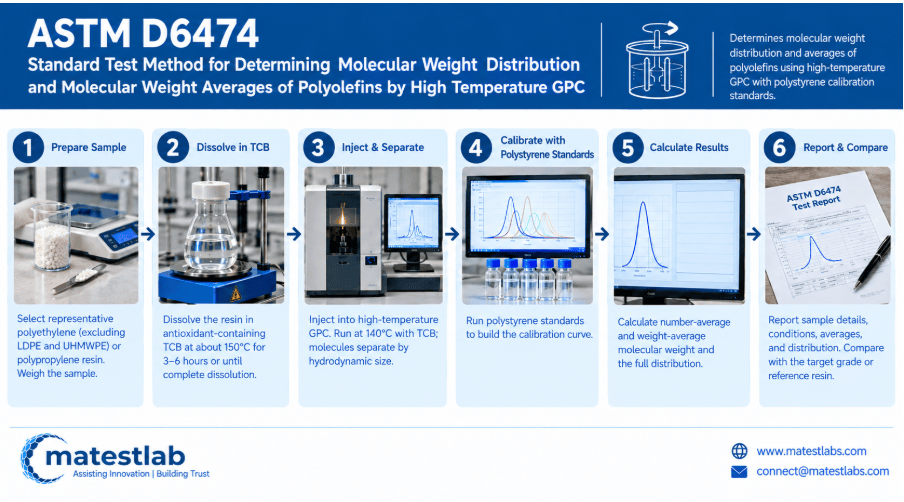
ASTM D6474 is a standard test method for determining the molecular weight distribution and molecular weight averages of polyolefins using high-temperature gel permeation chromatography (GPC). This test method involves dissolving a resin sample in hot trichlorobenzene, then eluting the solution through a column set and comparing the results with those of polystyrene. Molecular weight averages and their distribution govern the resin’s melt flow, strength, morphology, and other characteristics. Therefore, this test method highlights the key role of molecular weight distribution in controlling the final properties of processed polyolefins. Professionals perform ASTM D6474 (Standard Test Method for Determining Molecular Weight Distribution and Molecular Weight Averages of Polyolefins by High Temperature Gel Permeation Chromatography) to analyze polyethylene, except low-density polyethylene (LDPE) and ultra-high molecular weight polyethylene (UHMWPE), and polypropylene resins that are soluble in 1,2,4-trichlorobenzene at 140°C, determine molecular weight averages, and utilize this data for specification conformity and product development. Technicians compare the obtained distribution curve with the desired curve for a given grade.
Get Certified ASTM D6474 Testing for Reliable Polyolefin Characterization
A polyolefin resin rarely contains molecules of uniform molecular weight. Instead, such a material typically comprises a distribution of molecular sizes that will influence the material’s flow characteristics during processing, as well as the final properties of the finished part. Resins with similar averages but differing molecular weight distributions will accordingly have different processing windows and final properties. ASTM D6474 allows evaluators to separate a sample of polyolefin into its constituent molecular weights and obtain the molecular weight distribution curve to better understand a resin’s processing characteristics and final properties.