
ASTM D6159 is a standard test method for determining hydrocarbon impurities in high-purity ethylene using gas chromatography with a flame ionization detector. This method separates a gaseous ethylene sample into its components as it moves through a chromatographic column, then measures each hydrocarbon impurity the detector picks up alongside the ethylene. Manufacturers and petrochemical testing facilities use ASTM D6159 (Standard Test Method for Determination of Hydrocarbon Impurities in Ethylene by Gas Chromatography) to ensure a specific grade of high-purity ethylene feedstock is suitable for a given manufacturing process, along with other materials testing services that support petrochemical quality control. Analysts calculate the purity of ethylene by determining the amount of hydrocarbon impurities detected by the gas chromatograph from the total amount of the gas sample analyzed.
ASTM D6159 Standard Test Method for Determination of Hydrocarbon Impurities in Ethylene by Gas Chromatography
What is ASTM D6159?
What is the Scope of the ASTM D6159 Test Standard?
ASTM D6159 is the standard test method for identifying hydrocarbon contaminants in high-purity ethylene using gas chromatography. The procedure calculates the amount of hydrocarbon detected to estimate ethylene purity by comparing the total quantity of hydrocarbon impurities found from the entire amount of the gaseous sample analyzed. The ASTM D6159 standard-
- Identifies fourteen specific hydrocarbon impurities in high-purity ethylene: methane, ethane, propane, propene, acetylene, isobutane, propadiene, butane, trans-2-butene, butene-1, isobutene, cis-2-butene, methyl acetylene, and 1,3-butadiene.
- Separates and measures each of the individual hydrocarbons using gas chromatography and a flame ionization detector.
- Establishes ethylene purity by subtracting the total amount of hydrocarbon impurities identified from 100.00% of the total amount of the gas sample analyzed.
- Expresses impurity levels in two possible units: ppmV, based on gas volume, or ppmMol, based on molar amount.
- Report ethylene purity using a working range of approximately 4 to 340 ppmV, as established by an interlaboratory study.
- Exclude any hydrocarbon impurities with a molecular weight greater than n-decane and any non-hydrocarbon components from analysis.
What are the Uses of ASTM D6159 Testing?
ASTM D6159 testing helps analysts confirm that ethylene feedstock meets its purity specification before it enters polymerization or other downstream processes. Manufacturers use the results of ASTM D6159 test reports to accept or reject a certain ethylene supply and monitor the feedstock quality during their polyethylene production cycle. The test standard-
- Determines whether a certain ethylene sample meets a particular specification.
- Supports the specification development of ethylene as a petrochemical feedstock.
- Assists manufacturers in using impurity data as an internal quality control tool.
- Indicates whether hydrocarbon components interfere with the polymerization process or reduce catalyst performance.
- Supports research analysts in evaluating the ethylene feedstock quality during process development.
Which Materials Can Be Tested Under ASTM D6159?
ASTM D6159 testing method is applied to high-purity ethylene that is produced for petrochemical manufacturing as a chemical feedstock, primarily for polyethylene production. ASTM D6159 test method is applicable to gaseous samples that an analyst can directly introduce to a gas chromatograph to separate and measure individual hydrocarbon components. Before conducting the analysis, an analyst ensures that the ethylene sample tested is a representative portion of the ethylene feedstock or batch and the gas chromatography equipment is prepared according to the test method.
Why is ASTM D6159 Important?
ASTM D6159 provides ethylene producers and users with a standard method for qualifying the feedstock purity before the start of a process in which traces of impurities can adversely impact the production of polymers or catalyze reactions. By analyzing the mixture and breaking it into identifiable components, rather than reporting a bulk purity, ASTM D6159 informs manufacturers as to what specific impurities may be impacting their feedstock. This is critical information since different hydrocarbon gas impurities impact polymerization processes in different ways, and the manufacturer must identify the specific sources of contamination in order to neutralize its impact.
ASTM D6159 Equipment and Sample Preparation Guide
ASTM D6159 standard test method requires analysts to prepare a gas chromatograph and flame ionization detector calibrated against an appropriate hydrocarbon standard for determining hydrocarbon impurities in high-purity ethylene.
| Sample and Specimen Details | Analysts test a representative sample of high-purity ethylene intended for petrochemical feedstock use. |
| Specimen Preparation | Analysts introduce the ethylene gas sample directly into the gas chromatography system under the method’s specified conditions. |
| Specimen Dimensions | Analysts size the sample volume to suit the chromatographic column and detector so trace-level impurity components remain measurable. |
| Instrumentation | The system uses a gas chromatograph, a column suited to hydrocarbon separation, a flame ionization detector, calibration gas standards, and a data acquisition system. |
Testing Procedures and Requirements for ASTM D6159
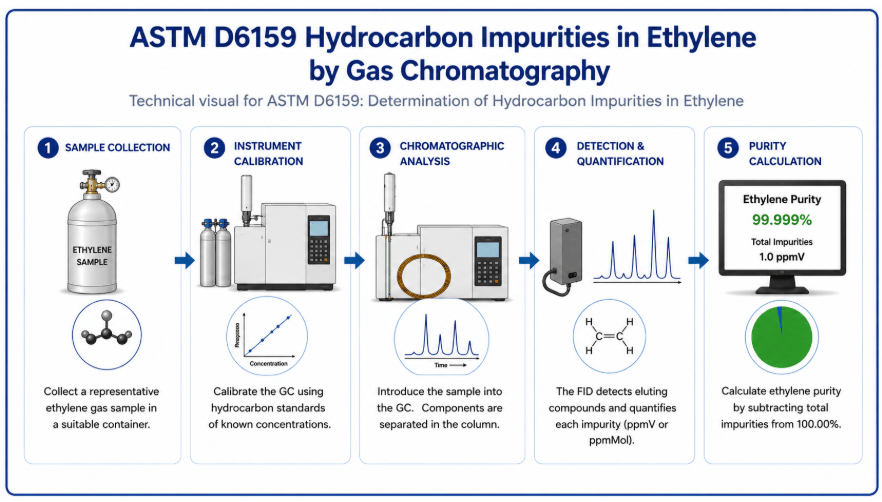
ASTM D6159 test method analyzes hydrocarbon impurities in ethylene using gas chromatography. These procedures allow analysts to separate and identify individual hydrocarbon components in a sample of high-purity ethylene. The ASTM D6159 test method comprises the following procedure-
| Sample Collection | Analysts collect the ethylene gas sample in a suitable container under controlled conditions. |
| Instrument Calibration | Analysts calibrate the gas chromatograph using hydrocarbon standards of known concentrations. |
| Chromatographic Analysis | Analysts introduce the ethylene gas to the gas chromatograph to separate individual hydrocarbon components. |
| Detection | The flame ionization detector detects the separated hydrocarbon components eluted from the column. |
| Quantification | Analysts quantify the concentration of each impurity detected in ppmV, percentage by volume, or ppmMol, percentage by mole, in accordance with the detector response and calibration standards. |
| Purity Calculation | Analysts calculate the ethylene’s overall purity from the total impurities detected. |
| Result Reporting | The analyst reports the detected hydrocarbon impurities identified and the purity calculated following the test method. |
ASTM D6159 Testing Process and Data Collection
An analyst takes an ethylene gas sample and prepares the gas chromatography equipment calibrated to hydrocarbon standards. The ethylene gas sample is introduced to the column, where the gas chromatograph separates ethylene from hydrocarbon impurities according to the individual components eluted through the flame ionization detector. The analyst calculates the concentration of each hydrocarbon impurity from the detector response and determines the ethylene purity from the total amount of detected impurities.
Common Challenges and Troubleshooting
Accurate ASTM D6159 results require a properly functioning chromatograph with a flame ionization detector calibrated to hydrocarbon standards, an uncontaminated chromatographic column, and a representative ethylene gas sample introduced consistently to the gas chromatograph. Contamination of the chromatographic column and incorrect calibration of the flame ionization detector, among other inconsistencies in the testing procedures, can affect the retention time of hydrocarbon components eluted from the column and compromise analytical results.
ASTM D6159 Analysis Results and Interpretation
The report provides information on the purity of the tested ethylene sample based on the presence of hydrocarbon-type impurities identified.
- The analyst expresses the amount of hydrocarbon impurities detected in terms of either ppmV, percentage by volume basis, or ppmMol, percentage by the number of moles, following the calculation procedure.
- The analyst uses a range of approximately 4 to 340 ppmV as an ethylene purity working range derived from an interlaboratory investigation.
- The report identifies each detected hydrocarbon component individually rather than combining them into a single impurity value.
- The analyst calculates the ethylene’s overall purity relative to the whole sample, based on the total impurities detected.
- The analyst calculates ethylene purity from the total amount of hydrocarbon impurities detected in accordance with the total amount of the gas sample analyzed.
Get Certified ASTM D6159 Testing for Reliable Ethylene Purity Analysis
High-purity ethylene feedstock must meet certain impurity limits, as trace components may interfere with the polymerization process and reduce catalyst efficiency. ASTM D6159 establishes an analytical procedure of gas chromatography that characterizes the impurities of light hydrocarbons in ethylene. Analysts apply the results of ASTM D6159 to verify incoming ethylene shipments and for setting specifications and monitoring feedstock quality in polyethylene production.
FAQ
Updated on September 7, 2026


Project Today
specialized laboratories ready to deliver results