
ASTM D6142 describes a standard test method for analysis of phenol by capillary gas chromatography (GC). This method determines known impurities in phenol using a calibrated GC system with a capillary column, generally applied to phenol of 99.9% or greater purity. Analysts use ASTM D6142 (Standard Test Method for Analysis of Phenol by Capillary Gas Chromatography) to set specifications for produced phenol and control phenol production in a laboratory. Chemists compare the levels of found impurities to a particular specification of phenol to ensure that the material’s level of purity is acceptable.
ASTM D6142 Standard Test Method for Analysis of Phenol by Capillary Gas Chromatography
What is ASTM D6142?
What is the Scope of the ASTM D6142 Test Standard?
ASTM D6142 is the standard test method for analyzing phenol with a purity of 99.9% or higher by capillary gas chromatography. This standard determines known impurity levels in phenol using a calibrated gas chromatograph. This standard-
- Determines known impurities in phenol by gas chromatography.
- Applies generally to phenol samples of 99.9% or greater purity.
- Covers the determination of impurities in phenol at concentrations up to 70 mg/kg with a limit of detection of 1.7 mg/kg and a limit of quantitation of 5.8 mg/kg;
- Requires rounding results according to the rounding-off method in Practice E29 when determining conformance with applicable specifications.
What are the Uses of ASTM D6142 Testing?
ASTM D6142 testing helps chemists verify that phenol purity meets specification requirements before it is sent to production. Manufacturers use the results of testing to accept or reject phenol shipments and monitor the produced material’s quality. This test standard-
- Establishes that the level of impurities in the sample of phenol meets the specification requirement for phenol with a purity of 99.9% or higher.
- Supports specification-setting for phenol used in resin, adhesive, and chemical manufacturing.
- Enables manufacturers to utilize the result of phenol purity analysis as an internal control over their production process.
- Determines the concentration of common impurities, including mesityl oxide, cumene, hydroxyacetone, acetone, α-methylstyrene, 2-methylbenzofuran, and acetophenone;
- Supports the comparison of measured impurity levels to specification requirements.
Which materials can be tested under ASTM D6142?
ASTM D6142 testing is an appropriate method for analyzing phenol samples of 99.9% or higher purity amenable to gas chromatographic analysis of impurities. This standard applies to phenol used in resin, adhesive, and general chemical manufacturing. A supplier or manufacturer can use ASTM D6142 to examine the impurities in a material and ensure its conformity to a particular specification. Chemists analyzing a phenol sample in accordance with ASTM D6142 confirm that the sample’s purity falls within the target range and prepare the gas chromatograph by injecting reference materials with known impurities into the instrument.
Why is ASTM D6142 Important?
ASTM D6142 gives phenol producers and consumers a standard for determining trace impurities that a general purity figure does not identify. Impurities such as mesityl oxide, cumene, hydroxyacetone, acetone, α-methylstyrene, 2-methylbenzofuran, and acetophenone often accompany the production process and significantly affect final product quality. By setting a limit of detection and a limit of quantitation, ASTM D6142 helps manufacturers establish specification limits that consider potential process variables instead of setting a general level of purity. Manufacturers usually calculate the level of purity of phenol by subtracting the percentage of detected impurities from 100.00; however, this calculation does not indicate the absolute level of purity if the sample of phenol contains water or other impurities not identified by this test.
ASTM D6142 Equipment and Sample Preparation Guide
ASTM D6142 testing uses a capillary gas chromatograph, an appropriate detector calibrated against standards that include known impurities, and related laboratory equipment.
| Sample and Specimen Details | Chemists prepare a sample of phenol for testing and then analyze it to confirm the material meets the requirements for phenol used in the production of resins, adhesives, or general chemical manufacturing. |
| Specimen Preparation | Chemists condition and, if necessary, dilute the phenol sample to enable its introduction into the gas chromatograph without damaging the column. |
| Specimen Dimensions | Chemists dilute the sample to ensure that the injection volume is appropriate for the capillary column and detector, facilitating the detection of trace impurities down to the limit of quantification. |
| Instrumentation | The system utilizes a capillary gas chromatograph, an appropriate detector, calibration standards that include known impurities, such as mesityl oxide, cumene, hydroxyacetone, acetone, α-methylstyrene, 2-methylbenzofuran, and acetophenone, and data-processing software. |
Testing Procedures and Requirements for ASTM D6142
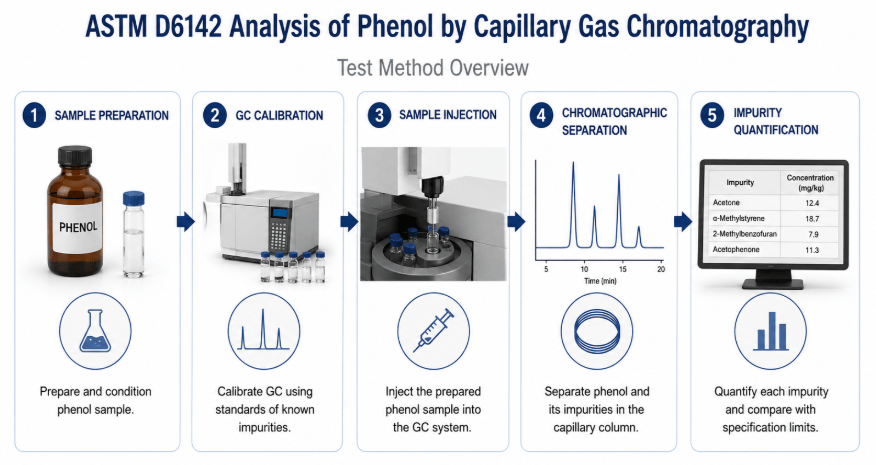
This test method specifies the chromatographic procedure for analyzing known impurities in phenol. The ASTM D6142 test method comprises the following procedure-
| Instrument Calibration | Chemists calibrate the gas chromatograph using phenol standards containing known concentrations of the target impurities. |
| Sample Introduction | Chemists introduce a conditioned phenol sample into the gas chromatograph in accordance with the test method. |
| Chromatographic Separation | The capillary column separates phenol from its known impurities as the sample moves through the system. |
| Detection | The detector measures the separated components as they elute from the column. |
| Quantification | Chemists calculate each impurity’s concentration from its peak response relative to the calibration standards. |
| Result Rounding | Chemists round the calculated results according to the method in Practice E29 before comparing them to a specification. |
| Result Reporting | The analyst records the concentration of each detected impurity along with the sample and instrument conditions used. |
ASTM D6142 Testing Process and Data Collection
An analyst collects a phenol sample determined to fall within the purity range covered by this test method and prepares the gas chromatograph by injecting standards with known impurities into the instrument. The analyst heats the capillary columns, and the sample components separate as they pass through the detector. Chemists measure the amount of volatile components in the sample of phenol and round the results in accordance with the rules of precision and significant figures described in Practice E29, comparing them to the values specified for the grade of phenol.
Common Challenges and Troubleshooting
Accurate ASTM D6142 results depend on a properly calibrated gas chromatograph, a clean capillary column, and consistent sample introduction. Column contamination or drift in detector response can shift retention times and skew impurity quantification. Chemists verify calibration against fresh standards regularly and inspect the column and injection system before each test series.
ASTM D6142 Analysis Results and Interpretation
The analyst reports the amount of detected impurities in the tested sample of phenol in accordance with the specification requirements.
- The analyst reports impurity concentrations in milligrams per kilogram (mg/kg), the unit the standard specifies for all results.
- The report identifies each detected impurity, such as acetone, acetophenone, α-methylstyrene, or 2-methylbenzofuran, individually rather than as a single combined value.
- The chemist rounds each result according to the rounding-off instructions in Practice E29 before comparing the results to the specification.
- The report compares the measured impurity concentrations against the applicable phenol specification rather than assigning a single overall purity grade to the sample.
- The report notes that purity calculated by subtracting known impurities from 100.00 does not reflect absolute purity if the sample contains water or unknown components outside the method’s known impurity list.
Get Certified ASTM D6142 Testing for Reliable Phenol Purity Analysis.
Phenol used in the production of resins, adhesives, or chemicals must be highly purified because several common impurities, including mesityl oxide, cumene, hydroxyacetone, acetone, α-methylstyrene, 2-methylbenzofuran, or acetophenone, significantly affect the final product. ASTM D6142 provides chemists with a capillary gas chromatography method that determines known impurities in phenol with a limit of quantitation of approximately 5.8 mg/kg. Analysts performing chemical analysis programs use ASTM D6142 results to verify incoming phenol shipments, support specification-setting, and monitor phenol quality during production.
FAQ
What is ASTM D6142 used for?
ASTM D6142 determines known impurities in phenol of 99.9% or greater purity using capillary gas chromatography.
What impurities does ASTM D6142 measure?
The method measures known impurities including mesityl oxide, cumene, hydroxyacetone, acetone, α-methylstyrene, 2-methylbenzofuran, and acetophenone.
What is the detection limit for ASTM D6142?
The method’s limit of detection is 1.7 mg/kg, and its limit of quantitation is 5.8 mg/kg.
Updated on September 6, 2026

Testimonials
Real results
Engineers trust us with what matters most
“We had a great experience working with this company for our ASTM E84 testing. They were the first company to respond to our inquiry within just a few minutes of submitting it. From start to finish, the communication was excellent, and the entire process was swift, straightforward, and hassle-free.”

“Very good communication, testing associates were very patient with delays on our end. Reasonable turnaround time for results and nicely detailed report. Analysts were also quick to answer any follow-up questions. Happy with results.”
“Matestlab connected us with an accredited lab within days, cutting weeks off our product validation timeline.”
Start Your Testing
Project Today
Project Today
Define your requirements and get access to
specialized laboratories ready to deliver results
specialized laboratories ready to deliver results
Start Testing
Partners with us
Clients
Vendors