
ASTM D6082 Standard Test Method for High-Temperature Foaming Characteristics of Lubricating Oils

    What is ASTM D6082?

    ASTM D6082 is a standard test method to determine the high-temperature foaming characteristics of lubricating oils. The test method provides a numerical indication of the lubricating oil’s foaming characteristics and foam stability at a given high temperature. The lubricating-oil sample is sent to a laboratory, where a representative sample is placed in the proper test apparatus and is heated to the specified temperature. They inject air into the oil under controlled conditions, and the amount of foam produced is noted. The foam properties are then measured, and the changing properties of the foam during the designated settling period are observed after this aeration period. The ASTM D6082 test (Standard Test Method for High Temperature Foaming Characteristics of Lubricating Oils) determines the foaming characteristics of lubricating oils at high temperatures. The results are useful to manufacturers, engineers, suppliers, and quality-control staff for comparing lubricating oils, as well as for monitoring the formulation consistency and the effectiveness of the antifoam.

    Read more

    Get Certified ASTM D6082 High Temperature Foaming Characteristics Testing

    Lubricant manufacturers and suppliers, engineers, and quality control personnel use ASTM D6082 testing to measure the foaming capabilities of lubricating oils in a controlled environment at elevated temperatures. The technicians take and prepare representative samples of the lubricating oils for analysis in the necessary testing equipment. They ensure the test temperature and lead the heated oil to the air by the specified procedure. The technicians watch and quantify the foam produced during the test and document the necessary information. Analysts evaluate the recorded foam characteristics to compare lubricant samples and identify differences in high-temperature foaming behavior. Results can assist in lubricant development, lubricant evaluation, production monitoring, and lubricant quality control.
    What is the scope of ASTM D6082?

    ASTM D6082 provides a method for determining the foaming characteristics of lubricating oils under specified high-temperature conditions. The standard covers:

    Read more

    • High-Temperature Foaming: Evaluates the tendency of lubricating oils to produce foam at elevated temperatures.
    • Foam Generation: Measures the amount of foam produced when air passes through the lubricating oil under controlled conditions.
    • Foam Stability: Evaluates the persistence or reduction of foam after the specified aeration period.
    • Lubricating Oil Evaluation: Supports comparison of the foaming characteristics of applicable lubricating oils.
    • Formulation Assessment: Helps evaluate differences in lubricant formulations and antifoaming performance.
    • Quality Control: Supports monitoring of foaming characteristics between lubricant production batches.

    What are the uses of ASTM D6082 testing?

    ASTM D6082 provides information about the high-temperature foaming behavior of lubricating oils. Manufacturers and technical personnel can use the results to evaluate lubricant performance and consistency. The test helps to:

    • Determine the high-temperature foaming characteristics of lubricating oils.
    • Measure the amount of foam generated under specified conditions.
    • Evaluate foam stability after aeration.
    • Compare the foaming behavior of different lubricant formulations.
    • Monitor consistency between production batches.
    • Evaluate formulation changes and additive performance.
    • Support lubricant research and product development.
    • Assist quality-control and manufacturing activities.

    Which Materials Can Be Tested According to ASTM D6082?

    ASTM D6082 applies to lubricating oils for which high-temperature foaming evaluation is required. Technicians should verify the lubricant type and applicable test requirements before testing. The method may apply to:

    • Lubricating Oils: Evaluates applicable oils for high-temperature foaming characteristics.
    • Industrial Lubricants: Supports foaming evaluation of applicable industrial lubricating oils.
    • Formulated Lubricants: Allows comparison of different lubricant formulations.
    • Lubricant Production Samples: Supports testing of representative samples from production batches.
    • Development Samples: Helps engineers evaluate foaming behavior during lubricant formulation and product development.

    Why is ASTM D6082 testing important?

    Foam can also be a problem in high-temperature systems by affecting the lubrication of the oil. Excessive foam may be damaging to lubrication, fluid flow, and system operation. Variations in formulation or manufacturing process may also affect foam formation and stability. Changes in lubricant formulation or production conditions can also influence foam formation and stability. ASTM D6082 is a controlled method for testing high-temperature foaming characteristics of lubricating oils. The test enables manufacturers and engineers to compare samples of lubricants and detect any differences in foaming behavior. 

    ASTM D6082 Equipment and Sample Preparation Guide

    Technicians need representative lubricating-oil samples and suitable equipment for heating the sample, introducing air, and measuring foam under controlled conditions.

    Read more

    Sample IdentificationTechnicians identify the lubricating oil, product grade, formulation, production batch, and other relevant sample information before testing.
    Sample PreparationTechnicians prepare a representative lubricating-oil sample according to the applicable test requirements.
    High-Temperature Test ApparatusTechnicians use suitable equipment to contain and heat the lubricating oil to the required test temperature.
    Air Introduction SystemTechnicians use the specified air-delivery system to introduce air into the heated oil under controlled conditions.
    Temperature and Foam Measurement EquipmentTechnicians use suitable temperature-monitoring and measurement equipment to control the test conditions and determine the foam characteristics.

    ASTM D6082 Testing Procedures and Requirements

    Technicians first identify and prepare a representative lubricating-oil sample. They place the sample in the specified test apparatus and heat it to the required temperature. The technicians introduce air into the heated lubricating oil under the required controlled conditions. They observe the foam generated during the aeration period and determine the applicable foam characteristics. After completing the specified test period, technicians allow the foam to settle as required and record the applicable observations. Analysts review the results and report the foaming characteristics of the tested lubricating oil. The testing process includes the following steps.

    Read more

    Sample Identification and PreparationTechnicians identify the lubricating oil and prepare a representative sample according to the applicable requirements.
    Test Apparatus Preparation and Temperature ControlTechnicians prepare the test apparatus and heat the lubricating oil to the specified high-temperature condition.
    Air Introduction and Foam GenerationTechnicians introduce air into the heated lubricating oil under controlled conditions to produce foam.
    Foam Observation and Data RecordingTechnicians measure and record the applicable foam characteristics during and after the specified test period.
    Result Evaluation and ReportingAnalysts evaluate the recorded foam data and report the applicable high-temperature foaming characteristics.

    ASTM D6082 Testing Process and Data Collection

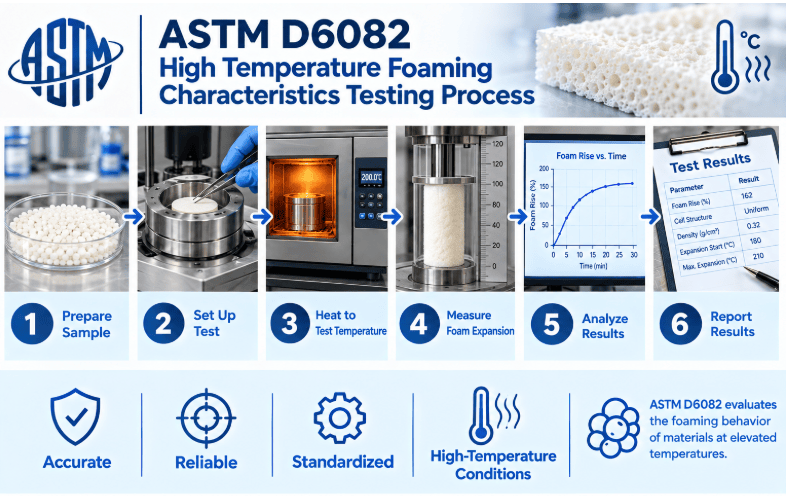
    Technicians identify the lubricating-oil sample and prepare a representative portion for testing. They place the sample in the specified test apparatus and heat it to the required temperature. After the sample reaches the required test condition, technicians introduce air into the lubricating oil according to the specified procedure. The air causes foam to form, and technicians observe and measure the applicable foam characteristics. Following the aeration period, technicians observe the foam during the required settling period. They record the sample identification, test temperature, test conditions, foam measurements, and other relevant observations. Analysts review the recorded information and determine the high-temperature foaming characteristics of the lubricating oil.

    ASTM D6082 testing process showing lubricating-oil sample preparation, heating of the oil to a controlled high temperature, introduction of air into the oil, formation and measurement of foam, foam settling, and recording of test results.
    ASTM D6082 High Temperature Foaming Characteristics Testing Process

    Common Challenges and Troubleshooting

    Temperature variations, contamination, incorrect air flow, improper sample handling, equipment-condition issues, and inaccurate foam measurements can affect ASTM D6082 results. Sample quantities of the lubricants to be evaluated should be representative, and the test temperature should be maintained throughout the examination. Standardized sample preparation, temperature, air introduction, foam measurement, and equipment maintenance ensure the production of reliable and comparable results.

    Analysis Results and Interpretation

    The report summarizes the high-temperature foaming characteristics of the tested lubricating oil. It includes the applicable foam measurements together with the sample identification, test temperature, test conditions, and relevant observations. ASTM D6082 provides foam-characteristic results rather than a single universal material-property value.

    Read more

    • Technicians report the applicable foam measurements according to the requirements of the selected procedure.
    • Foam volume may be reported using SI units such as mL, as applicable.
    • Technicians record the applicable test temperature in °C.
    • Analysts record the relevant aeration and settling times in s or min, as applicable.
    • The report includes lubricant identification and other relevant test conditions.
    • Consistent sample preparation, temperature control, air introduction, foam measurement, and equipment maintenance help produce reliable and comparable results.

    Link to ASTM D6082 

    FAQ

    What type of samples does ASTM D6082 use?
    The method uses representative samples of applicable lubricating oils prepared according to the test requirements.
    Foam can influence lubricant circulation and system performance. Evaluating foam characteristics helps manufacturers and engineers compare lubricant behavior under elevated-temperature conditions.
    Technicians report the applicable foam measurements and test conditions according to the specified procedure. Foam volume may be expressed in mL, while test temperature is typically recorded in °C.
    Rohit Dhembare
    About Author
    Rohit Dhembare
    Rohit Dhembare is an Operations Associate at MaTestLab Inc. and holds a postgraduate degree in Organic Chemistry.
    Testimonials
    Real results
    Engineers trust us with what matters most
    Start Your Testing
    Project Today
    Define your requirements and get access to
    specialized laboratories ready to deliver results
    Partners with us
    Clients
    Vendors
    Process for testing
    • STEP 01

      You share your testing requirements

    • STEP 02

      You share your sample(s)

    • STEP 03

      We deliver your test reports

    Get your testing done

    Let us known your testing requirements and we will be right back with a solution.

      Let us root for each other. Collaborate to grow, expand, and accelerate our businesses.

      Partner with us

        Contact Us

        Discover more from MaTestLab

        Subscribe now to keep reading and get access to the full archive.

        Continue reading