ASTM D4890 Standard Test Methods for Polyurethane Raw Materials: Determination of Gardner and APHA Color of Polyols

    What is ASTM D4890? 

    ASTM D4890 provides test methods for determining the Gardner and APHA color of polyols used as polyurethane raw materials. The standard visually measures the color of clear polyester and polyether liquids whose light-absorption characteristics correspond to the applicable color standards. Test Method A determines Gardner color by comparing the sample with Gardner color standards. Test Method B determines APHA color by comparing the sample with platinum-cobalt color standards. Laboratories use ASTM D4890 (Standard Test Methods for Polyurethane Raw Materials: Determination of Gardner and APHA Color of Polyols) for quality control, specification testing, and research because color provides an important indication of polyurethane raw-material quality.

    Read more

    Get Certified ASTM D4890 Testing for Reliable Polyol Color Evaluation 

    ASTM D4890 helps laboratories evaluate the color consistency of polyester and polyether polyols. Manufacturers can use these results to compare raw-material batches, support quality control, perform specification testing, and research changes in polyurethane raw materials. 
    What is the scope of ASTM D4890? 

    ASTM D4890 covers visual determination of the color of clear polyester and polyether liquid polyols. The methods apply when the material has light-absorption characteristics, as defined by the applicable color standards. This standard-

    Read more

    • Determines Gardner color of polyols and APHA (platinum-cobalt) color of polyols.
    • Applies to clear polyester and polyether liquids and compares visually to known color standards.
    • Supports quality control and specification testing, as well as research and polyurethane raw-material evaluation.

    What are the uses of ASTM D4890 testing? 

    Manufacturers and laboratories use ASTM D4890 testing to assess the visual color of polyols used in the production of polyurethane. These standard methods-

    • Check polyol color consistency and compare different polyol batches.
    • Perform raw-material quality control and support specification testing.
    • Evaluate changes in polyol appearance and compare polyester and polyether polyols.
    • Support polyurethane research and development.

    Which Materials Can Be Tested Under ASTM D4890? 

    ASTM D4890 covers clear polyester and polyether liquid polyols that match the color of the specified color standards. Polyols that require melting before sampling should undergo controlled melting and thorough mixing before the laboratory removes the test sample.

    Why is ASTM D4890 important? 

    ASTM D4890 provides the standard practice for visually assessing polyol color. Color can indicate differences between raw-material batches and provides an important quality characteristic for urethane products. Laboratories can use Gardner and APHA color results for quality control, specification testing, and research.

    ASTM D4890 Equipment and Sample Preparation Guide 

    ASTM D4890 specifies the use of suitable color-comparison equipment and properly prepared polyol samples. Technicians need to remove solid particles and air bubbles before visual comparison. Technicians should use only the minimum heat required to melt the material and thoroughly mix it before taking a sample.

    Read more

    Sample and Specimen DetailsTechnicians clear polyester or polyether liquid polyol representative of the material being tested.
    Specimen PreparationTechnicians melt solid or partially solid material; when necessary, they mix it thoroughly, minimize atmospheric-moisture exposure, and remove solid particles and air bubbles before testing.
    Specimen DimensionsFor Gardner testing, the sample fills the specified Gardner-Holdt tube to the required level.
    InstrumentationGardner-Holdt clear-glass tubes, Gardner color reference standards, APHA platinum-cobalt color standards, suitable sample tubes, and appropriate visual color-comparison equipment.

    Testing Procedures and Requirements for ASTM D4890

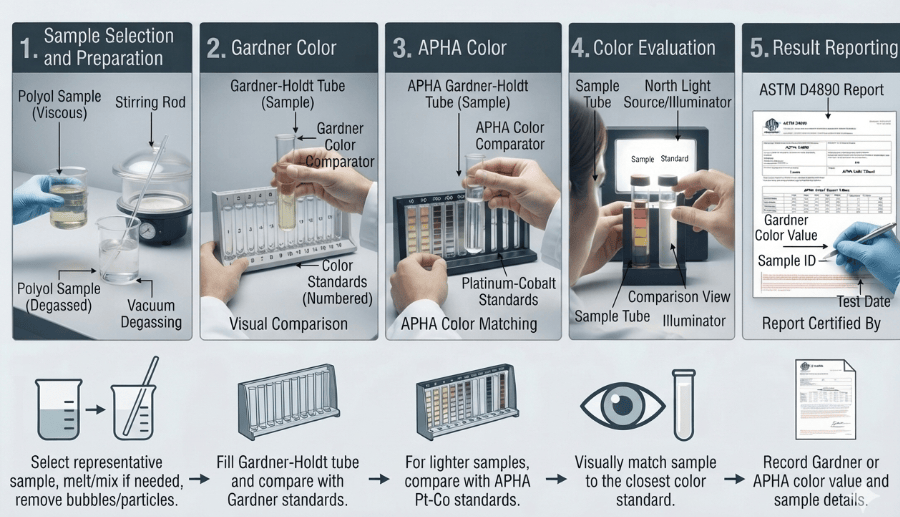
    ASTM D4890 presents two main visual color procedures. Depending on the specification, color measurement is either Gardner or APHA. Other reference ASTM documents include D883, D1193, D1209, D5386, E308, and E1164. Testing procedure for ASTM D4890 is given as:

    Read more

    Sample Selection and Preparation Technicians select a representative polyester or polyether polyol sample, melt and mix it as needed, and remove particles or air bubbles.
    Gardner ColorThey fill in the Gardner-Holdt tube and compare the sample visually with the applicable Gardner reference standards.
    APHA ColorTechnicians compare the sample with the appropriate platinum-cobalt color standards.
    Color EvaluationThey then match the sample to the color standard.
    Result ReportingAnalysts record the applicable Gardner or APHA color value and relevant sample information.

    ASTM D4890 Testing Process and Data Collection 

    Technicians first obtain a representative polyol sample and minimize atmospheric-moisture exposure during sampling. Technicians melt and mix materials as needed and prepare a clear sample containing no particles and no air bubbles. The operator fills the Gardner-Holdt tube and compares the sample to the appropriate Gardner standards. APHA testing is a comparison test that compares samples with platinum-cobalt standards. The laboratory notes the matching color value and determines which test method was selected.

    This image shows Gardner-Holdt clear-glass tubes for determining the color of polyols as per ASTM D4890.
    ASTM D4890 Testing Using Gardner-Holdt Clear-Glass Tubes

    Common Challenges and Troubleshooting

    Accurate color evaluation requires consistent sample preparation and appropriate reference standards. Common challenges include air bubbles in the sample, solid particles in the liquid, incorrect sample preparation, excessive heating during melting, moisture absorption by hygroscopic polyols, poor lighting or inconsistent visual comparison, and incorrect color-standard selection. The technicians should prepare clear samples, minimize moisture exposure, use appropriate reference standards, and maintain consistent comparison conditions.

    ASTM D4890 Analysis Results and Interpretation 

    • Laboratories report ASTM D4890 results based on the selected Gardner or APHA color method. 
    • The standard evaluates the visual color of clear polyester and polyether liquid polyols.
    • Analysts compare the sample with the applicable color standards and report the color standard that most closely matches the sample.
    • Engineers report results using the applicable Gardner color scale for gardening color and the appropriate platinum-cobalt color scale for APHA color.

    Link to ASTM D4890

    Read more

    FAQ

    What is ASTM D4890?
    ASTM D4890 provides test methods for determining the Gardner and APHA color of polyester and polyether polyols used as polyurethane raw materials.
    The standard covers clear polyester and polyether liquid polyols with color characteristics suitable for comparison with the applicable standards.
    The APHA method uses platinum-cobalt color standards for visual comparison.

    Updated on September 6, 2026

    Suyog Kamble
    About Author
    Suyog Kamble is an Operations Associate at Matestlab Inc. Suyog holds a postgraduate degree in organic chemistry and is trained in material science topics.
    Know More
    Testimonials
    Real results
    Engineers trust us with what matters most
    Start Your Testing
    Project Today
    Define your requirements and get access to
    specialized laboratories ready to deliver results
    Partners with us
    Clients
    Vendors
    Process for testing
    • STEP 01

      You share your testing requirements

    • STEP 02

      You share your sample(s)

    • STEP 03

      We deliver your test reports

    Get your testing done

    Let us know your testing requirements and we will be right back with a solution.

      Let us root for each other. Collaborate to grow, expand, and accelerate our businesses.

      Partner with us

        Discover more from Matestlab

        Subscribe now to keep reading and get access to the full archive.

        Continue reading