ASTM D4562 Shear Strength of Adhesives using Pin-and-Collar Specimen

    What is ASTM D4562?

    ASTM D4562 is a standard test method for assessing the shear strength of adhesive bond-type specimens with a pin-and-collar geometry. It measures the maximum force an adhesive joint can withstand under a controlled shear load. The computed shear strength helps manufacturers understand adhesive-joint behavior in service, including strength and durability. ASTM D4562 (Standard Test Method for Shear Strength of Adhesives Using Pin-and-Collar Specimen) can be used to test both structural and non-structural adhesives for metals and other engineering materials. Manufacturers use the results for material selection, product development, quality assurance, research, and specification compliance.

    Read more

    Get Certified ASTM D4562 Testing for Reliable Adhesive Shear Strength Evaluation

    ASTM D4562 testing evaluates the shear strength of adhesive joints in critical engineering applications. Accredited laboratory testing accurately measures the maximum shear strength of bonded assemblies and adhesive performance under standard conditions. Accurate ASTM D4562 testing supports material qualification, product quality monitoring, adhesive selection, product design, and compliance with customer and industry specifications.

    What is the Scope of ASTM D4562 Test Standard?

    ASTM D4562 is a test method that determines adhesive shear strength using the pin-and-collar specimen. The test evaluates an adhesive bond against forces parallel to the bond line and establishes the maximum shear force that can be applied before failure. ASTM D4562 is used extensively throughout the aerospace, automotive, construction, electronics, manufacturing, and research sectors for adhesive qualification and quality control, product development, and engineering evaluation.

    Read more

    ASTM D4562 is a standard for testing the shear strength of adhesive bonds using a pin-and-collar specimen. This test standard-

    • Determines the adhesive shear strength of a pin and collar specimen.
    • Tests the ability of adhesive joints to withstand forces parallel to the adhesive bond line.
    • Adhesive systems are compatible with structural and non-structural systems.
    • Applies to adhesive qualification, quality assurance, and engineering design and research applications.
    • Sets repeatable laboratory procedures for shear strength measurements.
    • Useful for assessing adhesive performance in engineering and industrial applications.

    What are the Uses of ASTM D4562 Testing?

    ASTM D4562 testing allows manufacturers, engineers, researchers, and Quality Control laboratories to assess the shear properties of adhesive joints in controlled loading situations. The results guide adhesive selection, product design, structural design, and manufacturing quality control. The ASTM D4562 test standard-

    • Calculates the resistance to breaking of adhesive bonds by a standardized test method.
    • Helps manufacturers ensure uniform adhesive bond quality.
    • Tests structural adhesives for use in aerospace assemblies.
    • Validates parts for automotive manufacturers.
    • Checks the adhesive capabilities of construction and industrial applications.
    • Helps testing laboratories qualify and certify materials.
    • Helps researchers formulate better adhesives and bonding technologies.

    What Materials Can Be Tested Under ASTM D4562?

    ASTM D4562 applies to adhesives used to bond metals, aluminum alloys, stainless steel, carbon steel, titanium alloys, composites, engineering plastics, and other structural materials where the shear strength of the adhesive must be evaluated.

    Why is ASTM D4562 Important for Adhesive Shear Strength Evaluation?

    ASTM D4562 has established a standard method for measuring the shear strength of adhesive joints. Engineers can use the method to assess bond durability, validate adhesive formulations, improve structural reliability, reduce bond failures, and ensure bonded structures can safely handle service loads. The standardized procedure also allows for comparison of results amongst laboratories and manufacturers.

    ASTM D4562 Equipment and Sample Preparation Guide

    For accurate and repeatable ASTM D4562 test results, proper specimen preparation is key. Specimen geometry, adhesive application, curing, and equipment calibration are standardized to ensure reliable measurement of adhesive shear strength.

    Read more

    Specimen DetailsRepresentative specimen(s) include(s) the adherends that are metal or other engineering material to which the adhesive under test is applied.
    Specimen DimensionsTechnicians select specimen dimensions based on the adhesive system, adherend configuration, and ASTM D4562 requirements. Technicians ensure that the bonded area and pin-and-collar geometry match the specified dimensions.
    Specimen PreparationTechnicians clean and roughen the bonding surfaces before applying the adhesive uniformly. Technicians position the pin-and-collar assembly correctly, control the bond-line thickness, and cure the bonded specimens under controlled conditions before testing.
    InstrumentationUniversal testing machine, pin and collar test fixtures, calibrated load cell, dimensional measuring instruments, specimen alignment fixtures, curing equipment, adhesive application tools, and other calibrated laboratory equipment for testing the shear strength of adhesives.

    Testing Procedures and Requirements for ASTM D4562

    ASTM D4562 is a method for testing adhesive shear strength using a loaded and bonded pin-and-collar assembly. The standardized testing procedure provides a repeatable, consistent evaluation of adhesive bond performance. The ASTM D4562 testing process has the following steps:

    Read more

    Specimen PreparationTechnicians cut the adherends to the required shape and size and clean the bonding surfaces to remove contaminants. Technicians apply the adhesive uniformly between the bonding surfaces at the specified bond-line thickness and insert a cylindrical pin into the collar assembly to create the standard pin-and-collar specimen configuration.
    Adhesive Bond CuringTechnicians cure the bonded specimens according to the adhesive manufacturer’s recommended schedule and allow the adhesive to develop its designed mechanical properties before testing.
    Universal Testing Machine EvaluationTechnicians install the cured specimen in a calibrated universal testing machine and apply the shear load at the specified loading rate until adhesive or cohesive failure occurs.
    Shear Strength MeasurementThe testing system records the applied load during the test, and analysts determine the ultimate shear strength from the load at which the adhesive bond fails.
    Data Recording and AnalysisThe analyst calculates shear strength by dividing the maximum failure load by the bonded area and analyzes adhesive performance alongside the observed failure mode.
    Documentation and ReportingThe analyst documents specimen identification, adhesive type, curing conditions, bond dimensions, testing parameters, maximum load, calculated shear strength (MPa or psi), failure mode, and other observations in accordance with ASTM D4562 reporting requirements.

    ASTM D4562 Testing Process and Data Collection

    The testing process begins with preparing representative bonded specimens per ASTM D4562. All cured specimens are loaded under a controlled shear load in a universal testing machine until they fail. The testing system provides continuous data on failure characteristics, displacement, and load. Laboratory staff records the specimen data, test conditions, maximum failure load, calculated shear strength, and mode of failure for engineering analysis and certification.

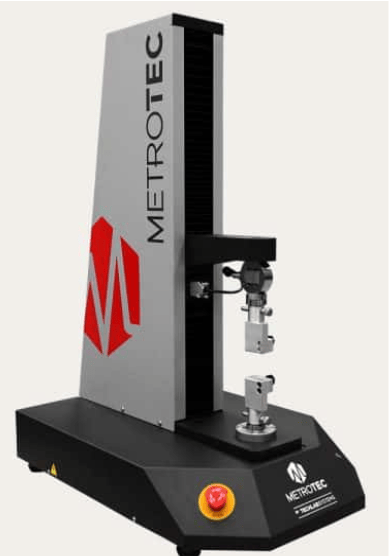
    The image shows a universal testing machine that is used to evaluate the shear strength of an adhesive bond using a pin-and-collar specimen according to ASTM D4562.
    ASTM D4562 Pin-and-Collar Adhesive Shear Strength Testing

    Common Challenges and Troubleshooting

    Accurate specimen alignment, adhesive thickness, complete adhesive curing, calibrated testing equipment, and controlled environmental conditions are all important for accurate testing. The accuracy of results can be affected by surface contamination, improper curing, misalignment of specimens, and incorrect loading rates. Standardized specimen preparation and experienced laboratory personnel, along with routine equipment calibration, increase repeatability and testing reliability.

    Analysis Results and Interpretation

    • ASTM D4562 measures the shear strength of an adhesive bond as the maximum failure load divided by the bond area. Test results are presented in megapascals or psi (pounds per square inch), depending on the customer or industry specifications.
    • Computes adhesive shear strength in units of pull force per unit area.
    • Determines failure mechanisms of adhesives, cohesion, or substrate.
    • Reports dimensions of specimens, bonded area, curing conditions, maximum load, and shear strength (calculated).
    • Evaluates the adhesive performance as part of quality control, material qualification, and engineering design.
    • Materials that exhibit uniform shear strength and acceptable failure properties meet the application performance specifications.

    Link to ASTM D4562

    Read more

    FAQ

    Where can I get the astm d4562 tested?
    You can share your astm d4562 testing requirements with MaTestLab. MaTestLab has a vast network of material testing laboratories, spread across the USA and Canada. We support your all material testing needs ranging from specific astm d4562 test to various testing techniques.
    Please contact us for a detailed quote for your astm d4562 testing needs. Cost incurred to carry out different astm d4562 testing methodology depends on the type of raw material; number of samples, coupons, or specimens; test conditions, turn around time etc. Costs of some ASTM testing methods start from $100 and the final value depends upon the factors listed above. Please contact us for the best and latest prices.
    The required number of samples or specimens should comply with the procedure given in the astm d4562 standard. However, the MaTestLab operations team can assist you for your special requirements once you share your testing details with us.
    MaTestLab has a vast testing laboratory network, hence we bring you the best testing facilities in a cost-effective way. We offer considerable discounts (15-20%) to our returning customers based on test volume and frequency.
    The turnaround time for astm d4562 test methodology depends upon the test procedure mentioned in the standard test document. However, we at MaTestLab understand your research requirements and hence try to get your test completed within the least possible time.
    Rohit Dhembare
    About Author
    Rohit Dhembare
    Rohit Dhembare is an Operations Associate at MaTestLab Inc. and holds a postgraduate degree in Organic Chemistry.
    Testimonials
    Real results
    Engineers trust us with what matters most
    Start Your Testing
    Project Today
    Define your requirements and get access to
    specialized laboratories ready to deliver results
    Partners with us
    Clients
    Vendors
    Process for testing
    • STEP 01

      You share your testing requirements

    • STEP 02

      You share your sample(s)

    • STEP 03

      We deliver your test reports

    Get your testing done

    Let us known your testing requirements and we will be right back with a solution.

      Let us root for each other. Collaborate to grow, expand, and accelerate our businesses.

      Partner with us

        Contact Us

        Discover more from MaTestLab

        Subscribe now to keep reading and get access to the full archive.

        Continue reading