ASTM D2684/D2684M Standard Test Method for Permeability of Thermoplastic Containers to Packaged Reagents or Proprietary Products

    What is ASTM D2684/D2684M? 

    ASTM D2684 describes a standard test method for the permeability of packaged reagents or proprietary products through thermoplastic containers. The test measures a container’s performance under conditions designed to simulate normal and elevated-temperature storage. ASTM D2684 (Standard Test Method for Permeability of Thermoplastic Containers to Packaged Reagents or Proprietary Products) applies to containers with leakproof positive closures. It includes two procedures based on the container design. Procedure A is used for a normal container design and can determine gain or loss rates and a permeability factor. For other container designs, Procedure B is used to determine the rate of weight loss or gain in the container being tested. 

    Read more

    Get Certified ASTM D2684/D2684M Testing for Reliable Thermoplastic Container Performance

    Packaged products should not leak from thermoplastic containers during storage. Thus, permeability testing assists manufacturers in checking the performance of the container material and design under specific exposure conditions. ASTM D2684 testing can be used to assist in the development, research, and specification of containers. Care needs to be taken, and with experience, the results can be used to estimate the loss of the product through the container wall during shelf storage.

    What is the Scope of the ASTM D2684/D2684M Test Standard?

    This standard provides methods for measuring the permeability of thermoplastic containers to packaged reagents or proprietary products under specified conditions. The exposures are designed to mimic normal temperature storage conditions encountered during end use. The ASTM D2684 standard-

    Read more

    • Tests the permeability of thermoplastic containers.
    • Tests containers for exposure conditions. 
    • Presents normal and elevated temperature storage conditions
    • Applies to containers intended for positive closure and that should be leakproof.
    • Describes how to create a standard container design (Procedure A).
    • Supplies Procedure B for other types of containers. 
    • Calculates weight loss or weight gain. 
    • Computes a permeability factor for Procedure A.
    • Supports container development, specification, and research uses.

    What are the Uses of ASTM D2684/D2684M Testing?

    ASTM D2684 testing assesses the permeability properties of thermoplastic containers with packaged products. Manufacturers can use the data to research container materials, designs, and storage performance. This standard:

    • Assists in estimating loss of packaged products during storage on the shelf.
    • Supports the separation of the effects of container design and materials.
    • Helps with packaging development and research.
    • Supplies information to meet specification requirements.
    • Calculates the weight gain or loss rate.
    • Gives a permeability factor for Procedure A.
    • Permits the testing of various container designs according to the appropriate procedure.

    Which Containers Can Be Tested Under ASTM D2684/D2684M?

    ASTM D2684 is used to evaluate thermoplastic containers that can be positively and leakproof closed. The test measures the permeability of these containers to packaged reagents or proprietary products during defined exposure conditions. The standard distinguishes between one standard container design tested with Procedure A and any other container design tested with Procedure B. This means the laboratory must determine the container design first, then choose the appropriate test procedure.

    Why is ASTM D2684/D2684M Important?

    ASTM D2684 helps determine how much packaged material could be lost through a thermoplastic container under specific test conditions. It provides producers with important information on how container material and design may affect product loss during storage. The test results can inform parameter settings, product research, and container development. However, because variables such as product composition, solving rate, and chemical interaction with the plastic may affect container performance, results should be interpreted with caution. Therefore, there should be enough evidence to support the application of test results outside of the original test conditions.

    ASTM D2684/D2684M Equipment and Sample Preparation

    ASTM D2684/D2684M requires appropriate equipment to prepare, expose, and weigh the thermoplastic container during the test. In addition to the material specification, review the material before testing begins; specimen preparation, conditioning, dimensions, and testing parameters take precedence if specified.

    Read more

    Sample and ContainerLaboratories test representative thermoplastic containers or container specimens to evaluate permeability-related weight loss under specified test conditions. The method applies to containers made from thermoplastic materials and assesses the loss of packaged products through the container walls.
    Specimen PreparationTechnicians prepare and condition the thermoplastic containers according to the requirements of the test procedure. Containers are filled with the specified test material, sealed appropriately, and prepared for exposure under controlled conditions before periodic weighing.
    Container ClosureThe test specimen consists of the complete thermoplastic container or container system being evaluated. Container size, shape, wall thickness, closure design, and material construction should be representative of the intended packaging application because these factors can influence permeability-related weight loss.
    InstrumentationAnalytical balance or suitable weighing equipment, controlled-temperature storage or test chamber, temperature and humidity monitoring equipment where applicable, suitable container closure/sealing equipment, and other laboratory equipment necessary to maintain the specified test conditions and accurately determine container weight changes.

    Testing Procedures and Requirements for ASTM D2684/D2684M

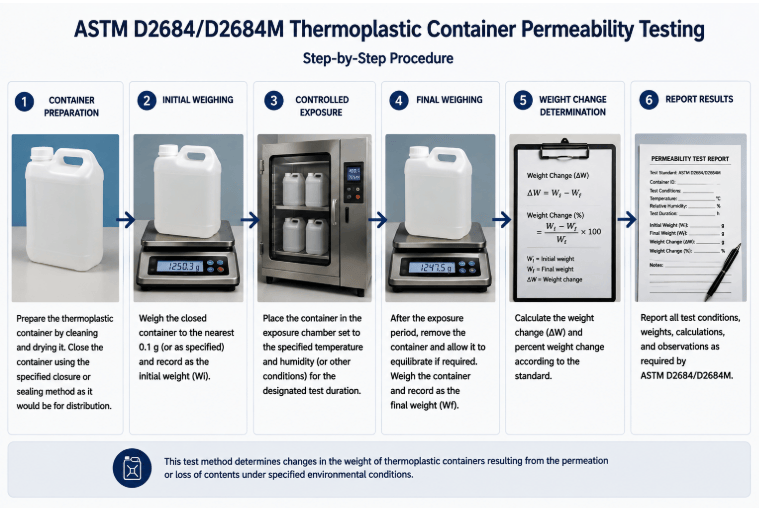
    ASTM D2684 includes two tests, depending on the container design. The technicians add the sample into the container, then close it, expose it under the conditions specified, and measure the change in weight during the test. The ASTM D2684 test methods comprise the following test procedures-

    Read more

    Procedure AApplies specifically to the standard container design. It determines the rate of weight loss or gain and provides a permeability factor.
    Procedure BApplies to other container designs. The permeability data are expressed as the rate of weight loss or gain for the particular container tested.
    ExposureTechnicians evaluate containers under specified normal or elevated-temperature storage conditions
    Weight MeasurementAnalysts measure changes in container weight during the applicable test period.
    Result ReportingAnalysts  report the applicable rate of weight loss or gain, with a permeability factor calculated under Procedure A

                                                                                        ASTM D2684 Testing Process and Data Collection

    Technicians first place the packaged reagent or proprietary product under test in representative thermoplastic containers. They then prepare and pack the containers according to the relevant regulations and subject them to the designated storage conditions. Technicians monitor variations in container weight and document their findings. The permeability factor is also calculated using the data under Procedure A.

     Thermoplastic containers undergoing controlled exposure and weight measurements for permeability evaluation according to ASTM D2684/D2684M.
    ASTM D2684 Thermoplastic Container Permeability Testing

    Common Challenges and Troubleshooting

    Accurate results require precise weight measurements, controlled exposure conditions, reliable packaging, and proper container preparation. Weight fluctuations and container permeability assessments may be affected by issues with the container closure. Analyzing outcomes outside of test conditions is another crucial factor. Because product modification, solvency, or chemical impacts on the plastic can impact performance, ASTM does not advise extrapolation or correlation to other situations without sufficient supporting data.

    ASTM D2684 Analysis Results and Interpretation

    The report provides the rate of weight gain or loss for the thermoplastic container under test. The results also include a permeability factor for Procedure A. These parameters describe how the container behaves under the given exposure conditions.

    Read more

    • ASTM D2684 determines the rate of weight gain or loss.
    • Procedure A also provides a permeability factor.
    • For the specific container under test, Procedure B delivers permeability data as the rate of weight gain or loss.
    • The outcomes can be used to assess the effects of container design and materials.
    • With suitable safeguards and supporting expertise, the results can help estimate packaged-product loss during shelf storage.
    • Without sufficient supporting information, results shouldn’t be automatically generalized to circumstances outside of the test.

    What Factors Should You Consider for ASTM D2684/D2684M Testing?

    Consider the following factors when choosing a laboratory for this testing.

    • Expertise: Qualified personnel should understand thermoplastic container testing, specimen preparation, exposure conditions, weight measurements, and the relevant process.
    • Speed: The necessary exposure conditions and project specifications determine how long testing will take.
    • Cost: The quantity and kind of containers, exposure needs, measurements, and reporting requirements all affect testing expenses.
    • Confidentiality: Throughout the testing procedure, Matestlab upholds confidentiality, and the outcomes are carefully shared with the relevant parties.

    Link to ASTM D2684

    FAQ

    Where can I get the astm d2684 tested?
    You can share your astm d2684 testing requirements with MaTestLab. MaTestLab has a vast network of material testing laboratories, spread across the USA and Canada. We support your all material testing needs ranging from specific astm d2684 test to various testing techniques.
    Please contact us for a detailed quote for your astm d2684 testing needs. Cost incurred to carry out different astm d2684 testing methodology depends on the type of raw material; number of samples, coupons, or specimens; test conditions, turn around time etc. Costs of some ASTM testing methods start from $100 and the final value depends upon the factors listed above. Please contact us for the best and latest prices.
    The required number of samples or specimens should comply with the procedure given in the astm d2684 standard. However, the MaTestLab operations team can assist you for your special requirements once you share your testing details with us.
    MaTestLab has a vast testing laboratory network, hence we bring you the best testing facilities in a cost-effective way. We offer considerable discounts (15-20%) to our returning customers based on test volume and frequency.
    The turnaround time for astm d2684 test methodology depends upon the test procedure mentioned in the standard test document. However, we at MaTestLab understand your research requirements and hence try to get your test completed within the least possible time.
    Dr Ruchika Yogesh
    About Author
    Dr Ruchika Yogesh
    Dr. Ruchika Yogesh is an entrepreneur, science and AI/ML enthusiast, medicinal chemistry subject matter expert (SME), scientific/medical copyeditor, and an independent researcher.
    Testimonials
    Real results
    Engineers trust us with what matters most
    Start Your Testing
    Project Today
    Define your requirements and get access to
    specialized laboratories ready to deliver results
    Partners with us
    Clients
    Vendors
    Process for testing
    • STEP 01

      You share your testing requirements

    • STEP 02

      You share your sample(s)

    • STEP 03

      We deliver your test reports

    Get your testing done

    Let us known your testing requirements and we will be right back with a solution.

      Let us root for each other. Collaborate to grow, expand, and accelerate our businesses.

      Partner with us

        Contact Us

        Discover more from MaTestLab

        Subscribe now to keep reading and get access to the full archive.

        Continue reading