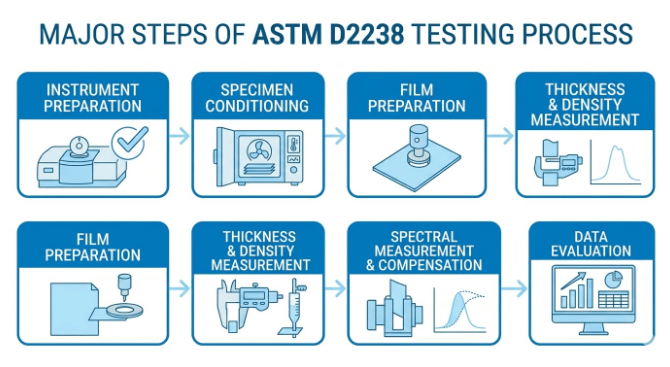
ASTM D2238 describes infrared absorption spectrophotometric test methods for measuring the 1378 cm−1 band in polyethylene that is associated with methyl groups. The standard includes two test methods that use compensation techniques to account for interference from nearby absorption bands. Test Method A uses a standard sample film with a known methyl content, while Test Method B uses a wedge of polymethylene or polyethylene with a known low methyl content. ASTM D2238 applies to Type I, Type II, and Type III polyethylenes within specified density ranges. When laboratories interpret the measurements with appropriate calibration data, the methods can help compare the total methyl content of polyethylene materials made by similar processes. ASTM D2238 (Standard Test Methods for Absorbance of Polyethylene Due to Methyl Groups at 1378 cm−1) also notes that methyl-group information can be useful when combined with molecular-weight and reactive-end-group data to study polyethylene structure and polymerization mechanisms. The results can also support qualitative comparisons with properties such as melting point, density, stiffness, and other mechanical properties related to crystallinity. ASTM states that these test methods are especially suitable for research and have not been tested for manufacturing control.
Get Certified ASTM D2238 Testing for Reliable Polyethylene Characterization
Polyethylene structure and branching can influence important material properties. Infrared measurements of the methyl-group band at 1378 cm−1 provide information that researchers can use to compare polyethylene materials produced by similar processes. Controlled compensation and calibration procedures help laboratories obtain comparable infrared measurements. ASTM D2238 testing can support polymer research, material characterization, and comparative studies. When combined with other molecular and material data, the results can help researchers investigate polyethylene structure and qualitative relationships between methyl content and selected material properties.