
ASTM C372 Linear Thermal Expansion of Porcelain Enamel and Glaze Frits and Fired Ceramic Whiteware Products by Dilatometer Method

    What is ASTM C372?

    ASTM C372 is a laboratory test method that has been standardized to determine the coefficient of linear thermal expansion (CLTE) of porcelain enamel frits, glaze frits, and fired ceramic whiteware products using a precision dilatometer. Thermal expansion data are critical for analyzing the response of ceramic materials to heat during production and use. Technicians place a representative specimen in a dilatometer and heat it at a controlled rate during the test. The dilatometer continuously measures the change in specimen length as the temperature increases. The dimensional changes are recorded, and the coefficient of linear thermal expansion is calculated. It should be noted that ASTM C372 (Standard Test Method for Linear Thermal Expansion of Porcelain Enamel and Glaze Frits and Fired Ceramic Whiteware Products by Dilatometer Method) offers objective and repeatable thermal expansion measurements as compared to visual inspection. The results help manufacturers select suitable materials, evaluate thermal compatibility between ceramic layers, minimize thermal stress cracking, and improve product performance.

    Read more

    Get Certified ASTM C372 Testing for Reliable Thermal Expansion Evaluation

    ASTM C372 establishes a standardized test method for determining the linear thermal expansion of porcelain enamel frits, glaze frits, and fired whitewares using the dilatometer method. Laboratory testing is used to confirm dimensional stability when heated under controlled conditions and helps meet customer and industry requirements. Manufacturers use ASTM C372 to support product qualification, quality assurance, manufacturing consistency, research and development, and process optimization. The outcomes enable manufacturers to make ceramic materials with predictable thermal characteristics.

    What is the Scope of ASTM C372 Test Standard?

    ASTM C372 provides a standard test method for measuring the linear thermal expansion of porcelain enamel frits, glaze frits, and fired ceramic whiteware products by dilatometer.

    Read more

    • Determines the linear coefficient of thermal expansion of ceramics.
    • Applies precise procedures for dilatometer tests.
    • Assesses compatibility and dimensional stability.
    • Uses it for porcelain enamel frits, glaze frits, and fired whiteware products.
    • Assists in quality assurance, product qualification, and manufacturing control.

    What is the Use of ASTM C372 Testing?

    • Manufacturers use ASTM C372 to determine the thermal expansion properties of ceramic materials for product development and quality control.
    • Porcelain enamel manufacturers test for thermal compatibility of porcelain enamel and metal base materials.
    • Manufacturers of ceramics test-fire items so that they will be more stable in use.
    • Sanitaryware manufacturers measure thermal expansion to minimize cracking due to temperature changes.
    • During product development, the thermal behavior of ceramic materials is studied in research laboratories.
    • Manufacturers routinely use ASTM C372 testing for quality control to ensure consistent thermal expansion properties.

    What Materials Can Be Tested Under ASTM C372?

    ASTM C372 is applicable to porcelain enamel frits, glaze frits, fired ceramic products for whiteware, porcelain materials, sanitaryware, electrical porcelain, ceramic insulators, ceramic coatings, and other ceramic materials that need linear thermal expansion testing.

    Why is ASTM C372 Important for Thermal Expansion Evaluation?

    ASTM C372 is a well-established and standardized procedure for determining the thermal expansion of ceramic products. Standardized testing allows manufacturers to increase material compatibility, optimize product design, eliminate thermal stress failures, increase manufacturing consistency, and provide long-term reliable performance.

    Common Challenges and Troubleshooting

    Specimen preparation issues, instrument calibration issues, inconsistent heating rates, specimen misalignment, environmental variations, and improper temperature control can affect the accuracy of the test. Proper specimen handling, regular instrument calibration, controlled heating conditions, and standardized laboratory procedures produce reliable and repeatable results.

    ASTM C372 Testing Process and Data Collection

    Technicians prepare representative ceramic specimens and set up the dilatometer before testing. Technicians place the specimens in the dilatometer and heat them at a controlled rate while the system continuously monitors dimensional changes. The expansion is recorded in the laboratory during the heating cycle, and the coefficient of linear thermal expansion is calculated based on the requirements of ASTM C372.

    ASTM C372 Equipment and Sample Preparation Guide

    For accurate and repeatable thermal expansion measurements, it is crucial to have correct sample preparation and calibrated lab equipment.

    Read more

    Specimen DetailsRepresentative specimens include porcelain enamel frits, glaze frits, fired whitewares, sanitaryware, porcelain insulators, and other ceramic materials evaluated for thermal expansion.
    Specimen PreparationTechnicians prepare specimens with smooth, parallel surfaces and inspect them for visible defects before testing.
    Specimen DimensionsSamples are cut to meet ASTM C372 specifications for accurate sample placement in the dilatometer and reliable measurement of expansion.
    InstrumentationCommon laboratory equipment includes a precision dilatometer, a programmable laboratory furnace, temperature controllers, thermocouples, a digital data acquisition system, calibration standards, specimen holders, and dimensional measuring instruments.

    Testing Procedures and Requirements for Linear Thermal Expansion Evaluation

    ASTM C372 provides guidelines for measuring the linear thermal expansion coefficient using a calibrated dilatometer. Accurate, repeatable, and comparable results are obtained in controlled laboratory conditions.

    Read more

    Specimen PreparationTechnicians cut representative specimens according to the dimensions specified in ASTM C372. Every specimen is cleaned and checked for any visible defects, contamination, and surface damage before testing.
    Instrument CalibrationTechnicians calibrate the dilatometer and temperature measurement system according to the manufacturer’s recommendations before testing.
    Heating ProcedureTechnicians place the specimen in the dilatometer and heat it at a controlled rate over the required temperature range under controlled testing conditions.
    Expansion MeasurementThe dilatometer continuously measures the change in specimen length as the temperature increases. Expansion data are recorded during the heating cycle.
    Data CollectionLaboratory personnel record the specimen identification, initial dimensions, temperature profile, dimensional changes, heating rate, and testing conditions.
    Result AnalysisEngineers use the recorded expansion data to determine the coefficient of linear thermal expansion and evaluate the material’s thermal characteristics.
    Documentation Laboratory reports often include sample identification, material type, temperature range, heating rate, expansion measurements, calculated thermal expansion data, equipment data, and ASTM C372 compliance verification.
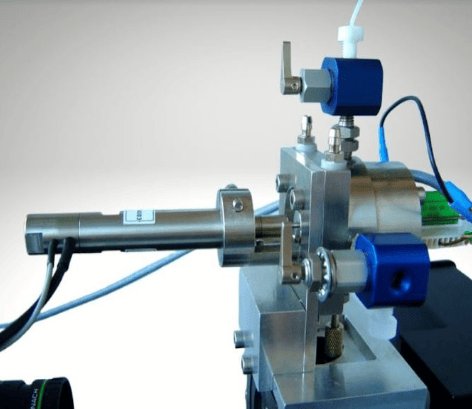
    This image depicts a ceramic sample within a laboratory dilatometer for ASTM C372 linear thermal expansion testing.
    ASTM C372 Linear Thermal Expansion Testing by Dilatometer

    Analysis Results and Interpretation

    • The coefficient of linear thermal expansion is usually reported in µm/m·°C, ×10⁻⁶/°C, or in any other appropriate measurement unit.
    • The amount of dimensional change is reported throughout the temperature range in mm or µm.
    • Generally, the lower the thermal expansion, the more dimensionally stable the material will be.
    • The higher the thermal expansion, the more likely there is a need to evaluate compatibility with adjacent materials.
    • The measured values are used to assess the suitability of the materials for high-temperature applications.
    • Engineers compare the measured coefficient of linear thermal expansion with design requirements or compatible ceramic and metal materials to evaluate thermal compatibility and reduce the risk of cracking during service.

    What are the Factors to Consider for ASTM C372 Testing?

    Speed: Thermal expansion testing needs to be done with controlled heating and cooling cycles, and the testing time is dependent on the range of temperature and heating rate selected.

    Read more

    Expertise: Dilatometer operators must be experienced laboratory personnel who can prepare specimens, operate precision dilatometers, monitor the temperature history, determine thermal expansion values, and interpret results accurately.

    Cost: Testing requires specialized thermal analysis equipment and precision instrumentation, but it is useful for product development, quality control, material compatibility, and long-term performance testing.

    Link to ASTM C372

    FAQ

    Where can I get the astm c372 tested?
    You can share your astm c372 testing requirements with MaTestLab. MaTestLab has a vast network of material testing laboratories, spread across the USA and Canada. We support your all material testing needs ranging from specific astm c372 test to various testing techniques.
    Please contact us for a detailed quote for your astm c372 testing needs. Cost incurred to carry out different astm c372 testing methodology depends on the type of raw material; number of samples, coupons, or specimens; test conditions, turn around time etc. Costs of some ASTM testing methods start from $100 and the final value depends upon the factors listed above. Please contact us for the best and latest prices.
    The required number of samples or specimens should comply with the procedure given in the astm c372 standard. However, the MaTestLab operations team can assist you for your special requirements once you share your testing details with us.
    MaTestLab has a vast testing laboratory network, hence we bring you the best testing facilities in a cost-effective way. We offer considerable discounts (15-20%) to our returning customers based on test volume and frequency.
    The turnaround time for astm c372 test methodology depends upon the test procedure mentioned in the standard test document. However, we at MaTestLab understand your research requirements and hence try to get your test completed within the least possible time.
    Dr Ruchika Yogesh
    About Author
    Dr Ruchika Yogesh
    Dr. Ruchika Yogesh is an entrepreneur, science and AI/ML enthusiast, medicinal chemistry subject matter expert (SME), scientific/medical copyeditor, and an independent researcher.
    Testimonials
    Real results
    Engineers trust us with what matters most
    Start Your Testing
    Project Today
    Define your requirements and get access to
    specialized laboratories ready to deliver results
    Partners with us
    Clients
    Vendors
    Process for testing
    • STEP 01

      You share your testing requirements

    • STEP 02

      You share your sample(s)

    • STEP 03

      We deliver your test reports

    Get your testing done

    Let us known your testing requirements and we will be right back with a solution.

      Let us root for each other. Collaborate to grow, expand, and accelerate our businesses.

      Partner with us

        Contact Us

        Discover more from MaTestLab

        Subscribe now to keep reading and get access to the full archive.

        Continue reading