
ASTM A6 Specification for General Requirements for Rolled Structural Steel Bars, Plates, Shapes, and Sheet Piling

    ASTM A6 Introduction

    ASTM A6 (Standard Specification for General Requirements for Rolled Structural Steel Bars, Plates, Shapes, and Sheet Piling) establishes prevailing requirements for rolled metal objects in production and other industrial applications. The general specifications contain rolled structural steel bars, plates, shapes, and sheet piling. The steel is produced in open-hearth, basic-oxygen, or electric-arc furnaces. They also include additional refinings in a ladle metallurgy furnace or secondary melting, such as vacuum-arc remelting and electroslag remelting.

    Read more

    Get Certified ASTM A6 Testing for Reliable Structural Steel Quality

    Certification ensures that rolled structural steel products meet certain dimensional and mechanical properties before being utilized in the building process. Certified testing promotes structural reliability, reduces material defects, and assists in meeting engineering needs.
    Scope of ASTM A6 Test Standard

    • Specifies general requirements for rolled structural steel (RSS) 
    • Knows dimensional and mechanical property specifications 
    • Responsible for quality control and construction material inspection 
    • Applies to bars, plates, shapes, and sheet piling. 
    • Helps in the production and installation of structural steel structures 

    ASTM A6 Equipment and Sample Preparation

    Specimen DetailsThe standard specifies the requirements for specimen preparation, including any necessary conditioning or preparation before testing.
    Specimen dimensionsSpecimen dimensions vary by structural steel product type. Technicians choose samples with the true specimen cross-section and size. These dimensions can be width, thickness, length, and other geometric dimensions. The technicians also position and prepare the specimens and guarantee correct alignment during testing and accurate measurement of load and deformation.

    Use of ASTM A6

    • Compares the quality and consistency of structural steel 
    • Assists in the construction and fabrication needs 
    • Helps with dimensional and mechanical checks 
    • Reduces the load on the structural steel.
    • Ensures quality control and acceptance of structural materials 

    Why are dimensional tolerances important?

    Dimensional tolerances ensure that structural steel parts can be assembled accurately during production and on the construction site. Accurate dimensions ensure optimal load distribution, assembly precision, and structural performance. 

    Read more

    Why are mechanical properties critical?

    Mechanical properties determine the durability and strength of structural metallic materials. Quality metal provides excellent safety, load-carrying capacity, and structural reliability. Therefore, ASTM A6 plays an important role in construction and engineering.

    Common Challenges and Troubleshooting 

    The technical problems arise from dimensional deviation, surface defects, marking problems, or inconsistent mechanical properties. These problems impact the acceptance of the product and its structures. However, using good manufacturing control systems, along with proper equipment calibration and careful inspection procedures, will enhance testing accuracy and product reliability.

    ASTM A6 Testing Technique, Process, and Data Collection

    The technician prepares steel samples for inspection and testing. Then, the lab makes dimensional measurements and mechanical tests. The technician evaluates tensile properties, tolerance, and surface quality requirements. Finally, the inspector notes the results and ensures conformance to ASTM A6. 

    Testing Procedures and Requirements

    First, the manufacturer of rolled steel structures produces rolled steel products in accordance with the manufacturing requirements. The lab then performs dimensional inspection and mechanical properties testing. The technician also confirms the chemical composition, tolerances, and surface quality requirements. Lastly, the inspector examines marking, identification, and acceptance criteria before product approval.

    Read more

    This document includes other specifications such as A36/A36M, A131/A131M, A328/A328M, A514/A514M, and A529/A529M.

    Specimen SelectionRepresentative samples of hot-rolled structural steel shapes, plates, or bars are tested. Technicians select samples that are representative of the size and mechanical properties of the material. These specimens provide accurate testing of the steel’s actual performance in its intended use. 
    Test Setup and ExecutionTest setups and test executions differ depending on the type of tests that are being done on structural steel, e.g., tensile testing (ASTM E8) or impact testing (ASTM A370). However, there are two methods for calculating yield strength: 0.2 percent offset and 0.5 percent extension under load. 
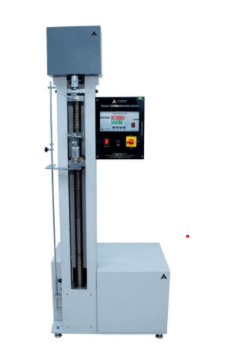
    This image shows a tensile testing machine that measures mechanical properties, such as tensile and yield strengths, during ASTM A6 testing.
    ASTM A6 Tensile Testing Machine 

    Analysis Results and Interpretation

    ASTM A6 provides records of tensile strength, yield strength, and values in megapascals (MPa) and kilopascals (kPa). The specification uses millimeters (mm) or inches (in) for information on dimensions and tolerances. High mechanical strength provides excellent structural performance and load-carrying capacity. Good dimensional tolerances result in greater accuracy in manufacturing and construction.

    Read more

    FAQ

    Where can I get the astm a6 tested?
    You can share your astm a6 testing requirements with MaTestLab. MaTestLab has a vast network of material testing laboratories, spread across the USA and Canada. We support your all material testing needs ranging from specific astm a6 test to various testing techniques.
    Please contact us for a detailed quote for your astm a6 testing needs. Cost incurred to carry out different astm a6 testing methodology depends on the type of raw material; number of samples, coupons, or specimens; test conditions, turn around time etc. Costs of some ASTM testing methods start from $100 and the final value depends upon the factors listed above. Please contact us for the best and latest prices.
    The required number of samples or specimens should comply with the procedure given in the astm a6 standard. However, the MaTestLab operations team can assist you for your special requirements once you share your testing details with us.
    MaTestLab has a vast testing laboratory network, hence we bring you the best testing facilities in a cost-effective way. We offer considerable discounts (15-20%) to our returning customers based on test volume and frequency.
    The turnaround time for astm a6 test methodology depends upon the test procedure mentioned in the standard test document. However, we at MaTestLab understand your research requirements and hence try to get your test completed within the least possible time.
    Rohit Dhembare
    About Author
    Rohit Dhembare
    Rohit Dhembare is an Operations Associate at MaTestLab Inc. and holds a postgraduate degree in Organic Chemistry.
    Testimonials
    Real results
    Engineers trust us with what matters most
    Start Your Testing
    Project Today
    Define your requirements and get access to
    specialized laboratories ready to deliver results
    Partners with us
    Clients
    Vendors
    Process for testing
    • STEP 01

      You share your testing requirements

    • STEP 02

      You share your sample(s)

    • STEP 03

      We deliver your test reports

    Get your testing done

    Let us known your testing requirements and we will be right back with a solution.

      Let us root for each other. Collaborate to grow, expand, and accelerate our businesses.

      Partner with us

        Contact Us

        Discover more from MaTestLab

        Subscribe now to keep reading and get access to the full archive.

        Continue reading