ASTM D1763 Standard Specification for Epoxy Resins

    What is ASTM D1763?

    ASTM D1763 specifies requirements for totally reactive epoxy resins supplied as liquids or solids for applications such as castings, coatings, tooling, potting, adhesives, and reinforced applications. This standard provides a consistent specification for characterizing totally reactive epoxy resins before manufacturers use them in further processing. The standard covers both liquid and solid resins and groups them by chemical composition. ASTM D1763 (Standard Specification for Epoxy Resins) therefore supports quality control, material characterization, resin classification, product development, and consistent processing of epoxy-based thermosetting materials. 

    Read more

    Get Certified ASTM D1763 Epoxy Resin Testing

    Manufacturers, suppliers, and users can use ASTM D1763 to assess epoxy resins against specified requirements. Applicable test methods are available for the characterization of resin properties, comparative resin testing with different grades and production batches, quality assurance, and material selection.

    What is the scope of ASTM D1763?

    ASTM D1763 establishes requirements for epoxy resins used in plastics and related applications. The specification covers totally reactive epoxy resins supplied as liquids or solids for applications such as castings, coatings, tooling, potting, adhesives, and reinforced applications. This standard classifies the covered resins by chemical nature. The specification includes resin types based on materials such as bisphenol A and epichlorohydrin, novolac resins and epichlorohydrin, cycloaliphatic epoxies, glycidyl esters, and other epoxy systems. Manufacturers and quality-control laboratories can use these requirements to maintain consistency between resin batches. The ASTM D1763 standard covers-

    Read more

    • Epoxy Resins: Evaluates epoxy resins against the specified requirements for their applicable type and grade. 
    • Liquid Epoxy Resins: Characterizes applicable liquid resin materials according to the physical and chemical requirements specified for the relevant resin classification. 
    • Solid Epoxy Resins: Evaluates applicable solid epoxy resin materials according to the requirements established for their designated grade. 
    • Epoxy Resin Grades: To compare the properties of resin with the specification limits to determine if the material matches its specified grade.
    •  Production Batches: Enables the manufacturer and user to compare batch-to-batch quality by comparing measured resin properties to quality specification requirements. 
    • ASTM D1763 establishes resin requirements but does not function as an engineering-design guide or determine which resin users should select for a particular application.

    What are the applications of ASTM D1763 testing?

    ASTM D1763 is a standard classification and evaluation of liquid and solid reactive epoxy resin. It ensures raw materials meet standards for viscosity, color, and softening point before blending with hardeners and turning into industrial, structural, and consumer goods.

    • Aids the epoxy resin quality control process for manufacturers to ensure that the resin batches they use are compliant with the specified requirements. 
    • Provides standardized property data, supporting material selection for specific material formulations and applications in the use of epoxy resin. 
    • Supports supplier evaluation by enabling users to compare conformity and properties of epoxy resin between suppliers and production batches. 
    • Supports formulation development, delivering resin-property information for use in the development of plastics, coatings, adhesives, and composite systems with epoxy.
    • Helps manufacturers of resin, plastics, and other materials maintain consistent resin characteristics and assess materials prior to production use to support process control and material qualification.

    What Materials Can Be Tested According to ASTM D1763?

    The following materials can be tested according to the ASTM D1763 standard-

    • Epoxy Resins: Evaluates resin materials against the applicable chemical and physical requirements established by the specification. 
    • Liquid Epoxy Resin Grades: Characterizes applicable liquid epoxy materials to determine whether they meet the requirements for their designated grade. 
    • Solid Epoxy Resin Grades: Assesses suitable solid epoxy materials and ensures that they meet the required physical and chemical properties. 

    Why is ASTM D1763 Testing Important?

    ASTM D1763 outlines standard specifications for epoxy resins and provides guidance for assessing conformance to resin characteristics. The requirements help manufacturers determine resin quality and consistency, and help users compare materials and ensure quality based on the data generated. The specification does not contain engineering data nor guide end users to any resin for purchase.

    What Properties Does ASTM D1763 Evaluate?

    ASTM D1763 evaluates the following properties of epoxy resin materials-

    • Viscosity (cP at 25°C): Measures the resistance of applicable epoxy resin to flow and helps classify the resin according to the specified requirements. 
    • Mettler Softening Point (°C): Determines the softening temperature of applicable solid or semisolid epoxy resin and helps classify the material according to its specified resin group. 
    • Color (Gardner-Holdt or applicable color scale): Evaluates resin color and helps verify conformity with the color requirement for the applicable resin type and grade. 
    • Epoxy Content: Classifies applicable Type I, Grade 1 epoxy resins according to their specified epoxy-content range, expressed in equivalents/100 g or related WPE values.

    How does ASTM D1763 work?

    Technicians determine the type and grade of epoxy resin that applies to the problem, and they take a representative sample. They set up the sample in compliance with the appropriate test procedure and employ calibrated laboratory equipment to determine the necessary properties. The laboratory then makes a comparison of the measured values to the applicable ASTM D1763 specification requirements. Technicians record the results and decide if the epoxy resin meets the requirements.

    ASTM D1763 Equipment and Sample Preparation Guide

    Proper sample preparation and appropriate laboratory equipment help technicians obtain reliable epoxy resin test results. Technicians should take representative resin samples and preserve them from contamination and changes of condition before testing. Laboratories should use calibrated instruments that are appropriate for the properties and requirements being assessed.

    Read more

    Sample DetailsTechnicians use a representative epoxy resin sample that matches the specified resin type and grade.
    Sample PreparationTechnicians prepare the resin according to the applicable test procedure and prevent contamination, moisture exposure, or other changes that could affect the measured properties.
    Sample ConfigurationTechnicians place the prepared resin in suitable containers or molds according to the property being evaluated and maintain consistent sample conditions before testing.
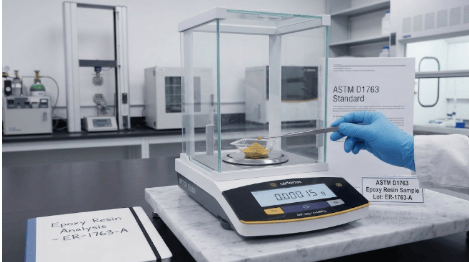
    InstrumentationLaboratories use calibrated laboratory equipment appropriate for the required epoxy resin property, such as analytical balances, viscosity-measurement equipment, heating systems, and other applicable testing instruments.

    ASTM D1763 Testing Procedures and Requirements

    Laboratories use calibrated equipment appropriate for the required epoxy resin properties, including viscosity-measurement equipment, Mettler softening-point equipment, color-measurement equipment, analytical balances, and other applicable instruments. This document contains other similar specifications as ISO 3673. The ASTM D1763 procedure comprises of the following-

    Read more

    Sample Preparation and InspectionTechnicians prepare representative epoxy resin samples and check their condition before testing to make sure contamination and/or handling does not influence the results.
    Property MeasurementTechnicians determine the physical and chemical characteristics specified for the various types and grades of epoxy resins for which the test is applicable by means of ASTM procedures and calibrated testing equipment.
    Specification ComparisonTechnicians measure the values and compare to the applicable ASTM D1763 requirements to determine if the epoxy resin complies with the specified grade requirements.
    Result Analysis and ReportingTechnicians document the measured values, suitable test conditions, resin identification, and conformance for material qualification and quality assessment.

    ASTM D1763 Testing Process and Data Collection

    Technicians identify the epoxy resin type and grade before preparing a representative sample. They condition and handle the sample according to the applicable test procedure and perform the required measurements using calibrated equipment.

    The laboratory records the measured property values, test conditions, resin identification, and conformity information. Engineers then compare the results with the applicable specification requirements to assess resin quality and consistency.

     Analytical balance used to measure a representative epoxy resin sample during ASTM D1763 testing.
    ASTM D1763 Analytical Balance 

    Common Challenges and Troubleshooting

    Epoxy resin test results can vary due to moisture exposure, contamination, improper handling of samples, temperature, and equipment calibration. Technicians should keep representative samples and carefully follow applicable test conditions. Laboratories should also choose the proper test procedure to use for the type and grade of the resin. Technicians should check equipment calibration and record any unusual conditions of samples or tests that may impact interpretation.

    Analysis Results and Interpretation

    • The laboratory report includes applicable epoxy content (equivalents/100 g), weight per epoxy equivalent (WPE), viscosity (cP at 25°C), Mettler softening point (°C), color classification, resin type, grade, and conformity with the applicable specification requirements.
    • The test assesses the following physical and chemical properties of epoxy resins, which are pertinent to the suitability of the material for the intended use type and grade. 
    • Engineers use test results to compare types, grades, suppliers, manufacturing processes and production batches of epoxy resin to determine the quality of the resin. 
    • Engineers use the test results for material qualification, quality assurance, supplier evaluation, formulation development, process control, and material selection. 
    • Engineers interpret the results together with resin type, grade, sample condition, test method, temperature, and other applicable test conditions because these factors can influence measured resin properties. 

    Link to ASTM D1763 

    Read more

    Updated on August 21, 2026

    Malhar Khole
    About Author
    Malhar Khole is a Material Testing Associate at Matestlab Inc. and holds a postgraduate degree in Material Science and Technology from IIT (BHU), Varanasi.
    Know More
    Testimonials
    Real results
    Engineers trust us with what matters most
    Why Choose Matestlab?
    Matestlab is a unified testing services partner based in the USA. Matestlab offers raw material and product testing services through accredited, expert laboratories primarily based in the USA. Matestlab supports physical, thermal, chemical, electrical, mechanical, environmental, and characterization testing needs through its global network of 2200+ accredited testing laboratories. Matestlab's in-house materials science experts curate and design comprehensive testing programs matched to the sample material and specific testing need, with regulatory requirements and confidentiality in mind.

    If you are looking for a managed and trusted testing partner to achieve your research goals, feel free to schedule a meeting with us or send us a request at connect@matestlabs.com to learn more about our services. For a quick quote, call us at (302)244-7710. We are happy to serve you.
    Start Your Testing
    Project Today
    Define your requirements and get access to
    specialized laboratories ready to deliver results
    Partners with us
    Clients
    Vendors
    Process for testing
    • STEP 01

      You share your testing requirements

    • STEP 02

      You share your sample(s)

    • STEP 03

      We deliver your test reports

    Get your testing done

    Let us know your testing requirements and we will be right back with a solution.

      Let us root for each other. Collaborate to grow, expand, and accelerate our businesses.

      Partner with us