
ISO Standards

International Organization for Standardization (ISO) is a global network of 167 national standards bodies. This is an independent, non-governmental international organization with one member per country. ISO brings together expertise from various fields to share knowledge and develop voluntary, consensus-based, market-relevant International Standards to support innovation and manufacturing across the globe.

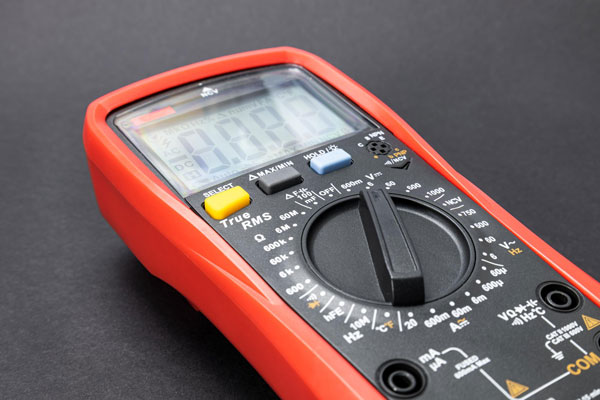
    Digital multimeter used for ASTM testing
    ISO/ASTM 52939:2023 Additive Manufacturing for Construction Qualification Principles Structural and Infrastructure Elements
    ISO/ASTM 52939:2023 offers instructions for certifying additive manufacturing procedures in the building industry, guaranteeing the quality and safety…
    ISO Standards
    ISO/TR 12998:2019 Mechanical joining – Guidelines for Fatigue Testing of Joints
    In mechanical joining, fatigue testing entails repeatedly stressing joint specimens to mimic actual circumstances and evaluate their long-term…
    ISO Standards
    ISO 18606:2013 Packaging and the Environment Organic Recycling
    ISO 18606:2013 specifies the packaging material requirements that are fit for organic recycling processes, including industrial composting and…
    ISO Standards
    ISO 10531:1992 Packaging, Complete, filled transport packages – Stability testing of unit loads
    ISO 10531:1992 provides a normative method for determining the stability of unit loads—bundled packages that are stacked, wrapped,…
    ISO Standards
    ISO 21976:2018 Packaging, Tamper verification features for medicinal product packaging 
    ISO 21976:2018 describes requirements and guidance for tamper verification elements on medicinal product packaging. It aims to enable…
    ISO Standards
    ISO/TR 20436 Buildings and civil engineeringworks – Sealants – Paintability andpaint compatibility of sealants
    The technical standard ISO/TR 20436:2017 evaluates the surface appearance of dried coatings, particularly sealants used in building projects.…
    ISO Standards
    ISO 14188:2012 Test methods for measuring thermal cycle resistance and thermal shock resistance for thermal barrier coatings
    ISO 14188:2012 is written to evaluate the thermal cycle resistance and the thermal shock resistance of metallic and…
    ISO Standards
    ISO 4892 Methods of Plastics Exposure to Laboratory Light Sources
    ISO 4892 is an appropriate standard for exposing plastics to laboratory light sources to model the influence of…
    ISO Standards
    ISO 9277 Determination of the Specific Surface Area of Solids by Gas Adsorption 
    ISO 9277 defines a Brunauer-Emmett-Teller (BET) method of determining the specific surface area of solids through the process…
    ISO Standards
    ISO 14130 Apparent Interlaminar Shear Strength by Short-Beam Method
    ISO 14130 provides a mechanism to determine the apparent interlaminar shear strength (ILSS) of fiber-reinforced plastic composites via…
    ISO Standards
    ISO 1920 Testing of Concrete: Strength of Hardened Concrete
    ISO 1920 is an all-encompassing standard series describing the methods to test the mechanical properties of hardened concrete…
    ISO Standards
    ISO 11463 Corrosion of Metals and Alloys, Guidelines for the Evaluation of Pitting Corrosion
    ISO 11463 describes an extensive guideline to assess the pitting corrosion occurring in metallic materials, which is a…
    ISO Standards
    Load more

    Introduction to ISO

    International Organization for Standardization (ISO) is an independent, non-governmental organization that creates, sets and promotes international standards to support innovation and manufacturing processes across the globe. ISO has a global network of national standards bodies with one member per country. ISO is a not-for-profit, self-sustained organization.

    Businesses provide ISO certification to their customers as a proof of product or service compliance.

    Introduction to ISO Standards

    ISO standards are highly evolved, best practices to make standardized products and services across businesses and customers. ISO standards describe the best way of doing a specific activity in a particular field. These standards are established by experts and help make products safe, compatible and working well in the user environment. Till date ISO has published 22,600+ standards applying to all kinds of industries.

    Generally Used  ISO Standards

    Here is a list of most common ISO standards-

    • Quality management standards (ISO 9000): These help organizations work more efficiently and reduce product failures.
    • Energy management standards (ISO 50001): These optimize and cut down energy consumption.
    • Environmental management standards (ISO 14001): These focus on reducing environmental impact, reduce waste, and make existing processes more sustainable.
    • Health and safety standards: These are used to ensure healthy and safe working environments and reduce workplace-related accidents.
    • Food safety standards (ISO 22000): These focus on protecting food from contamination.
    • IT security standards (ISO/IEC 27000): These keep sensitive information away from unauthorized eyes thus securing data and other information.

    FAQ

    Where can I get iso standards testing done?
    You can share your iso standards testing requirements with Matestlab. Matestlab has a vast network of material testing laboratories, spread across the USA and Canada. We support your all material testing needs ranging from specific iso standards tests to various testing techniques.
    Please contact us for a detailed quote for your iso standards testing needs. Cost incurred to carry out different iso standards testing methodology depends on the type of raw material; number of samples, coupons, or specimens; test conditions, turn around time etc. Please contact us for the best and latest prices.
    The required number of samples or specimens should comply with the relevant standard's procedure. The Matestlab operations team can assist you for your special requirements once you share your testing details with us.
    Matestlab has a vast testing laboratory network, hence we bring you the best testing facilities in a cost-effective way. We offer considerable discounts (15-20%) to our returning customers based on test volume and frequency.
    Turnaround time depends on the specific test procedure required. However, we at Matestlab understand your research requirements and hence try to get your testing completed within the least possible time.
    Testimonials
    Real results
    Engineers trust us with what matters most
    Why Choose Matestlab?
    Matestlab is a unified testing services partner based in the USA. Matestlab offers raw material and product testing services through accredited, expert laboratories primarily based in the USA. Matestlab supports physical, thermal, chemical, electrical, mechanical, environmental, and characterization testing needs through its global network of 2200+ accredited testing laboratories. Matestlab's in-house materials science experts curate and design comprehensive testing programs matched to the sample material and specific testing need, with regulatory requirements and confidentiality in mind.

    If you are looking for a managed and trusted testing partner to achieve your research goals, feel free to schedule a meeting with us or send us a request at connect@matestlabs.com to learn more about our services. For a quick quote, call us at (302)244-7710. We are happy to serve you.
    Start Your Testing
    Project Today
    Define your requirements and get access to
    specialized laboratories ready to deliver results
    Partners with us
    Clients
    Vendors
    Process for testing
    • STEP 01

      You share your testing requirements

    • STEP 02

      You share your sample(s)

    • STEP 03

      We deliver your test reports

    Get your testing done

    Let us know your testing requirements and we will be right back with a solution.

      Let us root for each other. Collaborate to grow, expand, and accelerate our businesses.

      Partner with us