
The ASTM E534 test standard outlines laboratory procedures for chemically analyzing sodium chloride (common salt). This method covers the chemical analyses that are frequently required for sodium chloride. The values are considered as a standard when expressed in SI units.
ASTM E534 Standard Test Methods for Chemical Analysis of Sodium Chloride
What is ASTM E534?
What is the Scope of ASTM E534?
Sodium chloride is a naturally occurring substance. It is a vital component of the human diet as well as a source of various salt compounds and chlorine. The ASTM E534 test method explains how to analyze sodium chloride to determine whether it’s acceptable for its intended use.
ASTM E534 Testing Procedure and Requirements
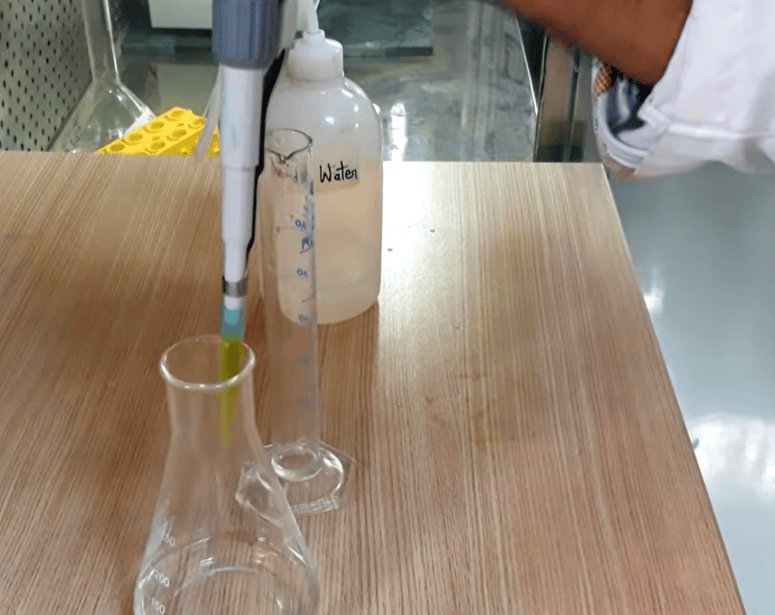
In the ASTM E534 test method, two aliquots of the stock solution are pipetted into 400-mL beakers, yielding a titer of 2–10 mL standard EDTA solution. The solution is then diluted to 200 mL with water and placed on a magnetic stirrer. Then 5 mL buffer solution, 1 mL KCN solution, and enough Eriochrome Black T Indicator Solution are added to get a real blue hue, titrated using a typical EDTA solution, and the milliliters are recorded as T1. In the case of calcium to precipitate magnesium, 2 mL of KOH solution is added and 1 mL of KCN solution to the other aliquot and mixed for about 2 minutes, then enough murexide solution (or an analogous calcium indicator solution) is added to the mixture. To get a real blue hue, titrated using a typical EDTA solution, and the milliliters are recorded as T2. About a 100 g sample is used for the test method, and the sample must be conditioned at 110°C for one hour.
ASTM E534 Analysis Results and Interpretation
In ASTM E534, the mass percent of calcium is calculated as:
Ca, % mass (m/m) = (T2) (factor) (0:1)/S
Where:
T2 = EDTA used to titrate calcium only
S = mass of salt in aliquot, g
Mass percent of magnesium is calculated as:
Mg, % mass (m/m) = (T1 ̶ T2) (factor) (0.6064) (0.1)/S
Where:
T1 = EDTA used to titrate total calcium and magnesium.
S = mass of salt in aliquot, g
Report analyses on a dry basis. If analyses are on an as-received sample, correction should be made by converting to a dry basis. Determine sodium chloride purity by subtracting the total percentage of impurities from 100. Moisture should be reported as a separate value.
Updated on August 29, 2026

Testimonials
Real results
Engineers trust us with what matters most
“We had a great experience working with this company for our ASTM E84 testing. They were the first company to respond to our inquiry within just a few minutes of submitting it. From start to finish, the communication was excellent, and the entire process was swift, straightforward, and hassle-free.”

“Very good communication, testing associates were very patient with delays on our end. Reasonable turnaround time for results and nicely detailed report. Analysts were also quick to answer any follow-up questions. Happy with results.”
“Matestlab connected us with an accredited lab within days, cutting weeks off our product validation timeline.”
Start Your Testing
Project Today
Project Today
Define your requirements and get access to
specialized laboratories ready to deliver results
specialized laboratories ready to deliver results
Start Testing
Partners with us
Clients
Vendors