
ASTM E475 is a standard test method for determining the assay of highly pure di-tert-butyl peroxide using the gas chromatography technique. It is also applicable to commercial di-tert-butyl peroxide, which contains small impurities. Flame ionization and the Karl Fischer method are used to perform this method. Values are stated in SI units, as they are to be regarded as standard.
ASTM E475 Standard Test Method for Assay of High Purity Di-tert-Butyl Peroxide Using Gas Chromatography
What is ASTM E475?
What is the Scope of ASTM E475?
The ASTM E475 test method is highly significant for the assay of di-tert-butyl peroxide, as it is a widely used catalyst. This test method provides a procedure for measuring the active peroxide content of a commercial di-tert-butyl peroxide reaction initiator. Therefore, it is important.
- Material: Pure di-tert-butyl peroxide and commercial di-tert-butyl peroxide, which may contain small amounts of isobutylene, tert-butanol, tert-butyl hydroperoxide, triisobutylenes, and water as impurities.
- Technique: Gas chromatography
- Purpose: Determine conformance with a given specification. Conformance is evaluated with the given specification, where an observed value or a calculated value is rounded off “to the nearest unit” in the last right-hand digit used in expressing the specification limit
ASTM E475 Testing Procedure and Requirements
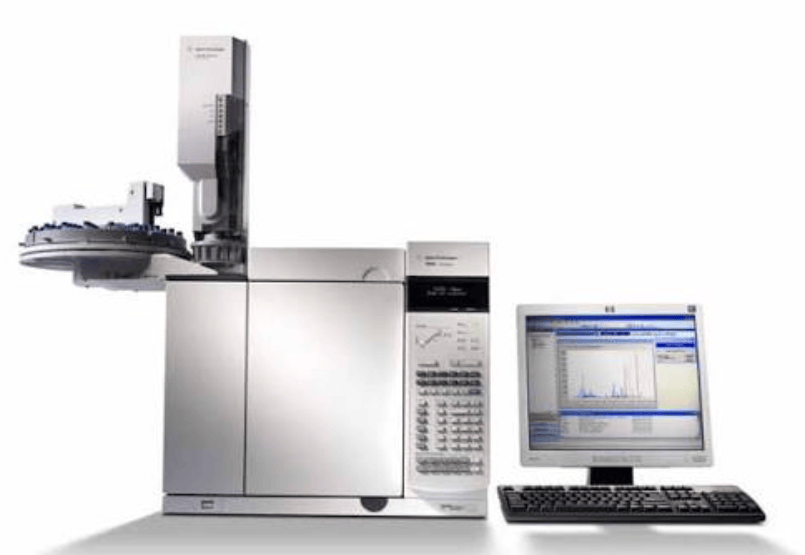
A sample is first mixed with water in dodecane, then it is injected into a gas chromatograph. Then di-tert-butyl peroxide is purified from impurities by using a gas program containing helium as a carrier. The flame ionization detector response is recorded, and the peak areas are measured. The assay of di-tert-butyl peroxide is corrected for water, which is determined using a separate Karl Fischer titration. The area percent of di-tert-butyl peroxide is considered to be equal to mass percent.
ASTM E475 Result Analysis and Interpretation
Updated on August 29, 2026

Testimonials
Real results
Engineers trust us with what matters most
“We had a great experience working with this company for our ASTM E84 testing. They were the first company to respond to our inquiry within just a few minutes of submitting it. From start to finish, the communication was excellent, and the entire process was swift, straightforward, and hassle-free.”

“Very good communication, testing associates were very patient with delays on our end. Reasonable turnaround time for results and nicely detailed report. Analysts were also quick to answer any follow-up questions. Happy with results.”
“Matestlab connected us with an accredited lab within days, cutting weeks off our product validation timeline.”
Start Your Testing
Project Today
Project Today
Define your requirements and get access to
specialized laboratories ready to deliver results
specialized laboratories ready to deliver results
Start Testing
Partners with us
Clients
Vendors