ASTM E202 Analysis of Ethylene Glycols and Propylene Glycols
What is ASTM E202?
ASTM E202 is a standard laboratory test method for the analysis of commercially available grades of ethylene glycols, propylene glycols and related glycol products. The standard compiles recognized analytical techniques to assess key chemical and physical properties that determine the product’s performance, stability, and suitability for industrial use. ASTM E202 (Standard Test Methods for Analysis of Ethylene Glycols and Propylene Glycols) tests a number of properties such as density, boiling properties, acidity, moisture content, trace iron contamination, and chemical composition instead of attempting to measure just any one of these properties. The resulting data can be used to check product quality, ensuring consistency and compliance with customer and industry specs.
Get Certified ASTM E202 Testing for Reliable Glycol Quality Evaluation
Certification ensures glycol products are tested using the same laboratory methods. Testing assures chemical composition, physical qualities, purity, moisture content, acidity, and contaminant levels in a controlled laboratory setting. ASTM E202 certification supports quality assurance, product qualification, manufacturing consistency, regulatory compliance, and reliable performance across a broad range of industrial and commercial applications.
What is the Scope of ASTM E202 Test Standard?
ASTM E202 provides a uniform method to test the chemical and physical characteristics of ethylene glycols, propylene glycols, and other glycol products in the laboratory under controlled conditions. This test standard-
Predicts chemical and physical characteristics of glycol products.
To determine specific gravity, acidity, water content, iron content, and distillation range.
Analyses chemicals by gas chromatography.
Assists in product quality control and ensures product specifications are met.
Applies to ethylene glycol, propylene glycol, dipropylene glycol, triethylene glycol, and other ethylene glycols.
Conducts standardized laboratory analysis for product and quality assurance.
What are the Uses of ASTM E202 Testing?
Manufacturers can use this testing method to assess the quality, purity, and chemical composition of glycols for use in various industrial applications. They use the results to support material selection, process control, product development, and quality assurance.
Chemical manufacturers check glycol products for purity and uniformity before distribution.
The automotive industry tests glycol and antifreeze mixtures to determine their effectiveness.
Pharmaceutical manufacturers evaluate glycol products for use as solvents, excipients, and processing materials.
Production batches are analyzed for quality control, as petrochemical companies do.
Specialist formulations are compared to existing formulations, and new glycol products are tested and assessed in research laboratories for specialist industrial applications.
Quality control laboratories regularly conduct tests to ensure the product conforms to customer specifications and/or regulatory requirements.
What Materials Can Be Tested Under ASTM E202?
This test standard can be used to test ethylene glycol and other glycols such as propylene glycol, dipropylene glycol, and triethylene glycol, ethylene diol, glycol mixtures, glycol-based industrial fluids, heat transfer fluids, antifreeze formulations, chemical intermediates, and other commercial glycol products that require chemical and physical property evaluation.
ASTM E202 Equipment and Sample Preparation Guide
Proper sample preparation and calibrated analytical equipment are essential for obtaining accurate and repeatable results.
Commercial samples such as grades of ethylene glycol, propylene glycol, dipropylene glycol, triethylene glycol, ethylene diol and other glycol-based products for chemical analysis are represented.
Specimen Preparation
Technicians thoroughly mix the liquid samples and dilute them to the appropriate concentrations when needed. Technicians handle the samples carefully to prevent contamination and moisture absorption.
Specimen Dimensions
Technicians provide liquid samples in quantities sufficient to perform all tests specified in the laboratory procedures for chemical and physical analysis.
Instrumentation
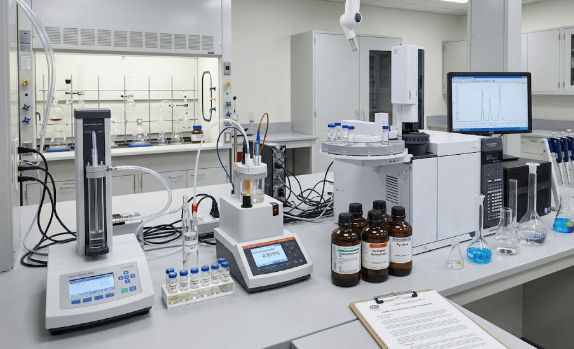
Common equipment includes pycnometers or density meters, distillation devices, Karl Fischer titrators, pH meters, analytical balances, gas chromatographs (GC), volumetric glassware, burettes, and laboratory data acquisition systems.
Testing Procedures and Requirements for Glycol Analysis
The standard tests glycol products based on a number of analyses to determine their chemical composition and physical properties. Standardized lab work procedures assure reliable, reproducible, and comparable analytical results. The ASTM E202 test procedure includes the following steps-
Technicians collect representative glycol samples, thoroughly mix them, and prepare them according to the analysis requirements. When necessary, technicians dilute concentrated samples to appropriate concentrations for testing.
Specific Gravity Measurement
Technicians measure sample density using a pycnometer or density measurement device in comparison with water.
Distillation Range Determination
Technicians heat the sample under controlled conditions to determine its boiling properties and distillation range.
Acidity Determination
Analysts determine the acid strength using standardized titration methods with a base until the sample reaches the specified endpoint.
Water Content Analysis
Analysts measure the moisture content using the Karl Fischer titration method, which is suitable for determining water in glycol.
Iron Content Analysis
Analysts determine the iron content using appropriate analytical reagents that minimize glycol interference.
Gas Chromatographic Analysis
Analysts use gas chromatography to determine the product composition and purity.
Documentation and Reporting
Laboratory personnel document analytical results, testing conditions, sample identification, calculated results, and ASTM E202 test results in laboratory reports.
ASTM E202 Testing Process and Data Collection
Testing starts with collecting representative glycol samples, which are prepared as specified in the analytical procedures. The laboratory determines specific gravity, distillation properties, acidity, water content, iron content, and chemical composition using calibrated equipment, measuring each parameter individually. Analytical measurements are performed step by step and are recorded and verified throughout the testing process. Collected data is analyzed to assess product quality and to meet ASTM E202 reporting requirements.
ASTM E202 Chemical Analyzer
Common Challenges and Troubleshooting
Analytical results may be unreliable due to sample contamination, water absorption, improper specimen preparation, inaccurate instrument calibration, reagent degradation, or analytical interference. Accurate and repeatable results are achieved by using high-purity reagents, following standardized laboratory procedures, proper sample handling, and routine equipment calibration.
Analysis Results and Interpretation
The results for specific gravity, acidity, water content, iron, distillation range, and chemical composition are shown.
Low moisture and/or impurity content usually indicates better product purity and quality.
Distillation characteristics are used to confirm a product’s identity and consistency in its manufacture.
Gas chromatography confirms chemical composition and detects impurities.
Products are tested against applicable specifications to confirm suitability and end-to-end compliance.
The standard offers a sound way of testing glycol product chemical quality and physical properties. Manufacturers can use accurate analytical data to keep product quality consistent, optimize manufacturing processes, confirm product purity, minimize contamination risks, demonstrate regulatory compliance, and ensure optimal performance in industrial applications.
Laraib Hashmi is an aspiring research enthusiast and science content professional with a strong interdisciplinary skill set, holding a postgraduate degree in Applied Microbiology from KIIT Bhubaneshwar, Odisha. Know More
Testimonials
Real results
Engineers trust us with what matters most
“We had a great experience working with this company for our ASTM E84 testing. They were the first company to respond to our inquiry within just a few minutes of submitting it. From start to finish, the communication was excellent, and the entire process was swift, straightforward, and hassle-free.”
Ivars FancyWalls
United States
“Very good communication, testing associates were very patient with delays on our end. Reasonable turnaround time for results and nicely detailed report. Analysts were also quick to answer any follow-up questions. Happy with results.”
Skye Henderson
United States
“Matestlab connected us with an accredited lab within days, cutting weeks off our product validation timeline.”
Rebecca Kozodoy-Pins
United States
Start Your Testing Project Today
Define your requirements and get access to specialized laboratories ready to deliver results