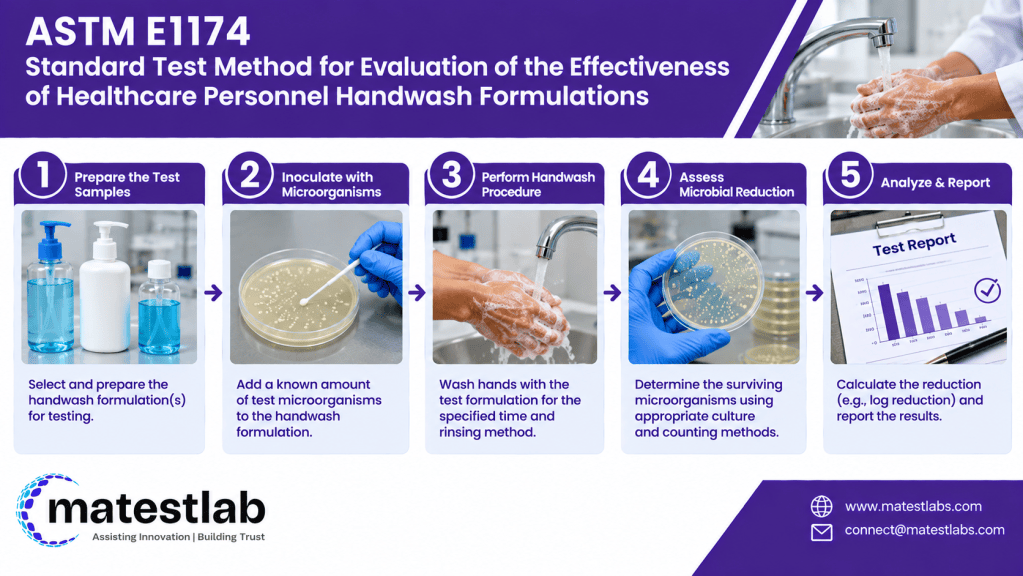
ASTM E1174 is a standard test method that outlines specific in vivo recommendations to assess the germ-reducing effectiveness of topically applied antiseptic soaps in the context of a typical hand hygiene protocol. The protocol involves a thorough knowledge of complex microbiological culture techniques as well as compliance with safety standards regarding the ethical safeguarding of human research volunteers. It quantifies the decrease of transient surface flora and explicitly sets a standard metric for all applications for repetitive sampling sequences.
The scope of ASTM E1174 includes:
- Materials: Topical antimicrobial hand washes, medicated liquid soaps, and clinical personal antiseptic cleansers.
- Purpose: establishes the efficacy of active formulations in terms of specific log-reduction of transient contamination of the skin.
- Properties measured: Pathogen survival rates, baseline population densities of microorganisms, and log10 reductions after washing.
- Methods: Live human subject hand contamination and localized “glove juice” extraction methods.
- Results: Statistical confirmation of the bactericidal effectiveness based on reference materials.
- Limitation: Does not validate surgical hand scrubs or waterless rub formulations.
- Environmental conditions: Baseline temperature parameters were monitored, and atmospheric relative humidity was controlled.
- Applications: Regulatory dossier submission, optimization of QC and consumer label claims support.
What are the Uses of ASTM E1174 Testing?
This mandatory performance test provides repeatable test criteria for assessing competitive sanitation liquids in the healthcare marketplace. The collected data helps to build consumer trust and clinical safety in sterile spaces. Manufacturers can have their industrial hygiene solutions officially proven effective under this testing method. This standard,
- Assists laboratory staff in submitting log documentation that can be verified to government clearance boards.
- Allows for quality assurance units to be responsible for raw material stability and batch-to-batch chemical potency.
- Guides health care institutions in making evidence-based purchasing decisions for global infection control.
What material can be tested under ASTM E1174?
All of these are tested in the same way: liquid architectural antiseptics, medicated hand wash for healthcare personnel, consumer use and personal care hygiene sprays, and foaming agents that contain a surfactant. The test matrix intentionally includes a variety of chemical formulations, including chlorhexidine gluconate blends, iodine complexes, triclosan solutions, and benzalkonium chloride bases. The liquid substances are applied directly to the human skin surface that has intentionally been exposed to a suspension of concentrated non-pathogenic fluorescent indicator organisms, such as Serratia marcescens or Escherichia coli, to evaluate barrier reduction in real-world conditions under controlled laboratory conditions.
Why is ASTM E1174 Important?
This is a very significant biological standard because it is the only validated method in the United States to ensure that a healthcare hand wash reduces cross-contamination. Soaps would only be tested in test tubes without this structured in vivo verification, which takes into consideration the complex topography of the skin and organic oils. ASTM E1174 creates realistic test conditions to keep vulnerable patients, doctors and nurses safe from hospital-acquired infections. This helps to reduce outbreaks, reduce healthcare liabilities and provide mass-produced sanitation products that provide actual anti-pathogen barriers.