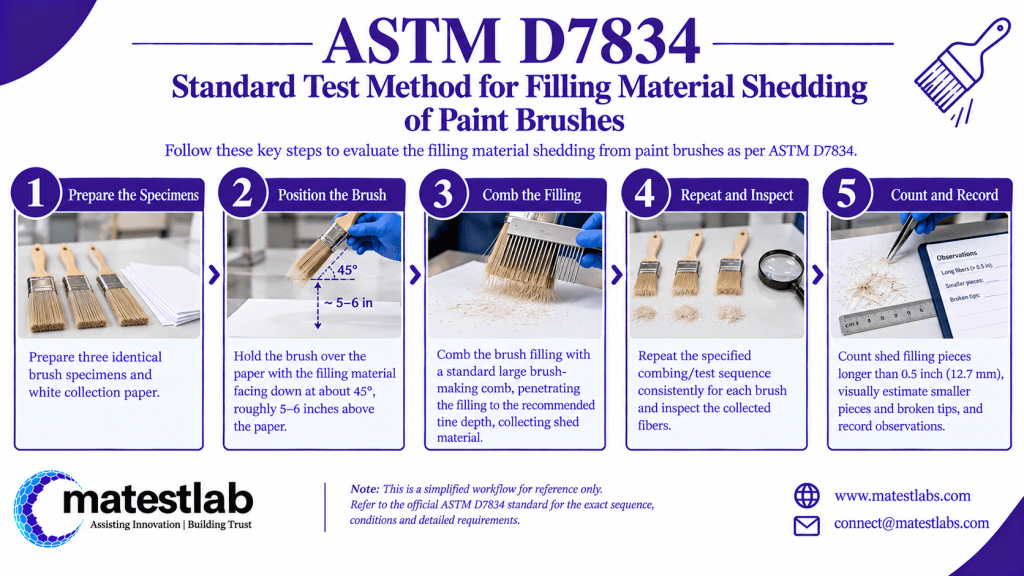
The result describes how much filling material a brush sheds under the comb test. Therefore, analysts should read the result together with the brush type, the filling material, and the test conditions. Moreover, the result supports brush comparison and quality control, but it does not judge brush quality on its own. As a result, analysts should combine it with other brush properties. In addition, they should keep the brush details with the result, so others can understand how it was produced. The points below explain how to read the results.
- The technician records the number of filaments that pull out or fall from each brush during the comb test. The analyst uses this count to compare shedding performance among brushes tested with the same procedure.
- The technician identifies the brush type and filling material, either natural bristle or synthetic filament. The analyst compares brushes with similar filling materials and construction because these factors can affect shedding performance.
- The technician follows the specified procedure and uses the dimensionally defined comb. The analyst checks that the same laboratory procedure and standard version apply when comparing brushes and production lots.
- The analyst compares shedding results across production lots to evaluate manufacturing consistency. A sudden increase in filament loss may indicate changes in brush construction or materials. Quality control teams investigate and document these changes before shipping the brushes.
- The analyst compares brushes from different suppliers or product lines only when they follow the same test procedure. The technician records differences in brush size, construction, and filling material because brushes with substantially different designs may not provide a fair comparison.
- The analyst considers shedding as one measure of brush quality rather than a complete assessment of performance. The technician uses additional performance tests to evaluate paint pickup, finish quality, and brush life.
FAQs
Which version of ASTM D7834 is current?
ASTM lists D7834-13(2024) as the active version, last updated September 25, 2024. Earlier versions, such as D7834-13R19, D7834-13, and D7834-12, are historical. Always cite the active version in your test request.
Which brushes does this test method cover?
It covers paint brushes with natural bristle or synthetic filament filling material. The standard refers to these materials as filling material. Share your brush type with the laboratory so the team can confirm suitability.
Does this test method measure overall paint brush quality?
No. This test method measures shedding only. Brush quality also depends on other properties, such as paint pickup and finish, so teams should use additional tests when they need a complete evaluation.
How much does paint brush shedding testing cost?
The cost depends on the number of brushes, the brush type, and the reporting needs. Share your requirements, and Matestlab provides a quote.
How long does testing take?
Turnaround depends on the number of brushes and the laboratory schedule. Share your sample details, and Matestlab confirms the timeline.
Direct link to the ASTM D7834 PDF
Related