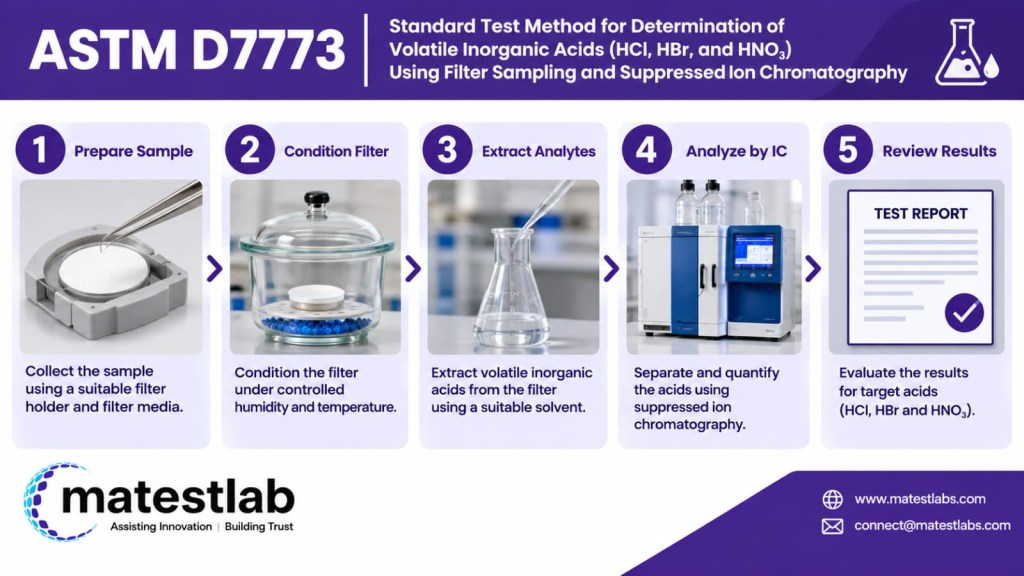
ASTM D7773 is a standard test method that describes a filter-sampling and ion chromatography method for measuring volatile inorganic acids in workplace air. In addition, technicians collect airborne acids on an alkali-impregnated quartz fiber filter, and analysts determine the target compounds through laboratory analysis. Overall, the method supports occupational and environmental hygiene monitoring, including the assessment of time-weighted average concentrations and short-term exposures.
The scope of ASTM D7773 includes:
- Material type: Workplace air containing hydrogen chloride, hydrochloric acid mist, hydrogen bromide, hydrobromic acid mist, or nitric acid vapor and mist.
- Purpose: The standard method helps to determine the mass concentration of specified volatile inorganic acids in air samples.
- Properties evaluated: Concentrations of the target acid-related compounds collected during air sampling.
- Testing method: Filter sampling followed by suppressed ion chromatography.
- Result: Analytical results will be obtained and expressed in the relevant SI units for the compound.
- Test limitations: The method does not compare the accuracy of different instrument models or establish precision between instruments of the same model. Sampling must follow relevant workplace air-sampling practices.
- Methodology: Technicians collect air samples on alkali-impregnated quartz fiber filters, and analysts prepare and analyze the collected material according to the method and instrument instructions.
- Application: The method facilitates workplace exposure assessment and occupational or environmental hygiene monitoring.
What are the Uses of ASTM D7773 Testing?
ASTM D7773 helps laboratories assess the selected volatile inorganic acids in workplace air. In addition, the method combines filter sampling with suppressed ion chromatography to measure target compounds. As a result, occupational hygienists and safety professionals can use the analytical data to investigate potential exposure. The Standard method:
- Helps to evaluate airborne hydrogen chloride and hydrochloric acid mist in workplace environments.
- Evaluates hydrogen bromide vapor and hydrobromic acid mist collected during air sampling.
- Supports the measurement of nitric acid vapor and mist in workplace air.
- Assesses time-weighted average concentrations for occupational exposure investigations.
- Helps to analyze short-term exposure samples when the sampling plan and method requirements support that assessment.
- Provides analytical data that occupational hygienists can use alongside workplace conditions and applicable exposure criteria.
Why is ASTM D7773 important?
ASTM D7773 ensures a common way to analyze selected volatile inorganic acids. These acids can cause irritation to the skin, eyes, and respiratory system of the body upon exposure; therefore, accurate sampling and analysis will allow organisations to understand the work environment. This method uses alkali-impregnated quartz fibre filters for sampling and suppressed ion chromatography for analysis. The method can be used to determine time-weighted averages as well as short-term exposure. The laboratory must ensure correct air-sampling techniques are used and that the manufacturer’s guidelines are followed. Professionals can use the results to understand if there has been exposure by looking at the exposure limits and work environment information to make more informed decisions.
Which inorganic acids do ASTM D7773 measure?
ASTM D7773 addresses three groups of volatile inorganic acids in workplace air: hydrogen chloride and hydrochloric acid mist, hydrogen bromide and hydrobromic acid mist, and nitric acid in vapor and mist forms. Technicians collect the airborne compounds using an alkali-impregnated quartz fibre filter. The sampled compounds are then analysed for the target analytes using suppressed ion chromatography. This depends upon the sampling strategy, conditions at the workplace, and correct use of the analytical instrumentation. It is important for the laboratory to be sure that the required analytes and monitoring time period will be covered by the method.
Does ASTM D7773 support short-term exposure assessment?
Yes, ASTM D7773 states that the method can also support measurements of short-term exposures, in addition to time-weighted average concentrations. It is important to select an appropriate sampling time period and procedure in line with workplace air sampling guidelines. The analyst should note the duration of sampling, sample identification, and field conditions. Not all sampling arrangements and instruments will be appropriate for all exposure times. It may therefore be useful to consult a competent laboratory to identify if the proposed sampling method fits with the method and what the users are trying to achieve.