
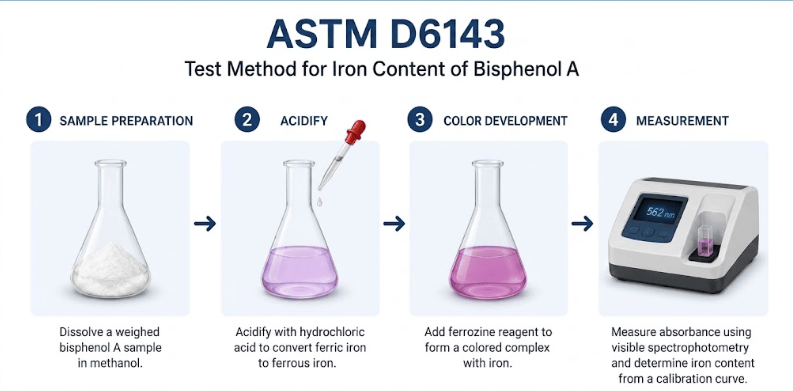
ASTM D6143 describes a standard test method for determining the iron content of bisphenol A (4,4′-isopropylidenediphenol). This method analyzes a bisphenol A sample by dissolving it in methanol, acidifying it with hydrochloric acid to convert ferric iron to ferrous iron, and complexing it with a ferrozine reagent to form a colored compound that visible spectrophotometry quantifies. Chemists use ASTM D6143 (Standard Test Method for Iron Content of Bisphenol A (4,4′-Isopropylidenediphenol)) to confirm that bisphenol A meets a manufacturer’s iron specification, since even trace iron can affect the color and downstream performance of the material. Manufacturers use these results along with other materials testing services to confirm that chemical raw materials meet purity specifications before entering production.
ASTM D6143 Standard Test Method for Iron Content of Bisphenol A (4,4′-Isopropylidenediphenol)
What is ASTM D6143?
What is the Scope of the ASTM D6143 Test Standard?
ASTM D6143 is a standard test method for determining the iron content of bisphenol A by visible spectrophotometry, whereby the iron in the sample is reduced and complexed to form a compound with an absorbance that is compared to that of a calibration curve. The standard test method-
- Determines the amount of iron in bisphenol A (4,4′-isopropylidenediphenol)
- Assesses samples with a minimum detection limit of 0.1 mg/kg and a maximum concentration of 10 mg/kg of iron
- Allows sample dilution or use of a longer path length cell to improve accuracy when iron levels fall outside the calibrated range.
- Rounds the test results according to the established guidelines in Practice E29
- Reports values in SI units, the only unit system the standard specifies.
What are the Uses of ASTM D6143 Testing?
ASTM D6143 testing helps chemists confirm that bisphenol A meets its iron specification before it enters resin or polymer production. Manufacturers rely on the results to approve or reject raw material shipments based on conformity with the relevant material specifications. This standard-
- Verifies whether a bisphenol A sample meets the specified iron content limit.
- Helps establish iron content specification limits for bisphenol A used in polycarbonate and epoxy resin production.
- Enables manufacturers to monitor the quality of bisphenol A purchased as a raw material.
- Evaluates whether unexpectedly high iron content caused discoloration in a bisphenol A sample.
- Assists analysts in reporting test results according to the rounding rules in Practice E29.
Which materials can be tested under ASTM D6143?
ASTM D6143 applies to bisphenol A (4,4′-isopropylidenediphenol) used to produce polycarbonate, epoxy resins, or other chemical products. Analysts use the standard test method to analyze the iron content of bisphenol A, with a concentration range of 0.1 mg/kg to 10 mg/kg. Chemists dilute the sample or use a spectrophotometer with a longer path length to determine the iron concentration in bisphenol A when the expected concentration is outside the calibration curve limits. Analysts also confirm that the bisphenol A sample is representative of the material to be tested and prepare the calibration solutions for visible spectrophotometry.
Why is ASTM D6143 Important?
ASTM D6143 provides a sensitive analytical technique for determining even trace levels of iron in bisphenol A that a general specification test would fail to identify. Iron in bisphenol A can cause undesirable coloration or other properties in polymers. Bisphenol A that is used to produce high-quality polymers typically contains less than 1 mg/kg of iron. Analysts use this standard test method to determine iron concentration in a bisphenol A sample down to 0.1 mg/kg using a visible spectrophotometer. ASTM D6143 is critical because it allows manufacturers to analyze the quality of their bisphenol A sample and ensure that it does not contain detectable levels of iron that might compromise the final product.
ASTM D6143 Equipment and Sample Preparation Guide
The ASTM D6143 test method requires a visible spectrophotometer, a system for determining iron levels using a ferrozine reagent, and volumetric glassware for diluting the sample being analyzed and the calibration solution.
| Sample and Specimen Details | Chemists test a representative sample of bisphenol A intended for polycarbonate, epoxy resin, or general chemical manufacturing. |
| Specimen Preparation | Chemists dissolve a weighed bisphenol A sample in methanol and acidify it with hydrochloric acid to convert ferric iron to ferrous iron. |
| Specimen Dimensions | Chemists weigh approximately 5 g of the sample to the nearest 0.1 mg into a 100-mL volumetric flask before dilution and color development. |
| Instrumentation | The system uses a visible spectrophotometer, a ferrozine color-development reagent, hydrochloric acid, iron calibration standards, and volumetric glassware. |
Testing Procedures and Requirements for ASTM D6143
The ASTM D6143 test method determines the concentration of iron in bisphenol A by converting metal ions in the sample to a colored complex, which is analyzed using visible spectrophotometry. The ASTM D6143 test method comprises the following procedure-
| Sample Dissolution | Chemists dissolve a weighed bisphenol A sample in methanol. |
| Acidification | Chemists acidify the dissolved sample with hydrochloric acid to convert ferric iron to ferrous iron. |
| Color Development | Chemists add a ferrozine reagent that complexes with the ferrous iron to form a red-pink chromophore. |
| Spectrophotometric Measurement | The spectrophotometer measures the sample’s absorbance at 560 nm. |
| Calibration Comparison | Chemists compare the measured absorbance against a calibration curve prepared from iron standards. |
| Result Rounding | Chemists round the calculated iron content according to the method in Practice E29. |
| Result Reporting | The analyst records the iron content to the nearest 0.1 µg/g along with the sample and instrument conditions used. |
ASTM D6143 Testing Process and Data Collection
A chemist weighs a sample of bisphenol A into a volumetric flask and dissolves it in methanol. The chemist then acidifies the solution with hydrochloric acid and determines the iron content by spectrophotometry. The chemist adds the mixture of hydrochloric acid and ferrozine to ensure the acid reduces all the ferric iron to the ferrous form. Then, a spectrophotometer reads the solution’s absorbance at 560 nm, and the chemist compares that reading against a calibration curve built from iron standards. The analyst rounds the resulting iron content per Practice E29 and reports it against the applicable specification.
Common Challenges and Troubleshooting
Proper dissolution of the sample, consistent acidification, and a properly calibrated spectrophotometer are critical for accurate ASTM D6143 results. These are very low levels that can be overestimated due to contamination from glassware, reagents, or sample treatment. The chemists use clean volumetric glassware, check the quality of the reagents used, and recalibrate the spectrophotometer regularly to ensure accurate results at the method’s low detection limit.
ASTM D6143 Analysis Results and Interpretation
The report states the level of iron found in the tested bisphenol A sample relative to the method range.
- The analyst states the amount of iron in milligrams per kilogram (mg/kg), the unit the standard specifies for all results.
- The report indicates whether the sample of bisphenol A required dilution or the use of a longer path length cell to determine the concentration of iron.
- The chemist rounds every reported result according to the method in Practice E29 before comparing it to a specification limit.
- The report compares the measured iron content against the applicable bisphenol A specification, noting that high-purity material typically falls below 1 mg/kg.
Get Certified ASTM D6143 Testing for Reliable Bisphenol A Iron Content Analysis
The iron level of bisphenol A in the production of polycarbonate and epoxy resins should be below a predetermined limit because its presence can darken the final product and interfere with the curing process. ASTM D6143 allows chemists to determine the iron content of bisphenol A using a sensitive colorimetric method with a low detection limit. This enables analysts to detect even low levels of ferric iron in the sample. Analysts use the results of the ASTM D6143 test to certify that the incoming raw materials meet the manufacturer’s specifications for iron content, set specification limits, and evaluate their materials.
FAQ
Updated on September 6, 2026


Project Today
specialized laboratories ready to deliver results