ASTM D4607 Standard Test Method for Determination of Iodine Number of Activated Carbon
ASTM D4607 is a standard test method to identify the iodine number and activated carbon through the adsorption of an aqueous solution of iodine. Industries use this technique to determine the relative activation and porosity levels of carbon materials. The test involves the titration methods and controlled adsorption conditions. The test report contains the values of iodine number, test conditions, and sample description, which are generally in mg/g. These findings assist in selecting activated carbon for filtration, purification, and adsorption.
Read More
GET STARTED
ASTM D4607 Introduction
ASTM D4607 provides a standardized procedure to determine the number of iodine molecules adsorbed by activated carbon, which reveals the relative porosity and level of activation. The iodine number is the grams of iodine that are adsorbed on 1 g of carbon under certain conditions. The value assists industries in determining carbon performance through the adsorption process. But iodine number does not directly determine the adsorption of every species. Additionally, its correlation with surface area depends on raw materials, processing conditions, and pore structure. Thus, ASTM D4607 helps to control the quality, research, and compare materials in water treatment and air purification systems.
Get Certified ASTM D4607 Testing for Accurate Activated Carbon Evaluation
Effective identification of iodine numbers guarantees uniformity in carbon quality and adsorption capacity. In addition, certification aids industries in comparing the level of activation among batches. In laboratories, controlled testing conditions and precise titration analysis are provided. As a result, manufacturers can achieve better reliability of the products and optimize their performance in real-life filtration conditions.
Service Name
Remarks
ASTM D4607 Testing
Contact US
Testing Procedure and Requirements
ASTM D4607 establishes iodine adsorption using a standardized titration process. The technician first prepares the carbon sample and iodine solution. Then, the sample interacts with the iodine solution under controlled conditions. The iodine number is determined after the titration of the leftover iodine after adsorption.
Sample Preparation
The technician weighs a specific mass (0.5-1.0 g) of activated carbon for testing.
Adsorption Step
The sample is mixed with iodine solution to allow adsorption under controlled conditions.
Titration Measurement
The remaining iodine is titrated to determine the amount adsorbed.
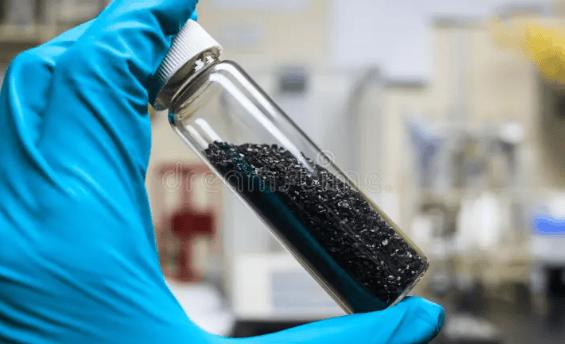
Activated carbon for iodine number determination
Scope of ASTM D4607 Test Standard
Measures iodine number as a measure of micropore content.
Applicable to powdered and granular activated carbon.
Enhances quality control, mat content comparison, and specification.
Applied in wastewater and water treatment, air purification, and industrial adsorption.
Equipment and Sample Preparation
Analytical Balance
Measures carbon sample mass accurately before testing.
Titration Setup
Determines residual iodine concentration after adsorption.
Volumetric Glassware
Prepares and measures iodine solution precisely.
Specimen Preparation
Dry carbon to remove moisture and accurately weigh the required sample
Use of ASTM D4607
Determination of the adsorption capacity of activated carbon.
Water and wastewater treatment carbon quality control.
Air purification and industrial adsorption air performance assessment.
Activated carbon is chosen in applications as a chemical process.
High-surface-area carbon materials in research and development.
What Does the Iodine Number Indicate in ASTM D4607?
The iodine number determines the relative porosity and degree of activation of activated carbon. An increase in values usually indicates an increase in the volume of the micropores. But this value does not directly indicate the adsorption of all contaminants. Therefore, engineers use it as a comparative parameter rather than an absolute performance measure.
How Do Impurities Affect ASTM D4607 Results?
Adsorbed volatiles, sulfur, and water extractables can affect iodine number. These reagents can either occupy active sites or disrupt adsorption behavior. Therefore, the values can be inaccurate due to improper sample preparation. These effects are minimized by controlled conditions and enhance reliability.
Common Challenges and Troubleshooting
Titration errors or improper sample preparation are common causes of testing errors. In addition, adsorption can be compromised by impurities like moisture or sulfur. The iodine number values also change with variations in the raw material and pore structure. In order to eliminate these problems, the laboratories are required to have accurate titration methods and clean, dry samples.
Testing Technique Process, and Data Collection
The first step in testing is to weigh the activated carbon sample correctly. Then the technician combines the sample with the iodine solution for adsorption. The remaining iodine is titrated using standard solutions after equilibrium. Lastly, the amount of iodine number is determined by the grams of carbon adsorbed. The regularity of data collection ensures a sound comparison among samples.
Analysis Results and Interpretation
ASTM D4607 gives out results in SI units. Iodine number is in milligrams per gram (mg/g). High values indicate a higher iodine adsorption capacity and a higher level of microporosity. Nevertheless, outcomes depend on the differences in raw material and processing conditions. When choosing activated carbon for specific applications, engineers take these values into account.
Factors to Consider For ASTM D4607
Speed: Efficient testing methods guarantee rapid turnover and proper titration and adsorption measurements.
Expertise: Skilled technicians perform accurate titration and sample processing, enhancing the consistency of iodine number values.
Cost: Low-cost testing enables regular quality control without impacting accuracy or industrial performance demands.
You can share your astm d4607 testing requirements with MaTestLab. MaTestLab has a vast network of material testing laboratories, spread across the USA and Canada. We support your all material testing needs ranging from specific astm d4607 test to various testing techniques.
How much do I need to pay for the astm d4607 test?
Please contact us for a detailed quote for your astm d4607 testing needs. Cost incurred to carry out different astm d4607 testing methodology depends on the type of raw material; number of samples, coupons, or specimens; test conditions, turn around time etc. Costs of some ASTM testing methods start from $100 and the final value depends upon the factors listed above. Please contact us for the best and latest prices.
How many samples are required for astm d4607?
The required number of samples or specimens should comply with the procedure given in the astm d4607 standard. However, the MaTestLab operations team can assist you for your special requirements once you share your testing details with us.
How much discount can I get on the astm d4607 test?
MaTestLab has a vast testing laboratory network, hence we bring you the best testing facilities in a cost-effective way. We offer considerable discounts (15-20%) to our returning customers based on test volume and frequency.
How many days will it take to complete the astm d4607 test?
The turnaround time for astm d4607 test methodology depends upon the test procedure mentioned in the standard test document. However, we at MaTestLab understand your research requirements and hence try to get your test completed within the least possible time.
Where can I get the astm d4607 tested?
You can share your astm d4607 testing requirements with MaTestLab. MaTestLab has a vast network of material testing laboratories, spread across the USA and Canada. We support your all material testing needs ranging from specific astm d4607 test to various testing techniques.
MaTestLab Inc. offers accessible, quick, and affordable material testing, product testing, and failure analysis services. We support your on-demand testing and expert consultation needs with the help of our extensive network of material testing laboratories situated in the US and other parts of the world.
MATERIAL TESTING
We offer destructive and non-destructive tests over a range of mechanical, electrical, chemical, thermal, optical, corrosion, radiation, and biological testing methodologies defined by ASTM, ISO and other organizations.
PRODUCT TESTING
We help you evaluate and ensure your product quality and performance with standard and custom-made testing solutions. All the tests are done at well-equipped testing laboratories using standard testing methods for best output and satisfaction.
FAILURE ANALYSIS
Failure analysis ensures high levels of quality in every manufacturing process. We help you with getting the best failure or root cause analysis to determine the cause of the failure. The results help you identify means to prevent failure recurrences.