
ASTM D4531 Standard Test Methods for Bulk and Dry Density of Peat and Peat Products

    What is ASTM D4531?

    ASTM D4531 describes a standard test method for determining the bulk and dry density of peat and peat products. The method evaluates the mass of a representative peat sample in relation to its volume under specified test conditions. Bulk density reflects the sample in its tested condition, while dry density reflects the mass of the material after moisture removal. Technicians collect and prepare representative peat specimens, determine the required mass and volume, and dry the applicable specimens for dry-density determination. Analysts use the recorded measurements to calculate the applicable density values. ASTM D4531 testing (Standard Test Methods for Bulk and Dry Density of Peat and Peat Products) provides information about the bulk and dry density characteristics and physical consistency of peat and peat products.

    Read more

    Get Certified ASTM D4531 Bulk and Dry Density Testing

    ASTM D4531 testing is useful for peat-product manufacturers, suppliers, agricultural-material producers, engineers, and quality-control personnel evaluating the bulk and dry density of peat materials. Technicians identify and prepare representative samples and determine the required specimen mass and volume. For dry-density evaluation, technicians dry the specimen according to the applicable procedure and determine the required dry mass. Analysts review the recorded data and calculate the applicable bulk or dry density values.

    What is the scope of ASTM D4531?

    ASTM D4531 provides test methods for determining the bulk and dry density of applicable peat and peat products. The methods provide a standardized approach for measuring specimen mass and volume and determining density characteristics under the required test conditions. The standard covers-

    Read more

    • Bulk Density: Determines the mass per unit volume of applicable peat materials in the specified test conditions. 
    • Dry Density: Determines the density of peat materials based on the applicable dry mass. 
    • Peat Products: Provides a standardized approach for evaluating the density characteristics of applicable peat and peat products.
    • Material Comparison: Supports comparison of density characteristics between applicable peat samples. 
    • Quality Control: Helps manufacturers monitor variations in peat-product density and consistency. 

    What are the uses of ASTM D4531 testing?

    ASTM D4531 provides bulk- and dry-density information that helps manufacturers and technical personnel evaluate the physical characteristics of peat and peat products. The test helps to-

    • Determine the bulk density of applicable peat materials. 
    • Determine the dry density of applicable peat materials. 
    • Compare density characteristics between peat products. 
    • Monitor consistency between production batches. 
    • Support quality-control activities. 
    • Help evaluate changes in peat-product composition or condition. 
    • Support product development and material evaluation. 

    Which materials can be tested according to ASTM D4531?

    ASTM D4531 applies to peat and applicable peat products for which bulk- or dry-density determination is required. Technicians should verify the sample type, condition, and applicable test requirements before testing. The methods apply to-

    • Peat Materials: Evaluates applicable natural peat materials. 
    • Peat Products: Supports density evaluation of applicable processed or prepared peat products. 
    • Different Product Grades: Allows comparison of density characteristics between applicable product grades. 
    • Production Samples: Supports testing of representative samples from production or processing batches. 

    Why is ASTM D4531 testing important?

    Bulk and dry density provide useful information about the physical characteristics and consistency of peat products. Density differences can indicate variations in material composition, moisture condition, processing, or product preparation. ASTM D4531 provides standardized procedures for determining these density characteristics. The results help manufacturers and engineers compare materials, monitor product consistency, identify variations, and support quality control and product-development activities.

    ASTM D4531 Equipment and Sample Preparation Guide

    Engineers need representative peat samples and suitable equipment to measure mass, determine volume, and dry specimens when dry-density determination is required.

    Read more

    Sample IdentificationTechnicians identify the peat material or peat product, product grade, production batch, and other relevant sample information before testing.
    Specimen PreparationTechnicians prepare representative specimens according to the applicable test requirements and avoid unnecessary loss or alteration of material.
    Mass and Volume MeasurementTechnicians use calibrated weighing and volume-measurement equipment to determine the required specimen mass and volume.
    Drying EquipmentAnalysts use suitable drying equipment when required to determine the dry mass of the peat specimen.
    InstrumentsLaboratory balances (to measure mass), drying ovens (to determine moisture and dry density), and paraffin wax melting pots with water displacement apparatuses (for irregular sample volume measurements).

    ASTM D4531 Testing Procedures and Requirements

    Technicians first identify and prepare representative peat specimens according to the applicable requirements. They determine the required specimen mass and volume for bulk-density evaluation. When dry-density determination is required, technicians dry the specimen according to the specified procedure and determine the applicable dry mass. The testing process is described in the following steps.

    Read more

    Sample Identification and Specimen PreparationTechnicians identify the peat material and prepare representative specimens according to the applicable requirements.
    Mass and Volume DeterminationTechnicians measure the required specimen mass and volume using suitable calibrated equipment.
    Drying and Dry Mass DeterminationTechnicians dry applicable specimens according to the required procedure and determine the dry mass for dry-density evaluation.
    Density Calculation and Data RecordingAnalysts use the applicable mass and volume measurements to calculate and report bulk or dry density results.

    ASTM D4531 Testing Process and Data Collection

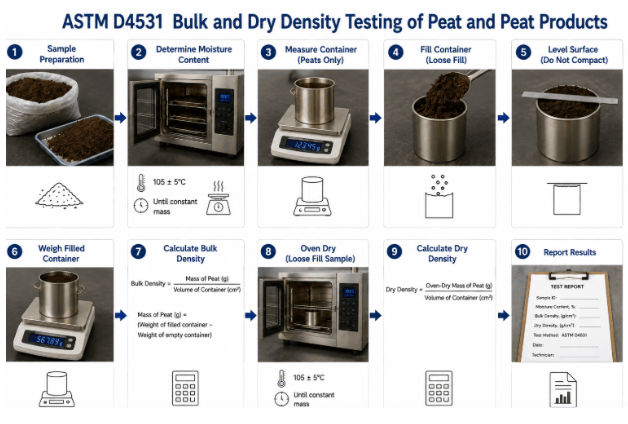
    Technicians begin by identifying the peat material and preparing a representative specimen. They determine the required specimen volume and measure its mass using suitable calibrated equipment. For dry-density determination, technicians dry the applicable specimen according to the specified procedure and determine the required dry mass. Analysts use recorded mass and volume measurements to calculate the applicable density values. Technicians record the sample identification, specimen condition, mass measurements, volume measurements, and other relevant test information. Analysts review the recorded data and report the bulk and dry density results.

     ASTM D4531 testing process showing peat sample identification and preparation, specimen mass and volume measurement, drying for dry-mass determination, calculation of bulk and dry density, and recording of test results.
    ASTM D4531 Bulk and Dry Density Testing of Peat and Peat Products

    Common Challenges and Troubleshooting

    Moisture changes, poor sample preparation, sample loss during handling, inaccurate volume measurement, incomplete drying, weighing errors, and equipment calibration errors can affect ASTM D4531 results. It is important that samples are representative and that the appropriate procedures are followed throughout by technicians. Prior to testing, technicians should check the calibration and condition of weighing equipment, volume-measurement equipment, and drying equipment. If unexpected results are obtained, analysts should check on the amount of moisture in the sample, the condition of the specimen, the mass and volume determinations, drying conditions, and calculation procedures.

    Analysis Results and Interpretation

    The report summarizes the bulk and dry density characteristics of the tested peat or peat product. It presents the measured values together with the relevant sample identification, specimen information, mass and volume measurements, specimen condition, and other required test information.

    Read more

    • ASTM D4531 produces density-specific results rather than a single overall material-property value. 
    • Technicians often represent bulk and dry density as mass per unit volume using the units specified by the selected procedure, such as kg/m³ or g/cm³, as applicable.
    • Consistent specimen preparation, accurate mass and volume measurement, controlled drying conditions, and suitable calibrated equipment help technicians and analysts produce reliable and comparable results.

    Link to ASTM D4531

    FAQ

    What does ASTM D4531 measure?
    ASTM D4531 measures the bulk and dry density of applicable peat and peat products.
    The methods utilize representative samples of peat or the peat product prepared per the test requirement.
    Density provides information on the physical characteristics and consistency of peat materials and can distinguish between products or production samples.
    Technicians use appropriate calibrated weighing and volume-measurement equipment and dry-density determination equipment as appropriate.
    Suyog Kamble
    About Author
    Suyog Kamble
    Suyog Kamble is an Operations Associate at MaTestLab Inc. and holds a postgraduate degree in Organic Chemistry.
    Testimonials
    Real results
    Engineers trust us with what matters most
    Start Your Testing
    Project Today
    Define your requirements and get access to
    specialized laboratories ready to deliver results
    Partners with us
    Clients
    Vendors
    Process for testing
    • STEP 01

      You share your testing requirements

    • STEP 02

      You share your sample(s)

    • STEP 03

      We deliver your test reports

    Get your testing done

    Let us known your testing requirements and we will be right back with a solution.

      Let us root for each other. Collaborate to grow, expand, and accelerate our businesses.

      Partner with us

        Contact Us

        Discover more from MaTestLab

        Subscribe now to keep reading and get access to the full archive.

        Continue reading