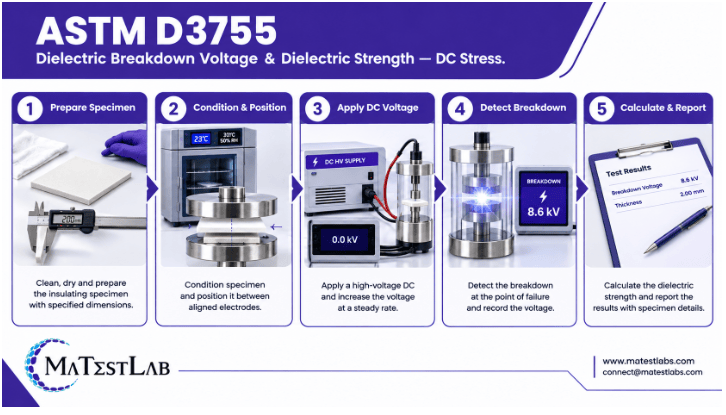
ASTM D3755 Standard Test Method for Dielectric Breakdown Voltage and Dielectric Strength of Solid Electrical Insulating Materials Under Direct-Voltage Stress
This test method measures the dielectric breakdown voltage and dielectric strength of solid electrical insulating materials under direct-voltage stress. The test involves applying increasing voltage to the material until breakdown occurs, with the voltage at failure recorded as the breakdown voltage. Dielectric strength is then calculated by dividing this voltage by the specimen's thickness. This method helps evaluate the material's ability to withstand electrical stress, ensuring it meets necessary performance standards for electrical systems. It is widely used in industries like power, electronics, and manufacturing to ensure the reliability and safety of insulating materials in high-voltage applications.
Read More
GET STARTED
ASTM D3755 Introduction
This test method provides a standardized procedure for determining the dielectric breakdown voltage and dielectric strength of solid electrical insulating materials when subjected to direct-voltage stress. This test is crucial for evaluating the performance of insulating materials used in electrical applications, such as cables, transformers, and capacitors. By measuring the voltage at which the material fails to insulate effectively, this method helps ensure the material’s reliability and safety in electrical systems, preventing potential electrical failures and hazards.
Get Certified ASTM D3755 for Reliable Electrical Insulation Performance
The ASTM D3755 certification is used to confirm that solid electrical insulating materials perform to the necessary dielectric strength and breakdown voltage requirements. Adherence to this standard will guarantee that insulating materials in electrical systems can offer sufficient protection against electrical breakdown that can enhance the safety of equipment and its working reliability.
Service Name
Remarks
ASTM D3755 Testing
Contact US
ASTM D3755 Testing Procedure and Requirements
Specimen Preparation
The preparation of the specimen is carried out by cutting the insulation material into similar shapes and sizes as per the test requirement.
Dielectric Breakdown Voltage Test
A directvoltage stress is applied to the specimen, gradually increasing the voltage until the material breaks down, permitting current to flow through the material.
Result Analysis
An increased value would depict increased insulating performance, and a low value can be a sign of possible vulnerability in the material under the electrical stress.
Scope of ASTM D3755
Defines protocols for finding out the dielectric breakdown voltage of solid insulating materials when subjected to DC stress.
Offers ways of determining dielectric strength depending on the thickness of the material.
Assures that there is a consistent review of the performance of electrical insulation.
ASTM D3755 Equipment and Sample Preparation
Specimen Details
The test procedure can be used on electrical insulating solid materials like rubber, plastic, and composite materials.
Specimen Dimensions
The size of the specimen is normally broken to a given dimension with a uniform thickness to provide uniformity during the testing process.
Specimen Preparation
The material is washed and dried thoroughly to eliminate any surface contaminants.
Applications of ASTM D3755
Power equipment insulation materials.
Electrical cable and wiring system insulation with polymer.
Laminates of electronic devices and circuit boards.
ASTM D3755 Common Challenges and Troubleshooting
Problems associated with this testing are specimen contamination, non-uniform specimen thickness, and wrong positioning of the specimen in the process of testing. The errors of the voltage ramp rate also have issues. Too rapid a manner of application of voltage may give artificial values of breakdown, and too slow a manner may cause thermal effects, capable of distorting the dielectric properties of the material.
ASTM D3755 Aggregate Testing Technique, Process, and Data Collection
The specimen is placed between standardized electrodes attached to a directvoltage power supply, in order to undertake the test. A controlled rate of increase in the applied voltage is applied until dielectric breakdown takes place. Data on tests such as breakdown voltage, specimen thickness, and calculated dielectric strength is collected and evaluated to know the performance of the insulation and its ability to meet the specification requirements.
ASTM D3755 Analysis Results and Interpretation
An increase in the values of dielectric strength will imply higher electrical insulation capabilities. The materials that can withstand greater voltages before breaking down are deemed to be more appropriate in high-voltage applications. It is expected that results are averaged using many specimens to be sure that the test data are reliable and repeatable.
ASTM D3755 Problem & Solution
Electrical devices need high-quality insulation materials that will not give way under high direct-voltage. ASTM D3755 gives the standardized test procedure to have the ability to measure the dielectric breakdown voltage and dielectric strength, which would guarantee safe working and reliability of electrical insulation material over a period.
Factors to Consider for ASTM D3755
Speed
Standardized testing practices enable the use of laboratories to test the performance of insulation in controlled voltage conditions effectively.
Expertise
High voltage tests are conducted by trained individuals, using special tools and necessitating high-level safety measures so that the measurements are correct and safe.
Cost
ASTM D3755 assists manufacturers in ensuring the use of trustworthy insulating materials to avoid electrical failures and minimize the maintenance and replacement expenses in electrical engineering.
Related
FAQ's
Where can I get the astm d3755 tested?
You can share your astm d3755 testing requirements with MaTestLab. MaTestLab has a vast network of material testing laboratories, spread across the USA and Canada. We support your all material testing needs ranging from specific astm d3755 test to various testing techniques.
How much do I need to pay for the astm d3755 test?
Please contact us for a detailed quote for your astm d3755 testing needs. Cost incurred to carry out different astm d3755 testing methodology depends on the type of raw material; number of samples, coupons, or specimens; test conditions, turn around time etc. Costs of some ASTM testing methods start from $100 and the final value depends upon the factors listed above. Please contact us for the best and latest prices.
How many samples are required for astm d3755?
The required number of samples or specimens should comply with the procedure given in the astm d3755 standard. However, the MaTestLab operations team can assist you for your special requirements once you share your testing details with us.
How much discount can I get on the astm d3755 test?
MaTestLab has a vast testing laboratory network, hence we bring you the best testing facilities in a cost-effective way. We offer considerable discounts (15-20%) to our returning customers based on test volume and frequency.
How many days will it take to complete the astm d3755 test?
The turnaround time for astm d3755 test methodology depends upon the test procedure mentioned in the standard test document. However, we at MaTestLab understand your research requirements and hence try to get your test completed within the least possible time.
Where can I get the astm d3755 tested?
You can share your astm d3755 testing requirements with MaTestLab. MaTestLab has a vast network of material testing laboratories, spread across the USA and Canada. We support your all material testing needs ranging from specific astm d3755 test to various testing techniques.
MaTestLab Inc. offers accessible, quick, and affordable material testing, product testing, and failure analysis services. We support your on-demand testing and expert consultation needs with the help of our extensive network of material testing laboratories situated in the US and other parts of the world.
MATERIAL TESTING
We offer destructive and non-destructive tests over a range of mechanical, electrical, chemical, thermal, optical, corrosion, radiation, and biological testing methodologies defined by ASTM, ISO and other organizations.
PRODUCT TESTING
We help you evaluate and ensure your product quality and performance with standard and custom-made testing solutions. All the tests are done at well-equipped testing laboratories using standard testing methods for best output and satisfaction.
FAILURE ANALYSIS
Failure analysis ensures high levels of quality in every manufacturing process. We help you with getting the best failure or root cause analysis to determine the cause of the failure. The results help you identify means to prevent failure recurrences.