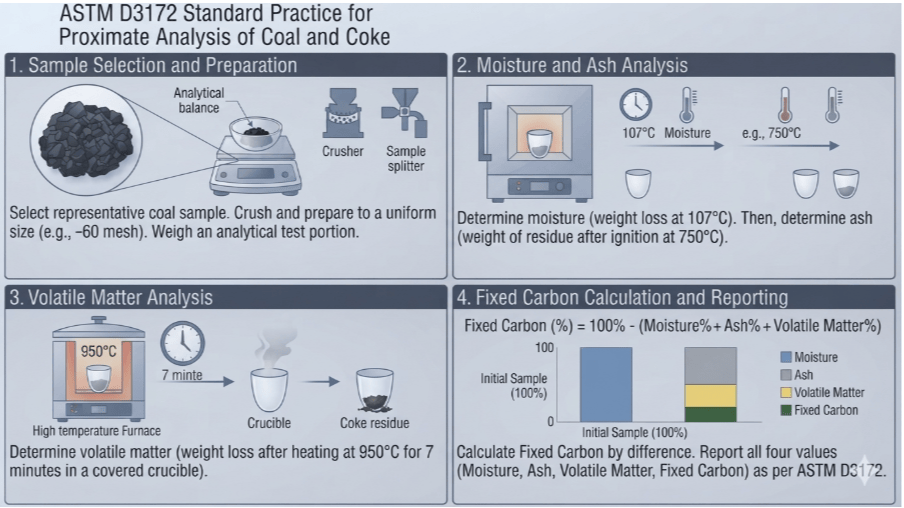
ASTM D3172 is a standard practice for proximate analysis of coal and coke. The practice covers determining moisture, volatile matter, and ash, and calculating fixed carbon. Laboratories analyze coal and coke samples after collecting and preparing them according to prescribed ASTM procedures. These results help laboratories determine the relative proportions of combustible and incombustible constituents in these solid fuels. Laboratories can also use the findings for coal-rank evaluation, trading, beneficiation research, and other technical purposes. ASTM D3172 (Standard Practice for Proximate Analysis of Coal and Coke) does not specify an independent procedure for each property. Instead, it directs laboratories to established ASTM test methods for individual determinations.
Get Certified ASTM D3172 Testing for Reliable Coal and Coke Quality Evaluation
Proximate analysis provides important information about the basic composition of coal and coke. ASTM D3172 aids laboratories in the consistent application of standardized methods for moisture, volatile matter and ash determination and fixed carbon calculation. The results can be used for material quality assessment, lot comparison, commercial transactions, and performance assessment of beneficiation. ASTM lists coal-rank evaluation, combustible-to-incombustible ratio, buying and selling, and beneficiation as significant applications of the practice.