ASTM D2295 Standard Test Method for Strength Properties of Adhesives in Shear by Tension Loading at Elevated Temperatures (Metal-to-Metal)
What is ASTM D2295?
ASTM D2295 outlines a test method for determining the comparative shear strength of adhesives used for metal-to-metal bonding at elevated temperatures. Technicians test standard specimens under controlled preparation, loading, and temperature conditions. ASTM D2295 (Standard Test Method for Strength Properties of Adhesives in Shear by Tension Loading at Elevated Temperatures (Metal-to-Metal) provides an elevated-temperature range of 315 to 850 °C and uses SI units as the standard measurement system. This test method helps manufacturers compare adhesive-bond strength at temperatures beyond normal service conditions and provides information for selecting adhesives that maintain strength during high-temperature exposure.
Get Certified ASTM D2295 Testing for Reliable High-Temperature Adhesive Bonds
Adhesive joints may lose strength at high temperatures. ASTM D2295 is a controlled test method for measuring adhesive shear strength at high temperatures. Laboratories can use the results to compare adhesive formulations and select adhesives for applications that require performance above normal temperatures.
What is the scope of the ASTM D2295 test standard?
This standard is a comparative shear strength test for bonding metals at increased temperatures, with standard specimens being tested in a laboratory. The ASTM D2295 standard-
Tests metal-to-metal adhesive bonds, comparative shear strength under tensile loading, and adhesive performance at elevated temperatures.
Covers temperatures ranging from 315 to 850 °C.
Uses standard adhesive-bonded specimens and controlled specimen preparation and testing conditions.
Uses a testing machine with suitable pin-type grips.
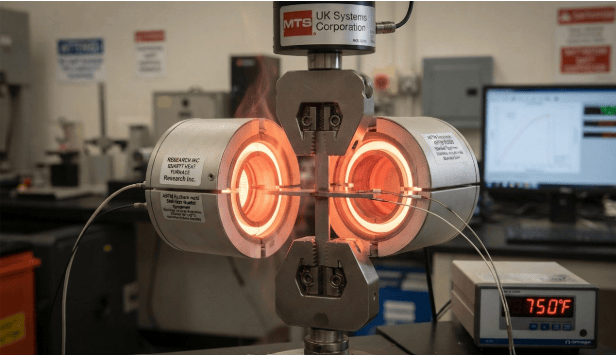
Uses radiant heating equipment to expose the specimen to the required temperature.
What are the uses of ASTM D2295 testing?
ASTM D2295 helps laboratories to evaluate how adhesive bonds retain shear strength at elevated temperatures. Manufacturers and engineers can use these results when comparing adhesives for applications that experience high-temperature exposure. This standard:
Determines comparative shear strength of adhesives, metal-to-metal adhesive bonds, and adhesive strength at elevated temperatures, and compares different adhesive formulations.
Supports adhesive selection for high-temperature applications.
Supports adhesive research and development and provides comparative data for quality evaluation.
Which materials can be tested under ASTM D2295?
ASTM D2295 specifies 18-8 (corrosion-resistant) steel and 17-7PH (precipitation-hardened) steel as suitable test-piece materials. The method also supports other heat-resistant steels suitable for the selected test-temperature range.
Why is ASTM D2295 Important?
The ASTM D2295 standard offers a standardized method for comparing adhesive shear strength under conditions well above normal. These test results allow engineers to select an adhesive that withstands elevated-temperature service.
ASTM D2295 Equipment and Sample Preparation Guide
The ASTM D2295 calls for standard metal-to-metal adhesive specimens, an appropriate tensile testing machine, and a heating apparatus capable of producing the specified high temperature. Technicians prepare the specimens per the specified configuration and select heat-resistant metals for the test temperature.
Laboratories first prepare metal-to-metal adhesive specimens from heat-resistant metal sheets.
Specimen Preparation
Technicians cut and bond metal strips as per the required specimen configuration and prepare the unbonded surfaces without burrs or irregularities.
Specimen Dimensions
Technicians prepare the recommended metal sheet thickness of 1.270 mm (0.050 in.) and measure specimen width and overlap length to the required accuracy.
Instrumentation
Tensile testing machine with pin-type grips, radiant heating equipment with a high-efficiency reflector, temperature-measuring equipment, and suitable specimen fixtures.
Testing Procedures and Requirements for ASTM D2295
Technicians should prepare standard adhesive-bonded metal specimens and test them under controlled elevated-temperature conditions per ASTM D2295. Laboratories select the metal based on the required temperature range and apply tensile loading through pin-type grips while the heating system exposes the bonded area to the specified temperature. The ASTM D2295 test method comprises the following test procedure-
Technicians prepare metal-to-metal adhesive specimens and select a suitable heat-resistant metal for specific temperature as specified.
Bond Preparation and Dimensional Measurement
Laboratories bond the individual metal strips and prepare the unbonded areas free from burrs or irregularities. Then they measure specimen width and overlap length to the specified accuracy.
Temperature Conditioning and Load Application
Laboratories heat the specimen to the desired elevated temperature with the radiant heating system and apply tensile loading through pin-type grips to produce shear stress in the adhesive joint.
Strength Measurement
Laboratories record the load required to produce failure of the adhesive joint
Result Reporting
Then, laboratories report the measured shear strength together with the test temperature and relevant specimen information.
ASTM D2295 Testing Process and Data Collection
Technicians first take the appropriate metal and adhesive system for the desired temperature range. Technicians then prepare the standard bonded specimens, measure the specimen dimensions, and install the specimens in the testing apparatus. Next, laboratories subject the bonded area to the required elevated temperature and apply tensile loading through pin-type grips. Lastly, laboratories document the applied load at adhesive-joint failure together with the test temperature and specimen information.
ASTM D2295 Universal Testing Machine (UTM) with a Split Radiant Heating Furnace Chamber
Common Challenges and Troubleshooting
Reliable and accurate adhesive testing requires proper specimen preparation, stable temperature control, correct specimen alignment, and reliable load measurement. Common challenges include inconsistent adhesive-bond preparation, incorrect specimen dimensions, improper metal selection for the test temperature, uneven heating of the bonded area, incorrect test temperature, specimen misalignment, incorrect load application, and Surface irregularities. Technicians should verify the specimen dimensions, heating system, temperature measurement, grips, and testing machine before starting the test.
ASTM D2295 Analysis Results and Interpretation
Laboratories report results based on test temperature, specimen configuration, failure load, and calculated adhesive shear strength.
Laboratories report results for temperature in °C, specimen dimensions in mm, applied force in N, and shear strength in MPa.
Then, laboratories can compare the resulting shear strength values at various temperatures to assess the ability of an adhesive to retain strength when exposed to high temperatures.
Gokula Srinivasan Selvam is a Material Testing Associate at Matestlab Inc. and holds a postgraduate degree in Ceramic Engineering from IIT (BHU), Varanasi. His academic background and professional experience are centered on advanced ceramic materials, their processing, characterization, and performance evaluation. Know More
Testimonials
Real results
Engineers trust us with what matters most
“We had a great experience working with this company for our ASTM E84 testing. They were the first company to respond to our inquiry within just a few minutes of submitting it. From start to finish, the communication was excellent, and the entire process was swift, straightforward, and hassle-free.”
Ivars FancyWalls
United States
“Very good communication, testing associates were very patient with delays on our end. Reasonable turnaround time for results and nicely detailed report. Analysts were also quick to answer any follow-up questions. Happy with results.”
Skye Henderson
United States
“Matestlab connected us with an accredited lab within days, cutting weeks off our product validation timeline.”
Rebecca Kozodoy-Pins
United States
Start Your Testing Project Today
Define your requirements and get access to specialized laboratories ready to deliver results