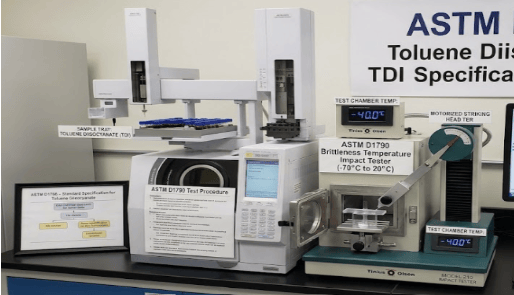
ASTM D1790 specifies a standard test method for determining the impact brittleness temperature of plastic sheeting. Technicians condition each specimen at controlled low temperatures and then subject it to the specified impact to determine whether it cracks or breaks. The test determines the temperature at which brittle failure takes place and is used to compare the low-temperature impact resistance of plastic sheets. These results help manufacturers, engineers, and quality-control laboratories establish material performance, support product development, and determine suitability for low-temperature applications.
Get Certified ASTM D1790 Brittleness Temperature Testing
ASTM D1790 testing helps manufacturers, suppliers, and users assess the low-temperature impact behavior of plastic sheeting. Laboratories prepare specimens to the specified dimensions, condition them at controlled temperatures, apply the required impact, and record the failure response. The resulting brittleness temperature enables engineers to compare plastic materials, production batches, formulations, and processing conditions when low-temperature impact resistance is a critical performance requirement.