ASTM D1781 Climbing Drum Peel for Adhesives

    What is ASTM D1781?

    ASTM D1781 is a standard test method for determining the resistance to climbing drum peel of adhesive-bonded sandwich constructions and similar adhesive-bonded materials. The test determines the force needed to peel one face from the core and/or the bonded substrate under controlled loading. The climbing drum configuration reduces bending stress in the peel arm, allowing the measured force to more accurately reflect adhesive bond performance. The climbing drum peel is used for many adhesive systems across a wide range of applications, including foam core, honeycomb core, laminated composites, and lightweight structural panels, and is specified by ASTM D1781 (Standard Test Method for Climbing Drum Peel for Adhesives). The results are generally employed for quality control, reliability assessment, performance assessment, product development, and specification.

    Read more

    Get Certified ASTM D1781 Testing for Reliable Adhesive Bond Performance

    ASTM D1781 ensures adhesive-bonded materials meet the peeling-resistance standards required for their uses. Laboratory testing confirms the integrity of the adhesive bond, identifies poor-bonding locations, and assesses the durability of a bonded sandwich construction before approval for production or service. Reliable ASTM D1781 testing helps ensure product quality, qualify materials, minimize bonding failure, and build confidence in adhesive performance in service.

    What is the Scope of ASTM D1781 Test Standard?

    ASTM D1781 is a standard test method for determining the peel resistance of adhesive bonds by a climbing drum apparatus. It tests the peel resistance of adhesive bonds between a flexible adherend and a rigid adherend during peeling of the flexible adherend under controlled loading. This quantitative test measures climbing drum peel resistance and can be used to compare adhesive systems, surface treatments, and constructions. The method can be used for metal-to-metal adhesives, as well as other materials if the flexibility and rigidity of the materials satisfy the requirements of the test method.

    Read more

    This test standard provides guidelines for a standard method of measuring the resistance of adhesive-bonded sandwich constructions and similar bonded materials to peeling by climbing drums. The ASTM D1781 test method-

    • Applies to climber drum peeling of adhesive-bonded sandwich constructions.
    • Tests peel resistance and adhesive bond strength under controlled loading conditions.
    • For use on bonded assemblies where structural and/or lightweight composite applications are required.
    • Assists with quality control, material qualification, product development, and engineering evaluation.
    • Establishes uniform methods of evaluating adhesive bond performance.
    • This is for evaluation of adhesive bond peel resistance in the laboratory, not for structural design calculations.

    What are the Uses of ASTM D1781 Testing?

    ASTM D1781 testing is used to help manufacturers, adhesive developers, and engineers evaluate peel resistance and durability of bonded sandwich constructions for structural applications. Results support quality assurance, adhesive selection, product certification, and engineering design.

    • The ASTM D1781 test ensures peel resistance for adhesive-bonded sandwich constructions and composite assemblies.
    • Manufacturers use the test to validate production quality and confirm adhesive-bond performance.
    • Aerospace engineers evaluate bonded aircraft structures to ensure long-term service performance and reliability.
    • ASTM D1781 evaluates the adhesive bond between lightweight vehicle parts.
    • Composite material manufacturers also use the method for product development to compare adhesive systems.
    • ASTM D1781 is a test conducted in testing laboratories to facilitate certification, material qualification, and customer specifications.
    • Researchers use the test to develop new adhesive formulations and optimize bonded structural designs.

    What Materials Can Be Tested Under ASTM D1781?

    ASTM D1781 covers adhesive-bonded sandwich constructions fabricated with a foam, honeycomb, balsa wood, composite laminate, aluminum panel, fiber-reinforced plastics, metallic, or polymeric facing, or other structural assemblies that are bonded together.

    Why is ASTM D1781 Important for Adhesive Bond Evaluation?

    ASTM D1781 is a laboratory test for assessing the quality of adhesive bonding and peel strength. Manufacturers use the test to identify poor adhesion, ensure manufacturing consistency, select the most suitable adhesive, and ensure bonded assemblies perform throughout their service life.

    ASTM D1781 Equipment and Sample Preparation Guide

    Prior to drum peel testing, technicians make representative adhesive-bonded samples in accordance with ASTM D1781. Accurate and repeatable peel resistance measurement is accomplished by properly preparing and conditioning the specimens.

    Read more

    Specimen DetailsRepresentative adhesive-bonded sandwich constructions, composite panels, laminates, foam-core panels, honeycomb-core structures, and other adhesive-bonded assemblies are to be prepared using the adhesive system under study.
    Specimen dimensionsTechnicians determine specimen dimensions based on the material system, adhesive type, and application requirements specified in ASTM D1781 or the material system’s product specification.
    Specimen preparationTechnicians prepare the specimens by bonding two adherends using the specified adhesive application and curing conditions and following the applicable preparation procedures. Technicians pre-condition the bonded specimens before testing according to ASTM D1781.
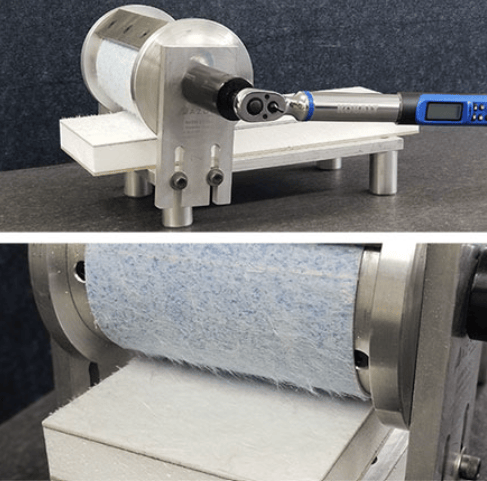
    InstrumentationUniversal Testing Machine (UTM) with a climbing drum peel fixture, calibrated load cell, specimen holding fixtures, dimensional measuring instruments, conditioning chamber (if required), and other calibrated laboratory equipment used for peel resistance testing.

    Testing Procedures and Requirements for ASTM D1781

    ASTM D1781 is a test that confirms the climbing drum peel resistance of the adhesive bond in sandwich constructions and bonded assemblies. Typical lab tests establish peel strength and assess the strength and integrity of the bond between two parts under controlled loading. The ASTM D1781 testing is comprised of the following steps:

    Read more

    Specimen PreparationTechnicians bond the two adherends with the adhesive under test using the specified adhesive thickness, curing conditions, and bonding procedure.
    Climbing Drum Peel TestTechnicians place the bonded specimen on the climbing drum fixture and rotate the drum to continuously peel one adherend from the bonded assembly at the predetermined rate.
    Peel Force MeasurementTechnicians continuously measure and record the peel force along the specimen as the adherend separates from the bonded assembly.
    Failure Mode EvaluationAnalysts examine the separated specimen to determine the failure mode, including adhesive, cohesive, core, or substrate failure.
    Visual ExaminationTechnicians visually examine the bonded surfaces for peeling, voids, poor bonding, delamination, and other conditions that may affect test performance.
    Documentation and ReportingLaboratory personnel document specimen identification, adhesive and adherend information, preparation conditions, test parameters, measured peel force, failure observations, and ASTM D1781 test details in laboratory reports.

    ASTM D1781 Testing Process and Data Collection

    The first step in testing is to identify the stainless steel parts and determine the applicable passivation treatment. Technicians clean and descale the parts as necessary before applying the selected nitric acid, citric acid, or electrochemical treatment. After passivation, personnel thoroughly rinse the parts to stop the chemical reaction and remove residual treatment chemicals. Technicians then perform the applicable verification procedure to confirm the effectiveness of the passivation treatment. 

    The image shows a climbing drum peel testing machine evaluating the peel resistance of an adhesive-bonded sandwich panel in accordance with ASTM D1781.
    ASTM D1781 Climbing Drum Peel Test for Adhesive Bond Evaluation

    Common Challenges and Troubleshooting

    Test accuracy can be affected by inconsistent adhesive application, improper specimen preparation, fixture misalignment, inconsistent curing conditions, specimen defects, or equipment calibration errors. Accurately repeatable test results are achieved through careful specimen preparation, controlled environmental conditions, calibrated testing equipment, and experienced laboratory personnel.

    Analysis Results and Interpretation

    • Peel resistance is the resistance to separating the adhesive bond between two surfaces, expressed in newtons per millimeter (N/mm), pounds-force per inch (lbf/in), or other engineering units, as measured by the force needed to start separating the bond and to continue separating it.
    • The observations of the failure mode allow the determination of whether the specimen shows adhesive failure, cohesive failure, failure of the substrate or core failure and therefore give information about the integrity and performance of the adhesive system.
    • Visual examination records evidence of bond defects (delamination, incomplete bonding, irregular peel propagation, voids, etc.) which could affect the measured peel resistance and overall bond quality.
    • Assemblies prepared by adhesive bonding that meet peel resistance requirements and have acceptable failure properties are acceptable for applications requiring reliable structural bonding and long-term service performance.

    Link to ASTM D1781

    Read more

    FAQ

    Where can I get the astm d1781 tested?
    You can share your astm d1781 testing requirements with MaTestLab. MaTestLab has a vast network of material testing laboratories, spread across the USA and Canada. We support your all material testing needs ranging from specific astm d1781 test to various testing techniques.
    Please contact us for a detailed quote for your astm d1781 testing needs. Cost incurred to carry out different astm d1781 testing methodology depends on the type of raw material; number of samples, coupons, or specimens; test conditions, turn around time etc. Costs of some ASTM testing methods start from $100 and the final value depends upon the factors listed above. Please contact us for the best and latest prices.
    The required number of samples or specimens should comply with the procedure given in the astm d1781 standard. However, the MaTestLab operations team can assist you for your special requirements once you share your testing details with us.
    MaTestLab has a vast testing laboratory network, hence we bring you the best testing facilities in a cost-effective way. We offer considerable discounts (15-20%) to our returning customers based on test volume and frequency.
    The turnaround time for astm d1781 test methodology depends upon the test procedure mentioned in the standard test document. However, we at MaTestLab understand your research requirements and hence try to get your test completed within the least possible time.
    Suyog Kamble
    About Author
    Suyog Kamble
    Suyog Kamble is an Operations Associate at MaTestLab Inc. and holds a postgraduate degree in Organic Chemistry.
    Testimonials
    Real results
    Engineers trust us with what matters most
    Start Your Testing
    Project Today
    Define your requirements and get access to
    specialized laboratories ready to deliver results
    Partners with us
    Clients
    Vendors
    Process for testing
    • STEP 01

      You share your testing requirements

    • STEP 02

      You share your sample(s)

    • STEP 03

      We deliver your test reports

    Get your testing done

    Let us known your testing requirements and we will be right back with a solution.

      Let us root for each other. Collaborate to grow, expand, and accelerate our businesses.

      Partner with us

        Contact Us

        Discover more from MaTestLab

        Subscribe now to keep reading and get access to the full archive.

        Continue reading