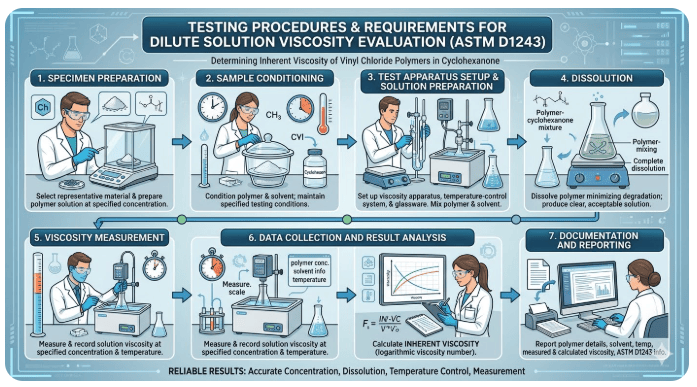
ASTM D1243 describes a standard method for measuring the dilute-solution viscosity of vinyl chloride polymers. The method expresses viscosity as inherent viscosity (also called the logarithmic viscosity number). For vinyl chloride polymers, ASTM D1243 (Standard Test Method for Dilute Solution Viscosity of Vinyl Chloride Polymers) applies to those that give clear, even solutions at the specified test dilution. The average molecular size of the polymer portion in solution relates to the viscosity of the dilute solution. The polymer is dissolved in cyclohexanone to a concentration that yields a clear, uniform solution suitable for testing. They then measure the flow properties of the polymer solution with a suitable viscosity-measurement method. When the analyst measures the solution viscosity, they can calculate the analyte viscosity using the measured solution viscosity and the logarithmic viscosity number. This test method provides information on the average molecular size of the polymer fraction soluble in the solvent. The method involves controlled solution preparation and viscosity measurement, providing comparable data for vinyl chloride polymers.
Get Certified ASTM D1243 Testing for Reliable Polymer Viscosity Evaluation
ASTM D1243 is a testing method used to characterize vinyl chloride polymers by dilute solution viscosity measurements for manufacturers and laboratories. Lab testing can help compare polymer materials, track material uniformity, and monitor changes in polymer processing. ASTM D1243 testing may be used to help material qualification, for quality assurance, in research, and for product development. Results provide intrinsic-viscosity data which can be used to compare the average molecular size of the soluble polymer fraction.