
ASTM D1239 Standard Test Method for Resistance of Plastic Films to Extraction by Chemicals

    What is ASTM D1239?

    ASTM D1239 is a standard test method for determining the resistance of plastic films to chemical extraction by measuring the film’s weight loss after immersion in chemicals. The method involves measuring the film’s weight before and after immersion in the specified chemical environment to determine weight loss. The test provides an empirical way to evaluate the loss of plasticizer or other extractable components from plastic film. Engineers can use these results to compare film formulations and evaluate how chemical exposure affects material stability.

    Get Certified ASTM D1239 Chemical Extraction Testing

    Plastic films can encounter chemicals during storage, handling, packaging, and household use. Chemical extraction may extract plasticizers or other extractables and may alter the film’s performance. ASTM D1239 is a standard method for determining weight loss due to chemical immersion. Laboratories use ASTM D1239 for material evaluation, product development, and quality control.

    What is the scope of ASTM D1239?

    ASTM D1239 specifies a test method for measuring the weight loss of plastic film after immersion in chemicals. The method focuses on chemically extracting components from thin plastic films. The ASTM D1239 standard-

    Read more

    • Measures the weight loss of plastic films after immersion in chemicals to provide an empirical assessment of resistance to extraction.
    • Measures weight loss in the film following chemical immersion. 
    • Evaluates the loss of plasticizer or other extractable components. 
    • Applies to films with a nominal thickness of 0.25 mm (0.010 in.) or less. 
    • Uses SI units as the standard measurement system. 
    • Provides a rapid empirical assessment of the loss of plasticizer or other extractable components from plastic film after immersion in liquids commonly used in households.

    What are the uses of ASTM D1239 testing?

    ASTM D1239 assists manufacturers in evaluating the weight loss of plastic films after exposure to specified chemicals. The test provides weight-loss data that can indicate the extraction of plasticizers or other soluble components from the film. This test standard –

    • Evaluates plastic film resistance to chemical extraction. 
    • Measures weight loss after chemical exposure. 
    • Helps assess plasticizer loss. 
    • Assists in the formulation of plastic films. 
    • Helps manufacturers compare film materials. 
    • Supports quality control. 
    • Provides empirical weight-loss data to compare plastic films under the specified chemical-exposure conditions.

    What Does Chemical Extraction Mean for Plastic Films? 

    Chemical extraction is the process in which a liquid removes soluble or extractable parts from a plastic film. Plasticizers and other extractable components can be removed from the film during immersion in the contacting liquid. As the extraction proceeds, the film may lose mass and alter physical or functional properties.

    Why is ASTM D1239 Important?

    ASTM D1239 outlines a standard method to measure weight loss from chemical extraction. Manufacturers can use the results to evaluate plastic film stability and compare different formulations. The test provides information about the loss of plasticizer or other extractable components from plastic film during chemical immersion.

    ASTM D1239 Equipment and Sample Preparation Guide

    Representative film specimens, suitable chemical containers, an accurate weighing system, and controlled test conditions are required to achieve reproducible and accurate results. Weight loss is calculated by weighing the specimen before and after chemical exposure.

    Read more

    Sample and Sample DetailsTechnicians select representative plastic-film specimens for chemical-extraction testing.
    Specimen PreparationThey then prepare the film specimens and condition them as required for weighing and immersion.
    Specimen DimensionsAnalysts use plastic film having a nominal thickness of not greater than 0.25 mm (0.010 in.).
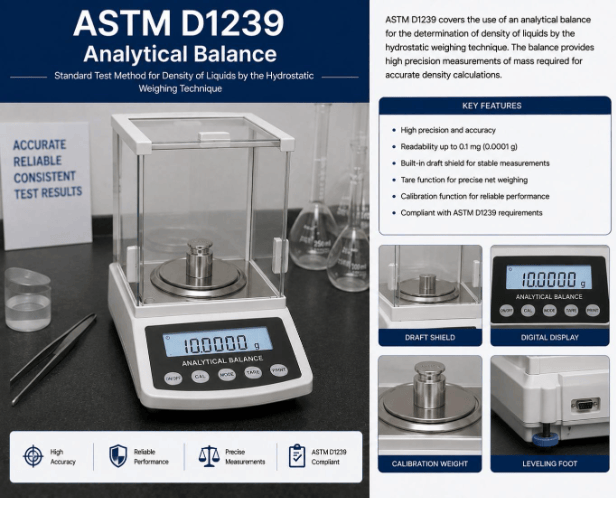
    Instrumentation Analytical balance, appropriate chemical containers, measuring device for specimen’s dimensions, and controlled test-environment equipment. Technicians use an analytical balance capable of weighing to 0.0001 g for the standard measurement. ASTM D1239 also specifies containers with a diameter of at least 65 mm (2.5 in.) and sufficient volume to hold one specimen.

    Testing Procedures and Requirements for ASTM D1239

    ASTM D1239 determines the weight loss of plastic film after immersion in chemicals. It offers a quick empirical test to assess the loss of plasticizer or other extractable material when the film encounters common household liquids.

    Read more

    Specimen PreparationTechnicians first prepare representative plastic film specimens and measure their original mass.
    Initial Weight MeasurementLaboratories weigh each specimen accurately before chemical exposure.
    Chemical ImmersionTechnicians place the film specimens in the designated chemical environment under controlled conditions.
    Final Weight MeasurementTechnicians remove the specimens, prepare them for final weighing according to the method, and determine their final mass.
    Weight-Loss DeterminationThe laboratory compares the initial and final specimen weights to determine the weight loss caused by chemical extraction.

    ASTM D1239 Testing Process and Data Collection

    Technicians take representative plastic film samples and initially measure their weight before the film is exposed to a given chemical environment. Then, they immerse the specimens under specific conditions and take them out. After exposure, they prepare the specimens for final weighing and record the final mass. Then the laboratory compares the initial and final weights to determine the loss after chemical exposure. Analysts should record specimen identification, exposure conditions, initial weight, film thickness, final weight, and measured weight loss. 

    This image shows an analytical balance used to measure the mass of plastic-film specimens before and after chemical exposure for ASTM D1239 testing.
    ASTM D1239 Analytical Balance

    Common Challenges and Troubleshooting

    Several factors can affect chemical-extraction results. Variations may occur due to differences in specimen thickness, initial weighing, chemical exposure, specimen handling, and final weighing. Technicians should use representative samples, proper weighing equipment, carefully handle specimens, and keep the control exposure conditions before weighing them.

    ASTM D1239 Analysis Results and Interpretation

    • ASTM D1239 tests plastic film resistance to chemical immersion. 
    • Laboratories measure specimen mass using an analytical balance and calculate the weight loss according to the applicable ASTM procedure.
    • ASTM D1239 specifies plastic-film test specimens in the form of squares measuring 50 ± 0.25 mm (2 ± 0.01 in.) on each side. It tests at least three specimens of each sample with each chemical reagent.
    • A higher weight loss indicates greater loss of plasticizer or other extractable components under the selected chemical conditions.
    • A lower weight loss indicates less loss of plasticizer or other extractable components under the same test conditions.

    How Does ASTM D1239 Improve Plastic Film Reliability? 

    ASTM D1239 gives manufacturers measurable data about the effect of chemical exposure on plastic films. The weight-loss results help manufacturers identify formulations that resist extraction.

    Read more

    Updated on August 18, 2026

    Suyog Kamble
    About Author
    Suyog Kamble is an Operations Associate at Matestlab Inc. Suyog holds a postgraduate degree in organic chemistry and is trained in material science topics.
    Know More
    Testimonials
    Real results
    Engineers trust us with what matters most
    Start Your Testing
    Project Today
    Define your requirements and get access to
    specialized laboratories ready to deliver results
    Partners with us
    Clients
    Vendors
    Process for testing
    • STEP 01

      You share your testing requirements

    • STEP 02

      You share your sample(s)

    • STEP 03

      We deliver your test reports

    Get your testing done

    Let us know your testing requirements and we will be right back with a solution.

      Let us root for each other. Collaborate to grow, expand, and accelerate our businesses.

      Partner with us

        Discover more from Matestlab

        Subscribe now to keep reading and get access to the full archive.

        Continue reading