
ASTM C169 is a method for chemical analysis that describes the quantitative analysis of the chemical composition of soda-lime and borosilicate glasses. The method quantifies the major oxides and chemical constituents that affect the physical, thermal, optical, and chemical properties of glass products. ASTM C169 (Standard Test Method for Chemical Analysis of Soda-Lime and Borosilicate Glass) verifies the composition of glass products to monitor manufacturing consistency, to qualify raw materials, and to ensure that glass products conform to customer and industry specifications.
ASTM C169 Standard Test Methods for Chemical Analysis of Soda-Lime and Borosilicate Glass
What is ASTM C169?
What is the scope of ASTM C169?
ASTM C169 provides standardized test methods for determining the chemical composition of soda-lime and borosilicate glass. The method quantifies the main elements of the glass to confirm product composition, to track the consistency of the manufacturing process, and to verify adherence to the glass material specifications. The results support quality control, raw material inspection, and product creation. The test standard-
- Determines the chemical composition of soda-lime and borosilicate glass.
- Quantifies major oxides and chemical constituents that affect glass properties.
- Supports quality control during glass manufacturing.
- Verifies conformance with product specifications and manufacturing requirements.
- Assists with raw material evaluation, research, and product development.
- Provides standardized analytical data for glass characterization.
What are the Applications of ASTM C169 Testing?
Manufacturers use ASTM C169 testing to ensure that the chemical composition of the glass product is consistent and to verify its production quality. The method is suitable for evaluating raw materials, research, and manufacturing process optimization because it enables accurate determination of the concentrations of major glass constituents. The test standard-
- Verifies the chemical composition of soda-lime and borosilicate glass.
- Supports quality control during glass manufacturing.
- Confirms compliance with customer specifications and industry standards.
- Assists with raw material qualification and incoming material inspection.
- Supports research and development of specialty glass products.
- Helps optimize glass manufacturing processes through compositional analysis.
What is Chemical Analysis of Glass?
Chemical analysis of glass is used to identify the concentration of major oxides and chemical constituents to identify the physical, thermal, optical, and chemical properties of glass. Manufacturers can check the product quality, manufacturing consistency, and material specifications by accurately measuring the composition of soda-lime and borosilicate glass. ASTM C169 sets a standard for analytical procedures to get consistent and repeatable results.
Why is ASTM C169 Testing Important?
The durability, thermal expansion, chemical resistance, and optical properties of glass are directly affected by its chemical composition. ASTM C169 is used to help manufacturers verify finished products with the correct levels of major constituents, support process control, and ensure product consistency. The method also supports material verification, quality assurance, and product development.
What Materials can be Tested According to ASTM C169?
ASTM C169 covers soda lime glass and borosilicate glass for architectural, laboratory, pharmaceutical, lighting, industrial, and consumer applications. The method is used to verify the chemical composition of finished glass products and raw materials to ensure the consistency of manufacturing.
How does ASTM C169 Determine the Chemical Composition of Glass?
ASTM C169 specifies test methods for determining the chemical composition of soda-lime and borosilicate glass. This involves splitting a sample of glass into a representative powder, then using a suitable technique (wet chemical analysis and instrumental analysis) to determine the abundance of the major components within the powder. Analysts quantify major constituents such as SiO₂, Na₂O, CaO, MgO, Al₂O₃, B₂O₃, Fe₂O₃, and other applicable oxides and report the results as weight percent (wt.%).
Common Challenges and Troubleshooting
If the sample is contaminated, not completely dissolved, incorrectly weighed, the instrument is not calibrated correctly, or the reagents are impure, then the analysis may be inaccurate. Routine calibration of analytical apparatus, QC procedures, and sampling representative material help avoid laboratory problems.
Analysis Results and Interpretation
- The test results convey the concentration of the major components of the glass, SiO₂, Na₂O, CaO, B₂O₃, Al₂O₃, MgO, Fe₂O₃, and other oxides, usually in weight percent (wt.%).
- The test result determines the suitability of the chemical composition based upon product specifications, manufacturing requirements, and industry standards.
- Compares the chemical composition of various production lots, raw materials, or glass formulations to determine manufacturing consistency.
- Helps with product quality control, raw material qualification, product certification, process optimization, and research and development of glass materials.
ASTM C169 Equipment and Sample Preparation
For accurate chemical analysis, the analyst prepares a representative glass sample, calibrates the analytical instruments, and verifies the analytical procedure using appropriate reference materials. The analyst crushes the glass into a representative powder, prepares the sample using the appropriate dissolution or fusion procedure, and determines the concentrations of the required constituents using the selected analytical method.
| Sample Details | Soda-lime glass and borosilicate glass samples representative of the finished product or raw material. |
| Sample Preparation | Analysts crush and grind the glass into a fine powder, prepare representative samples, dissolve the specimen using suitable acids or fusion techniques, and prepare analytical solutions according to the selected chemical analysis method. |
| Sample Configuration | Analysts prepare homogeneous powdered glass for wet chemical or instrumental analysis. |
| Instrumentation | ICP-OES (Inductively Coupled Plasma Optical Emission Spectrometer), Atomic Absorption Spectrometer (AAS), UV-Vis spectrophotometer, analytical balance, titration apparatus, laboratory furnace, digestion system, laboratory glassware, and computerized data acquisition software. |
Testing Procedures and Requirements
ASTM C169 provides standardized procedures for determining the chemical composition of soda-lime and borosilicate glass by preparing representative samples and analyzing the required constituents. Measured concentrations of the oxides aid manufacturers in checking material quality, monitoring production processes, and comparing glass compositions.
| Sample Preparation | Analysts crush, grind, and prepare representative glass samples for chemical analysis. |
| Sample Dissolution | Analysts dissolve the specimen using appropriate chemical reagents or fusion techniques. |
| Chemical Analysis | Analysts determine the concentration of major glass constituents using standardized analytical methods. |
| Quality Verification | Analysts validate analytical accuracy using reference materials and quality control procedures. |
| Data Collection and Analysis | Analysts record oxide concentrations and analytical observations and compare chemical composition with product specifications and acceptance criteria. |
ASTM C169 Testing Process and Data Collection
Representative samples of glass are picked up, crushed, and ground to a homogeneous powder, and dissolution/fusion procedures are used to prepare analytical solutions, followed by chemical analysis. The concentration of oxides is determined in the prepared samples by a standard chemical or instrumental method, and the laboratory reports the concentrations, observations, and calibration results, along with quality control results, and then prepares the final report.
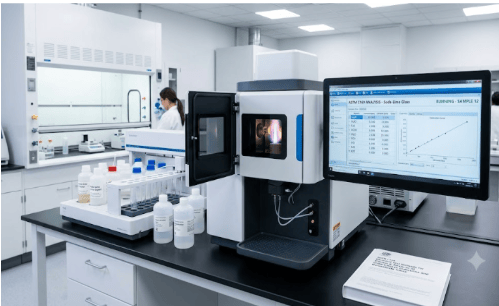
Get Certified ASTM C169 Chemical Analysis for Glass Products
The properties of glass, such as strength, durability, thermal expansion, chemical resistance, and optical properties, are directly affected by the chemical composition. ASTM C169 testing enables manufacturers to verify product quality, ensure process consistency, and verify conformance with material specifications before the product is placed on the market.
Updated on July 30, 2026

Testimonials
Real results
Engineers trust us with what matters most
“We had a great experience working with this company for our ASTM E84 testing. They were the first company to respond to our inquiry within just a few minutes of submitting it. From start to finish, the communication was excellent, and the entire process was swift, straightforward, and hassle-free.”

“Very good communication, testing associates were very patient with delays on our end. Reasonable turnaround time for results and nicely detailed report. Analysts were also quick to answer any follow-up questions. Happy with results.”
“Matestlab connected us with an accredited lab within days, cutting weeks off our product validation timeline.”
Start Your Testing
Project Today
Project Today
Define your requirements and get access to
specialized laboratories ready to deliver results
specialized laboratories ready to deliver results
Start Testing
Partners with us
Clients
Vendors