
By Laraib Hashmi | Last updated 1st May 2026

ASTM C1624 Adhesion Strength and Mechanical Failure Modes of Ceramic Coatings by Single Point Scratch Testing

ASTM C1624 outlines procedures for testing and evaluating the abrasion resistance of concrete and masonry surfaces using a rotary platform, double-head abrasion testing machine. Using the ASTM C1624 test method, researchers assess the practical adhesion strength, failure modes, and mechanical integrity of a given ceramic specimen on metal and ceramic substrates at ambient temperatures. Construction professionals and civil engineers use it to assess durability and wear resistance, aiding material selection and performance evaluation. ASTM C1624 results are primarily expressed in SI units, specifically newtons (N) for force, as this is the standard for reporting the critical scratch load (Lc) at which ceramic coating failure occurs.

Read More

GET STARTED

    Share your requirements *

    Provide your contact information *

    ASTM C1624 Introduction

    ASTM C1624  is a standardized method for evaluating the adhesion strength and failure modes of ceramic coatings, utilizing a progressive load scratch test. In this procedure, a diamond stylus systematically draws across the coated substrate under an incrementally increasing load. Researchers observe critical phenomena such as cracking, delamination, or spallation to determine the points at which the coating fails. These essential values of load provide quantitative insight into the coating’s adhesion and mechanical durability. This method is particularly relevant when evaluating the reliability of hard coatings in demanding fields such as aerospace, electronics, and advanced cutting tool manufacturing. It covers procedures for determining the abrasion resistance of surfaces, as well as requirements for equipment calibration, specimen preparation, and reporting of test results. The construction and civil engineering industries widely use this standard to assess the durability and wear resistance of surfaces.

    Get Certified ASTM D5213 Testing for Reliable Adhesion Strength in Ceramic Materials

    Since coating adhesion directly impacts durability and performance, ceramic-coated components are certified to stringent mechanical and adhesion standards. Qualified laboratory testing ensures precise and reproducible evaluation. One can consult MaTestLab for more information. ASTM C1624 testing helps build customer confidence and supports long-term reliability in demanding applications.
    Service NameRemarks
    ASTM C1624 Testing
    Contact US
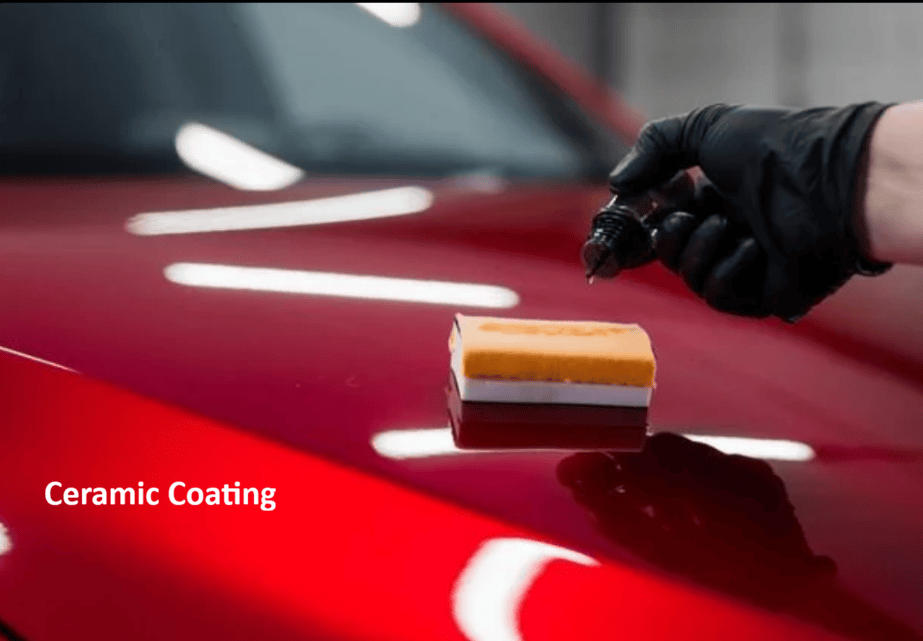
    A photo showing red ceramic coating being done over a car body. The adhesion strength and mechanical failure of such coating are evaluated by ASTM C1624 standard. 
    Ceramic Coating on a Car Body

    Testing Procedure and Requirements

    The ASTM C1624 testing procedure involves applying a progressively increasing normal load to a coated specimen using a stylus (scratch tester) until coating failure occurs. The operators conduct the test under controlled conditions while monitoring acoustic emission, friction force, and visual changes to identify critical loads at which different failure modes appear. The analyst then measures the results in terms of critical load (Lc), typically expressed in Newtons (N), which indicates the load at which coating adhesion failure or delamination initiates.

    Specimen SelectionThe specific specimen selection for ASTM C1624 may vary based on the size and shape of the concrete or masonry surface being evaluated.
    Test Setup and ExecutionEngineers and technicians use ASTM C1624 to test the abrasion resistance of concrete and masonry surfaces with a double-head abrasion testing machine. To set up the test, the analyst places the specimen on a rotary platform and adjusts the machine settings. They then execute the test by initiating abrasion with rotating heads, recording data on load, duration, and specimen changes, and analyzing the final results.

    Scope of ASTM C1624

    • Evaluates the adhesion strength of ceramic material coatings using scratch testing
    • Identifies critical loads corresponding to coating failure
    • Applicable to hard coatings such as nitrides, carbides, and oxides
    • Assesses different failure modes (cohesive, adhesive, substrate-related)
    • Supports quality control and coating performance comparison

    ASTM C1624 Equipment and Sample Preparation

    Specimen DetailsThe thickness and condition of the concrete or masonry surface are selected according to the requirements.
    Specimen dimensionsThe size and dimensions of the specimens should be sufficient to accommodate the testing equipment and allow for an accurate assessment of abrasion resistance.

    Applications of ASTM C1624

    • Evaluation of coating adhesion in cutting tools and wear-resistant components
    • Quality control of thin films in aerospace and automotive applications
    • Performance comparison of different coating materials and deposition methods
    • Failure analysis of coated surfaces under mechanical stress
    •  Developing durable, high-performance ceramic coatings
    • Assessment of coatings in biomedical implants and protective surfaces

    How Do You Ensure Accurate Results in ASTM C1624 Testing?

    The coated surface must be clean, uniform, and free from defects, as surface irregularities can distort scratch behavior. Proper calibration of the scratch tester and stylus is essential to apply a consistent and progressively increasing load. Maintaining controlled test parameters such as loading rate, scratch speed, and environmental conditions helps achieve reproducibility.

    Common Challenges and Troubleshooting

    One problem that seems to be associated with testing is inconsistency in the result, particularly for sensitive coatings. Possibly, sample  preparation variabilities, equipment calibration problems, or stylus force deviations could be some of the problems identified here. Troubleshooting means rejuvenation of the test apparatus, equal coating application, and running multiple tests. The troubleshooting process includes preparing the surface, selecting the correct stylus geometry, loading calibration, and reproducing scratches to ensure they are reproducible. Environmental conditions, such as temperature and humidity, may also affect the results, and they should be controlled.

    Ceramic Load Scratch Testing Technique, Process, and Data Collection

    The technique utilizes progressive load scratch testing with a stylus to evaluate coating adhesion and failure behavior. The process involves preparing a clean, uniformly coated specimen, applying a controlled increasing load while scratching the surface, and monitoring signals such as friction and acoustic emission. Data collection identifies critical loads (Lc) at which failure occurs and records failure modes, ensuring a reproducible and traceable coating performance assessment.

    Analysis Results and Interpretation of Adhesion Strength and Mechanical Failure Testing

    The results obtained from conducting the test can be used to evaluate the relative abrasion resistance of different surfaces or materials. These results aid in material selection, performance evaluation, and decision-making regarding the durability and wear resistance of concrete and masonry surfaces in various applications. SI units are considered standard units for stating test results.

    Factors to Consider for ASTM C1624 Testing

    • Speed: We focus on quick turnarounds without compromising accuracy. Our lean processes enable our clients to get results fast and keep their projects on time.
    • Expertise: MaTestLab has a team of experienced professionals who are well-versed with  ASTM standards. We make sure that we have proper testing processes and that the results are properly interpreted to make improved decisions.
    • Cost: Our testing solutions are cost-effective and deliver a balance between quality and affordability. Our services assist clients in upholding high standards and managing budgets effectively.

    Direct Link to PDF

    FAQ's

    Where can I get the astm c1624 tested?

    You can share your astm c1624 testing requirements with MaTestLab. MaTestLab has a vast network of material testing laboratories, spread across the USA and Canada. We support your all material testing needs ranging from specific astm c1624 test to various testing techniques.

    How much do I need to pay for the astm c1624 test?

    Please contact us for a detailed quote for your astm c1624 testing needs. Cost incurred to carry out different astm c1624 testing methodology depends on the type of raw material; number of samples, coupons, or specimens; test conditions, turn around time etc. Costs of some ASTM testing methods start from $100 and the final value depends upon the factors listed above. Please contact us for the best and latest prices.

    How many samples are required for astm c1624?

    The required number of samples or specimens should comply with the procedure given in the astm c1624 standard. However, the MaTestLab operations team can assist you for your special requirements once you share your testing details with us.

    How much discount can I get on the astm c1624 test?

    MaTestLab has a vast testing laboratory network, hence we bring you the best testing facilities in a cost-effective way. We offer considerable discounts (15-20%) to our returning customers based on test volume and frequency.

    How many days will it take to complete the astm c1624 test?

    The turnaround time for astm c1624 test methodology depends upon the test procedure mentioned in the standard test document. However, we at MaTestLab understand your research requirements and hence try to get your test completed within the least possible time.

    Where can I get the astm c1624 tested?

    You can share your astm c1624 testing requirements with MaTestLab. MaTestLab has a vast network of material testing laboratories, spread across the USA and Canada. We support your all material testing needs ranging from specific astm c1624 test to various testing techniques.

    POPULAR TESTS
    ONE-STOP FOR ALL
    MATERIAL TESTING NEEDS
    MaTestLab Inc. offers accessible, quick, and affordable material testing, product testing, and failure analysis services. We support your on-demand testing and expert consultation needs with the help of our extensive network of material testing laboratories situated in the US and other parts of the world.
    MATERIAL TESTING
    We offer destructive and non-destructive tests over a range of mechanical, electrical, chemical, thermal, optical, corrosion, radiation, and biological testing methodologies defined by ASTM, ISO and other organizations.
    PRODUCT TESTING
    We help you evaluate and ensure your product quality and performance with standard and custom-made testing solutions. All the tests are done at well-equipped testing laboratories using standard testing methods for best output and satisfaction.
    FAILURE ANALYSIS
    Failure analysis ensures high levels of quality in every manufacturing process. We help you with getting the best failure or root cause analysis to determine the cause of the failure. The results help you identify means to prevent failure recurrences.
    Process for testing
    • STEP 01

      You share your testing requirements

    • STEP 02

      You share your sample(s)

    • STEP 03

      We deliver your test reports

    Get your testing done

    Let us known your testing requirements and we will be right back with a solution.

      Let us root for each other. Collaborate to grow, expand, and accelerate our businesses.

      Partner with us

        close

        Please share your requirement with us

          ×

          Contact Us

          Discover more from MaTestLab

          Subscribe now to keep reading and get access to the full archive.

          Continue reading